Best AI Tools for Localizing Video Campaigns Across Markets
Most dubbed campaigns fail because the voice changes, not the words. Here are 6 AI localization tools that preserve voice identity and lip sync.
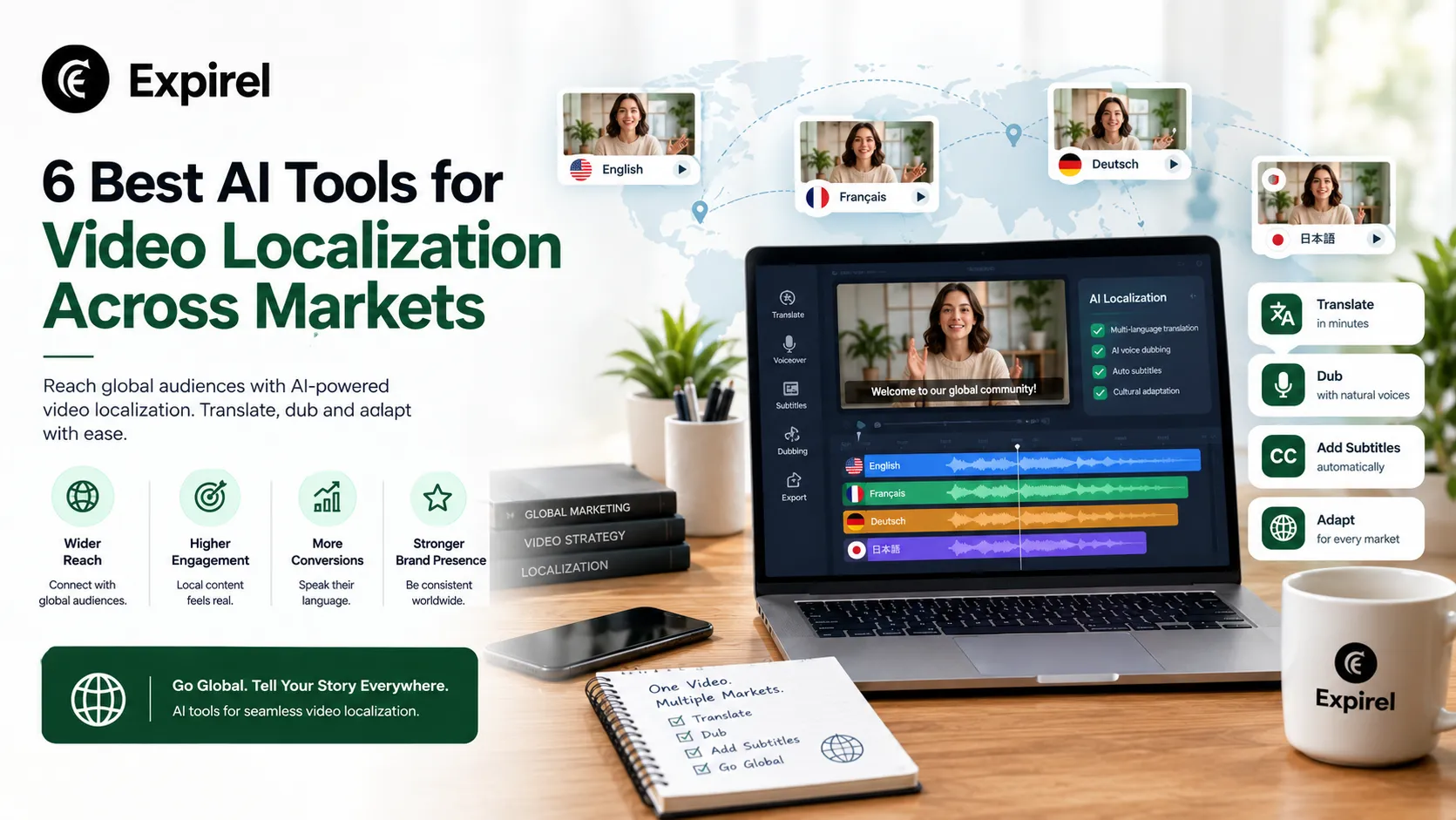
Localizing a video campaign has always carried the same quiet failure mode: the translated voiceover says exactly the right words, but it sounds like a completely different person. The script is accurate. The timing works. And yet the emotional connection the original campaign spent real budget building simply doesn't survive the trip into another language.
That gap is the actual problem worth solving, and it's why the phrase "video translation" undersells what good localization tools now do. The strongest options preserve a voice's identity across languages, not just its meaning, and increasingly preserve lip sync too, so a localized version doesn't read as obviously dubbed the moment someone looks at the speaker's mouth.
What Actually Separates Good Localization From Basic Translation
Before comparing tools, it helps to name the three distinct things a localization tool can preserve. Most tools handle the first. Fewer handle the second. The third is where the real quality gap opens up:
The words. Accurate translation of the script. Table stakes every tool does this, and it's the least interesting part of the problem.
The voice identity. Whether your spokesperson still sounds like the same person in Spanish as they did in English. This is what voice cloning targets, and it's the single biggest factor in whether a localized campaign feels native or outsourced.
The performance. Whether emotional nuance fear, sarcasm, excitement, warmth survives translation. This is the hardest to preserve and the most noticeable when it's missing.
A fourth, visual layer sits alongside these: lip sync. Audio-only translation leaves a visible mismatch between mouth movement and sound, which is exactly what makes a dubbed version read as dubbed even when the audio itself is good.
Online Video Editor Comparison Table
Tool | Best for | Localization mechanism |
|---|---|---|
Invideo | A full campaign localized from generation through final edit | Auto-translation plus voice cloning at the agent stage; dubbing with lip sync preserved in the editor |
Synthesia | Enterprise avatar campaigns across many languages | 140+ languages applied to one consistent avatar presenter |
HeyGen | One spokesperson reused across localized markets | 175+ languages with lip-synced avatar delivery |
Deepdub | Studio-scale film and TV dubbing | Emotion-preserving voice cloning across thousands of localized titles |
Papercup | Broadcast-grade work where a dubbing failure is unacceptable | AI dubbing with human linguist review on every project |
CAMB.AI | Live or fast-turnaround campaign content | Real-time, API-first multi-language dubbing at broadcast scale |
A note on pricing: these tools change their plans frequently, and published figures vary depending on monthly versus annual billing. Rather than quote numbers that go stale, check each vendor's current pricing page directly and pay particular attention to whether language features are included in the base plan or metered separately, since that distinction affects real cost more than the headline price does.
1. Invideo: Best for Localizing a Full Campaign End to End
Invideo covers localization from both directions a campaign might actually need it, which is what separates it from the specialist dubbing tools further down this list.
Generating for multiple markets from the start: when a campaign is built from a script, invideo agent plans what needs to change versus stay fixed across a translation, auto-translates the script, generates lip-synced voiceover, and uses voice cloning to keep the same voice across every language version. Your narrator sounds like your narrator in every market, rather than being swapped for a generic localized voice. It routes each shot to whichever of its 200+ integrated models fits, including Veo 3.1, Sora 2, Kling AI, Seedance 2.5, Runway, PixVerse, Hailuo, WAN, Recraft, GPT Image 2.0, and Nano Banana 2.
Localizing footage that already exists: Invideo Editor handles the finishing side a free online video editor that translates and dubs dialogue while preserving lip sync, editable on the same timeline, handling the rest of the campaign's assembly and review.
Where it falls short: it's a platform spanning the whole production-and-localization arc, not a specialist competing purely on dubbing depth for a single already-finished piece of content. If dubbing one finished film to the highest possible standard is your only job, a dedicated tool may go deeper.
2. Synthesia: Best for Enterprise Avatar Campaigns at Scale
Synthesia applies 140+ supported languages to a consistent avatar presenter, letting a campaign built around a spokesperson deploy across many markets simultaneously. Its published SOC 2 and ISO 42001 compliance matters specifically for enterprises rolling out training or brand messaging at scale, where procurement will ask about certifications before anyone evaluates the video quality.
Where it falls short: custom avatars carry a high annual cost per avatar, and the platform suits presenter-led content rather than narrative campaigns built from generated scenes.
3. HeyGen: Best for One Spokesperson Across Many Markets
HeyGen extends 175+ language support to a reusable avatar, the widest documented language coverage on this list. A campaign's spokesperson delivers the same message across every localized version without reshooting or re-recording per market, with lip-synced delivery keeping each version feeling native rather than dubbed.
Where it falls short: it's built specifically around avatar-led presenter content, not the broader range of formats a full campaign might include.
4. Deepdub: Best for Preserving Emotional Performance
Deepdub targets the hardest layer of the problem: emotion-preserving voice cloning built to maintain performance nuance fear, excitement, sarcasm across thousands of localized titles. This matters specifically for a campaign built around genuine performance rather than a straightforward informational read.
Where it falls short: it's priced and positioned for studios and networks with real localization budgets, not a self-serve plan a marketing team can start on today.
5. Papercup: Best When a Dubbing Failure Is Unacceptable
Papercup pairs AI dubbing with a human linguist review layer on every project. That costs more and moves slower than fully automated tools, and that's the entire point. For a major brand launch or a broadcast placement, where a badly dubbed line in one market carries genuine reputational cost, human QA on every localized line is the product.
Where it falls short: custom-quote only, and the human review layer trades turnaround speed for the reliability it exists to guarantee.
6. CAMB.AI: Best for Live and Fast-Turnaround Content
CAMB.AI's real-time dubbing suits campaigns with live or time-sensitive components a live event tie-in, breaking content, anything where waiting on a localization pass defeats the purpose. Its API-first model aims at teams embedding localization directly into a broader content pipeline rather than running it as a separate step.
Where it falls short: the API-first, engineering-oriented approach is a heavier commitment than a team that simply wants localized output quickly is likely to want.
How to Choose: A Decision Framework
Work through these in order the first question eliminates more options than any other:
Is your content already finished, or not yet produced? If it isn't produced yet, localizing at generation time (Invideo) is more reliable than dubbing afterward, because decisions about what changes across markets get made during production rather than retrofitted.
Is there a human face on screen? If yes, lip sync matters and audio-only dubbing will show. If your content is voiceover over b-roll, you can ignore lip sync entirely and focus purely on voice quality.
Is it one presenter, or a full narrative? A single spokesperson across markets points to HeyGen or Synthesia. Multi-scene narrative campaigns need something broader.
What's the cost of getting it wrong in one market? Low stakes (internal training, social content) — automated dubbing is fine. High stakes (broadcast, major launch) — pay for human review.
Does it need to happen live? Real-time requirements eliminate most of this list immediately and point to CAMB.AI.
Mistakes Teams Make When Localizing Video Campaigns
Treating localization as a final-step translation task. Deciding what changes across markets after the campaign is locked is far more expensive than planning it during production and produces worse results.
Ignoring lip sync because the audio sounds good. Viewers notice mouth mismatch even when they can't articulate what's wrong. Good audio over bad sync still reads as dubbed.
Swapping in a generic localized voice for a branded spokesperson. If your campaign is built on a recognizable voice, replacing it in every non-English market quietly discards that equity.
Applying broadcast-grade QA to everything. Human linguist review on internal training content is overspending. Match the review layer to the actual stakes of each piece.
Comparing tools on headline price alone. Whether language features are bundled or metered separately affects real cost far more than the advertised monthly rate.
Conclusion
The right tool depends less on feature counts than on where localization sits in your workflow. If a campaign isn't produced yet, building localization into generation, voice cloning, and lip sync handled during production rather than after avoids the retrofit problem entirely. If footage already exists, the question becomes how much a failure in any single market would actually cost you: automated dubbing for low-stakes content, emotion-aware synthesis or human linguist review for anything carrying real brand weight. What all of these share is the recognition that localization was never really a translation problem. It's an identity-preservation problem, and the tools worth paying for are the ones that treat it that way.
Frequently Asked Questions
Q: Why does a localized campaign often sound like a different person than the original?
Because standard translation and dubbing focus on getting the words right without preserving the original's specific voice identity, tone, and performance nuance. Tools built around voice cloning and emotion-preserving dubbing target that exact gap, rather than treating localization as translation alone.
Q: Can a campaign be localized before it's fully produced, instead of dubbed afterward?
Yes, and it's generally the more reliable approach. Planning what has to change versus stay fixed across translations during generation rather than retrofitting localization onto locked content avoids decisions that are expensive or impossible to reverse later.
Q: Which tool works best for one consistent spokesperson across many markets?
HeyGen or Synthesia, depending on scale. Both extend a single avatar's identity across many languages with lip-synced delivery. Synthesia suits enterprise-scale rollout with compliance requirements; HeyGen is more accessible for a single consistent presenter and currently documents wider language coverage.
Q: Is human review necessary, or is fully automated dubbing good enough?
It depends entirely on the stakes. For most marketing and training content, automated dubbing is generally considered sufficient. For a major brand launch or broadcast placement, a human review layer like Papercup's, or emotion-aware synthesis like Deepdub's, exists specifically for situations where a quality failure carries real reputational cost.
Q: Can lip sync actually be preserved in a dubbed version, not just the audio?
Yes, several tools are built specifically around this. Invideo Editor's dubbing capability and HeyGen's avatar delivery both preserve lip sync, which is what prevents a localized version from looking obviously dubbed in a way that audio-only translation cannot avoid.
Q: How many languages do these tools actually support?
Coverage varies meaningfully: HeyGen documents 175+ languages, Synthesia 140+, and others vary by plan tier. Worth verifying current coverage for your specific target markets directly with the vendor, since language lists expand regularly and headline counts don't always reflect equal quality across every language listed.

Fahad Ahmad
Founder of EXPIREL · Digital Entrepreneur · Product Management Specialist
Fahad Ahmad is the founder of EXPIREL and a digital entrepreneur with over 10 years of experience in SaaS development, SEO, and digital product creation. He focuses on building practical solutions that help individuals and businesses manage product expiration dates, organize inventory, track habits, and improve daily productivity.
Through EXPIREL, Fahad shares actionable guides, product management tips, barcode scanning tutorials, and research-backed insights designed to help users reduce waste, stay organized, and make smarter decisions.
Related Articles
View all
8 Best Salesforce Data Collection Tools for Healthcare Compliance
September 1, 2026
Compare 8 HIPAA-compliant Salesforce tools for healthcare data collection, from Health Cloud to FormAssembly. See BAA coverage, cost, and setup effort.
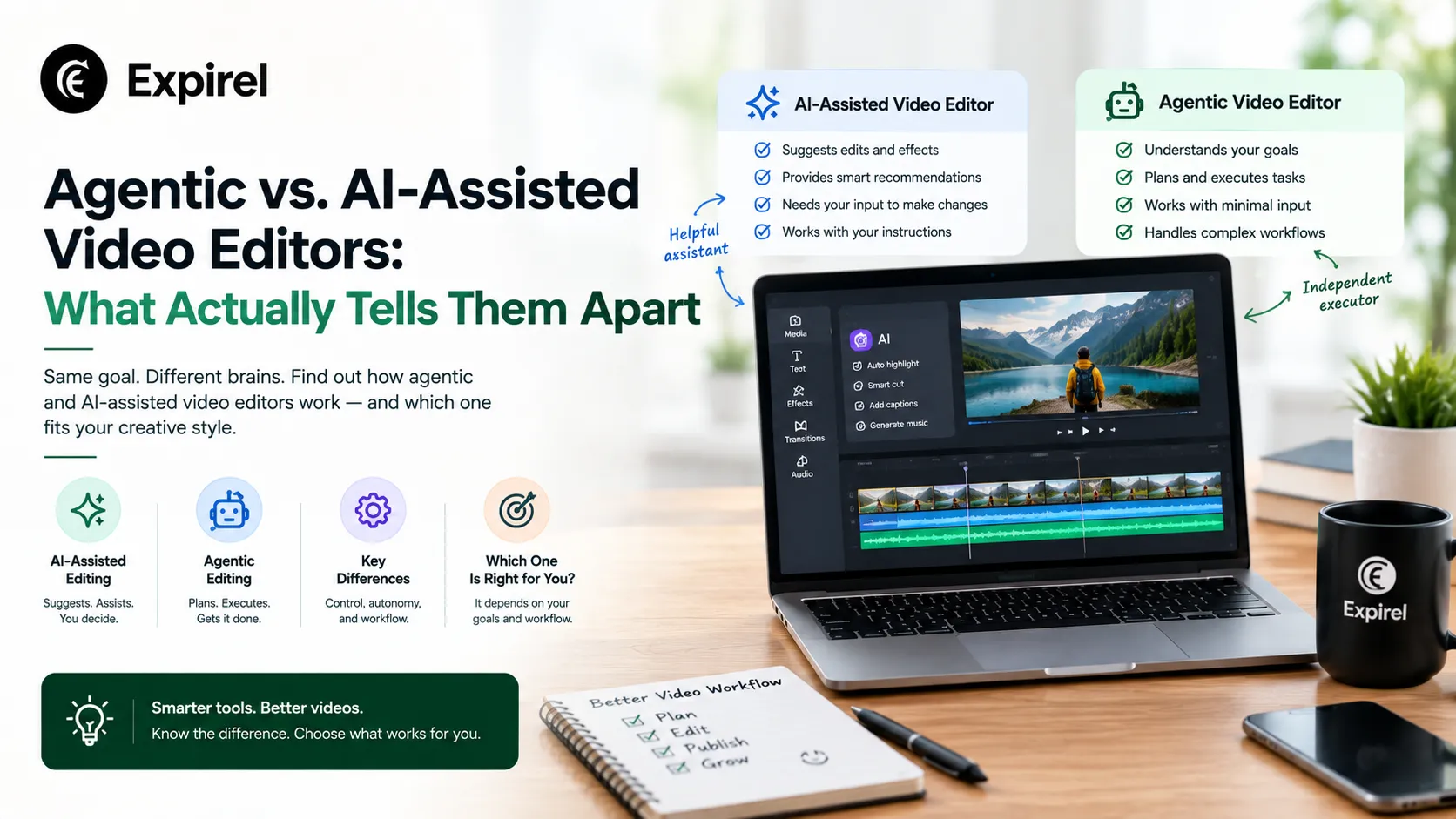
Agentic vs. AI-Assisted Video Editors: What Actually Tells Them Apart
September 14, 2026
Every editor claims "AI features" now. Here's the one test that actually tells an agentic editor apart from an AI-assisted one.
Best Productivity Chrome Extensions in 2026: The Only List That Tells You How to Actually Use Them
September 8, 2026
13 Best productivity Chrome extensions in 2026 with setup tips, privacy ratings, Cold Turkey vs StayFocusd, Google extensions, and persona-based picks.