Top 7 AI Visibility Platforms for Ecommerce That Do More Than Track Mentions
Compare 7 AI visibility platforms for ecommerce, then fix stock and expiry data so your products stay accurate, trusted and easy for AI to recommend.
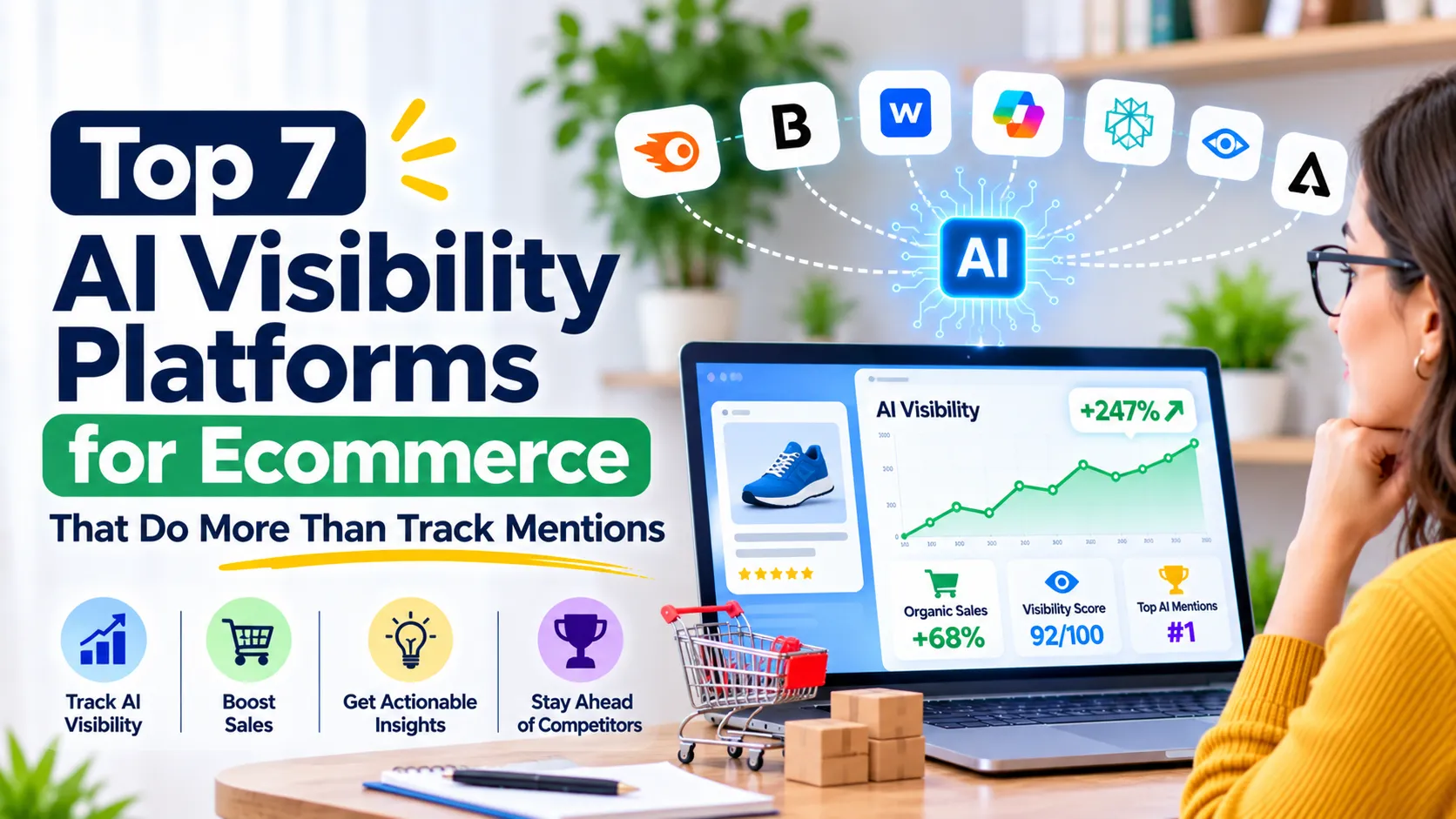
Buyers or Customers now ask ChatGPT, Gemini, Claude and Perplexity what to buy. If your brand shows up in one answer last week, that is luck, not a plan. A real plan starts with an AI visibility platform for ecommerce that shows where your products appear, why a rival ranks above you, and what to fix next.
This guide is written for sellers who handle dated stock, such as food, supplements, skincare and pet care. For these stores, visibility isn't just about content. Fresh stock, accurate shelf-life details, and honest reviews shape what AI engines say about you. So this guide compares seven tools, shows how to test them fairly, and then covers the stock and expiry side that most AI visibility advice skips.
Which Tool Fits Which Team?
Large commerce brands that want tracking plus action: Yotpo Discover. Yotpo says its first release targets brands with $10M or more in annual GMV.
Small teams that only need visibility numbers: a lightweight tracker such as Peec AI.
Teams that already live in an SEO suite: the AI tools inside Semrush or Ahrefs.
Brands worried about how AI agents read their site: Scrunch AI.
Stores that want an AI helper on their own site: Alhena AI. This solves a different problem, so treat it as a companion, not a tracker.
Brands that want deep answer monitoring: Profound.
Whichever tool you choose, pair it with a clean stock and expiry routine. A tracker shows you the gaps. It cannot fix a shelf of near expiry products.
What Is AI Visibility for Ecommerce?
AI visibility measures how often, and how well, AI engines mention and recommend your products when shoppers ask buying questions. Think of questions like “best vitamin C serum for sensitive skin” or “which protein bar has the least sugar.”
It differs from classic SEO in one way that matters: a search page shows ten links, but an AI answer often names two or three brands. Being fourth means being invisible.
It also overlaps with SEO more than most vendors admit. Google’s own guidance says standard SEO best practices still apply to AI features in Search, and that creating unique, useful content matters most in the long run. Google also explains how AI features use your pages, including the need for crawlable content and a good page experience. So fix your SEO base first, then add AI visibility tracking on top.
Why Tracking Mentions Alone Falls Short
A mention counter answers one question: where do we stand today? It cannot tell you why a competitor wins, what to publish next, or which sources the engines trust.
Teams then copy answers into a spreadsheet and guess. This breaks down fast in ecommerce because:
You sell hundreds of products across categories, not one brand name.
Shoppers ask different questions at the awareness, comparison and purchase stages.
Your real AI competitors are often brands you never tracked before.
AI answers change from run to run, so one screenshot proves nothing.
How to Judge a Platform Before You Buy
Use this scorecard. Give each line a score from 1 to 5 and total it.
Engine coverage: Does it cover ChatGPT, Gemini, Claude, Perplexity and Google AI Mode?
Commerce depth: Can you track by product, category, region and funnel stage?
Prompt quality: Does it use real shopper wording, or generic keywords?
Competitor view: Does it show who actually appears, including surprise brands?
Action layer: Does it help fix site issues, create content and build outside signals?
Authenticity: Does it rely on real reviews and community voices, or synthetic filler?
Measurement method: How does it score answers, and how often does it refresh?
Team fit: Does it support multiple clients, roles and shared workspaces?
Cost and eligibility: What are the minimums, contract terms and plan limits?
The 7 AI Visibility Platforms for Ecommerce
Features and prices change quickly in this market. Confirm every detail on the vendor’s site before you decide.
1. Yotpo Discover
Best for: commerce brands that want tracking linked to reviews, loyalty data and action.
Yotpo is a reviews and loyalty company that says more than 35,000 commerce brands use its tools. Its newer product, Discover, is an ai visibility platform for ecommerce that tracks where products appear in AI answers and then uses agents to act on the findings.
What Yotpo says Discover does:
Tracking: Ranks your products by product, category and region, and shows which rivals appear ahead of you.
Funnel view: Splits visibility by AI engine and buying stage.
Shopper language: Builds prompts from real reviews, questions and shopper behaviour.
True AEO competitors: Surfaces brands that win AI answers even if they are not on your usual competitor list.
Onsite Agent: Checks technical and structural issues that affect AI visibility.
Content Agent: Produces SEO ready content and publisher briefs using shopper voices.
Activation Agent: Engages real reviewers and loyalty communities on places AI engines trust, such as Reddit, retail marketplaces and expert publisher sites.
Claude connection: A Discover MCP lets you pull insights and run recurring workflows from Claude.
Yotpo also publishes customer results: Aetrex reports 62% more number one product placements in AI answers, and Pair Eyewear reports 33% more awareness stage visibility. Across customers, Yotpo cites 16% more number one placements and 20% more awareness stage visibility. These are the vendor’s own figures, so ask for the method and time frame during a demo.
Limits to know: Yotpo’s FAQ says the first release suits brands with $10M or more in annual GMV, with a waitlist for smaller brands. Access is through a demo, and pricing is not listed on the product page.
2. Profound
Best for: brands that want specialist monitoring of AI answers.
Profound focuses on tracking how brands appear across AI search engines. Before you commit, test three things: how deep its product level tracking goes, whether it offers execution tools, and what those tools cost.
3. Peec AI
Best for: small teams that want simple, focused tracking.
Peec AI tracks brand presence, sources and competitors in AI answers. Check which engines it covers, how easily you can edit prompts, and whether it offers anything beyond reports.
4. Semrush AI Visibility Toolkit
Best for: teams that already use Semrush.
This adds AI tracking to a familiar SEO platform, so you manage search and AI data in one place. Check how commerce-specific the reports are and how practical the recommendations feel.
5. Ahrefs Brand Radar
Best for: SEO teams that already use Ahrefs.
Brand Radar helps you follow brand mentions in AI results next to your search data. Test it on a large catalogue, and check how well it supports action, not just observation.
6. Scrunch AI
Best for: brands that care about how AI agents read their website.
Scrunch AI centres on how AI systems see and present your site content. Check its current features, pricing and fit for product catalogues.
7. Alhena AI
Best for: brands that want AI shopping help on their own store.
Alhena AI works on conversational shopping. Confirm whether you need outside visibility tracking or an on-site assistant, because those are two separate jobs.
Side by Side
Platform | Main strength | Commerce depth | Takes action | Watch out for |
Yotpo Discover | Tracking plus agents on reviews and loyalty data | High | Yes | $10M GMV target, demo based pricing |
Profound | Specialist answer monitoring | Verify | Verify | Cost and execution tools |
Peec AI | Simple, focused tracking | Verify | Limited | Depth for large catalogues |
Semrush toolkit | Fits an existing SEO stack | Verify | Some | Commerce-specific detail |
Ahrefs Brand Radar | Brand mentions beside SEO data | Verify | Limited | Product level depth |
Scrunch AI | How agents read your site | Verify | Some | Ecommerce fit |
Alhena AI | Onsite shopping assistant | Onsite only | Onsite | Not an outside tracker |
“Verify” means we did not find enough public detail to rate it, so test it in your trial.
Why Stock Freshness Shapes AI Visibility
Most AI visibility guides focus on content and links. If you sell dated goods, the state of your stock matters just as much. Here is why.
Reviews are public text. A customer who receives a short dated or stale product writes about it. Engines that summarize reviews can pick up those comments and repeat them to the next shopper.
Listings must match reality. If your page promises a shelf life you cannot meet, returns and complaints follow.
Availability errors cost trust. Selling a product that is out of stock, or already near its date, wastes the visibility you worked to earn.
Waste drains your budget. Stock that expires unseen cuts your margin, which leaves less money for tools, content and reviews.
None of this is a ranking trick. It is basic quality control, and it protects the signals that AI engines read.
Build an Expiry Aware Workflow With Expirel
This is where a stock tool earns its place next to your AI visibility platform. Expirel tracks expiry dates and sends reminders, so your team sells the right stock at the right time. Expirel Business supports unlimited products and shared access for up to 10 team members. Here is a simple routine:
Log stock on arrival. Use the barcode scanner to add items fast. For products with no usable barcode, Expirel’s AI Photo Scan reads the name, brand and expiry date from the label.
Set alert windows. Choose reminders at 30, 7 and 3 days before expiry. Multi channel alerts reach your team by email or WhatsApp.
Sell the oldest stock first. Sort by nearest expiry, then bundle, discount or ship those units before newer batches.
Keep listings honest. Update shelf life and batch details on your product pages when stock changes.
Review waste each month. Use advanced analytics to see what expired and why, then change your reorder size.
Ask for fresh reviews. When stock is fresh and shipping is fast, request reviews from recent buyers. These are the reviews that help AI engines trust you.
Expirel does not change how AI engines rank you, and it does not connect to your store platform. It keeps the operations behind your listings clean, so the reviews and product data that engines read stay accurate.
Example Scenario: A Snack and Supplement Store
This is a made up example to show the method, not a real case study.
A store sells 60 snacks and supplements. It asks ChatGPT and Gemini 25 shopper questions, such as “best low sugar protein bar for travel.” Two marketplace brands appear in most answers, while its own bestseller appears in only three.
The team checks the bestseller page. The title is vague, the ingredient list sits inside an image, and two recent reviews mention a short expiry date on arrival. The team fixes the page, adds a plain text FAQ, and starts logging every batch with its expiry date. It sells oldest stock first, then asks recent buyers for reviews. Every two weeks, it reruns the same 25 questions and records the result.
The lesson: the early gains came from page fixes and fresher stock, not from a clever trick. A paid platform finds these gaps faster, but it cannot replace the fixes.
A 6 Step Workflow You Can Run With Any Tool
The dashboard matters less than the routine. Follow these steps and repeat them every month. The goal is simple: to get recommended by AI engines because real shoppers and real sources back you up.
Baseline. Record where your top products appear across engines and buying stages.
Find gaps. List the questions where rivals appear and you do not, especially surprise rivals.
Fix the site. Improve product pages, structured data and crawl access so machines can read them.
Create useful content. Answer the exact questions shoppers ask, using wording from reviews and support tickets.
Build trust outside your site. Earn real reviews, community discussion and publisher coverage. Do not fake them.
Measure again. Wait a few weeks and rerun the same questions, since answers vary between runs.
Google warns against chasing inauthentic mentions, and the same logic holds for every engine: real signals last, fake ones get filtered out.
How to Run a Fair 4 Week Vendor Test
Write 20 to 30 shopper questions across awareness, comparison and purchase stages.
Run them yourself on the main engines and note which brands appear.
Give every vendor the same question list for two to four weeks.
Compare results for consistency, detail and usefulness.
When a tool finds a gap, ask what it does about it and who does the work.
Request a written quote with limits, minimum terms and add-on fees.
Never judge a tool on one result, because AI answers change.
Sample prompts by stage:
Awareness: “What should I look for in a protein bar for travel?”
Comparison: “Compare the top three low sugar protein bars.”
Purchase: “Where can I buy fresh low sugar protein bars with fast shipping?”
Mistakes Teams Make
Buying before fixing basics. A tool will only show you the same broken pages.
Tracking brand terms only. Shoppers rarely type your brand name.
Trusting one run. Test several times before you conclude.
Ignoring stock dates. Short dated deliveries create the exact reviews you do not want engines to repeat.
Publishing generic AI content. Thin text adds noise, not trust.
Skipping the owner. If nobody owns the weekly review, the dashboard goes unused.
Make It a Weekly Habit
AI visibility improves through small, steady work. Block 30 minutes each week to rerun your top five questions, check your nearest expiry dates, log changes, and pick one fix. A simple weekly habit tracker keeps that routine honest and shows your streak over time.
Final Verdict
If you want more than a mention counter, Yotpo Discover is a strong option for larger commerce brands, because it links tracking to site fixes, content and real shopper signals. Smaller brands should compare quotes, and lighter trackers or SEO suites may fit tighter budgets.
Whichever you pick, shortlist an option that shows real competitors, covers the engines your shoppers use, and helps you earn signals that anyone can verify. Then protect those signals at the source: keep stock fresh, keep listings honest, and review both every week.
Frequently Asked Questions
Q: What is an AI visibility platform for ecommerce?
It is software that tracks how AI engines mention and rank your products when shoppers ask buying questions. The best ones also help you fix site issues, create content and earn trusted signals.
Q: Do I still need SEO if I use one?
Yes. Google says standard SEO practices still apply to its AI features, and Yotpo’s own FAQ says its product works best alongside SEO tools. Treat them as partners.
Q: How does expiry date management connect to AI visibility?
Fresh stock leads to better reviews, fewer returns and accurate listings. Those are the signals AI engines can read. Tracking expiry dates is a quality control step, not a ranking trick.
Q: How long until I see results?
Plan on several weeks of repeated testing. AI answers vary, so look at trends, not single runs.
Q: Can a small store afford this?
Some tools suit smaller budgets, and some premium platforms set revenue minimums. Start with free manual testing using your own question list, then add a paid tool when you can act on what it shows.
Q: What should I track for products with expiry dates?
Track batch and expiry dates on arrival, the days left on each batch, how much stock expires unsold, and any review that mentions freshness. Expirel can handle the first three.
Q: What should I measure in AI answers?
Track your presence by product and stage, your position versus rivals, which sources engines cite, and how those numbers move over time.