How to Track Habits: A Complete System for Building Habits That Actually Stick
Tired of abandoned habit trackers? Get a step-by-step system for daily, weekly, and long-term habits, plus a free 30-day checklist you can start today.
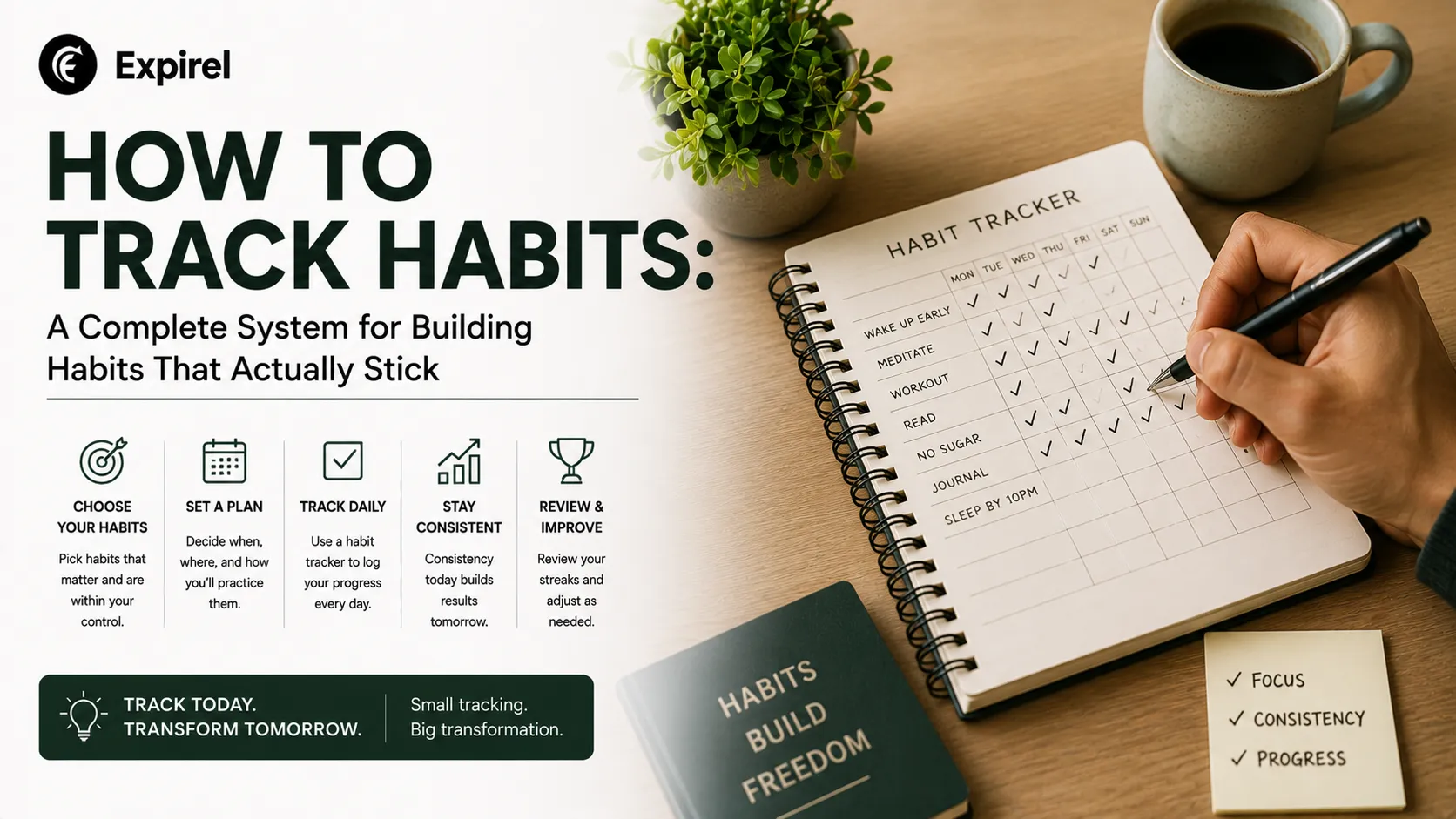
Most people who search for how to track habits have already tried a tracker once. They downloaded an app, filled a spreadsheet, or bought a paper planner with a thirty day grid. Two weeks later, the grid sat half empty and the app stopped opening. This is rarely a willpower problem. It is a tracking problem. The method did not match how habits actually form. This guide walks through how to track daily habits in a way that survives busy weeks, missed days, and the natural dip in motivation that hits almost everyone around day ten. You will get a complete framework: what to track, when to log it, how often to review it, and which tools remove friction instead of adding it. Along the way, I will point out the mistakes that quietly kill most tracking attempts, and the small wins that keep people going long after the initial motivation fades.
Track the process, not the outcome, log it within the same hour it happens, use one reminder channel, and review weekly instead of daily. This one shift fixes most failed tracking attempts, whether you use paper, a spreadsheet, or an app like Expirel.
This guide is written for anyone starting or restarting a habit tracking system: beginners setting up their first tracker, and people who have already tried and quit at least once. It covers daily, weekly, monthly, and long term habits, so it applies whether you are tracking a morning routine, a fitness goal, or a savings target.
Why Most Habit Tracking Attempts Fail
Before looking at how to track habits correctly, it helps to see why the common approach breaks down. It usually comes down to one of these patterns.
Tracking too many habits at once. Someone starts with eight habits in a notebook, keeps up for a perfect first week, then quietly stops updating it by week three because logging feels like a chore instead of a check-in.
Tracking only streaks. A single missed day feels like the whole system collapsed, so the person abandons tracking entirely instead of just marking one gap and continuing.
Tracking without a clear reason. The habit is logged, but nobody asked why it matters, so the data never turns into a decision.
Using a tool that adds friction. Opening a spreadsheet, finding the right row, and typing a value takes longer than the habit itself. People stop doing the tracking, not the habit.
None of these is personal failures. They are design failures in the system the person chose. Fix the system and the tracking holds.
What Habit Tracking Actually Means
Checking a box is not tracking. Real habit tracking is a feedback loop with three parts: the action, the record, and the review. Skip any one of the three and the system falls apart.
The action is the habit itself: walking, reading, drinking water, saving money.
The record is a timestamped, low-effort log of whether and how the action happened.
The review is a short, regular look at the pattern, not the single day, that tells you whether to keep, adjust, or drop the habit.
It also helps to separate two habit types early, because they need different tracking rules.
Outcome habits describe a result, for example losing five kilograms or saving a fixed amount each month.
Process habits describe the repeated action that leads to the result, for example a thirty minute walk or moving a set amount into savings each week.
Track the process daily. Track the outcome weekly or monthly. Mixing the two into one daily checkbox is one of the quiet reasons trackers get confusing and get abandoned.
This is also why a single missed day should never end your tracking. A widely cited 2009 University College London study followed people building a new daily habit and found it took an average of 66 days for the behaviour to feel automatic, with individual results ranging from about 18 to 254 days depending on the habit and the person (Lally et al., European Journal of Social Psychology, via PsyBlog). The same research found that missing a single day did not meaningfully change how long the habit took to stick. Consistency over weeks mattered far more than a perfect streak.
The Core Framework for How to Track Daily Habits That Stick
This is the same five step structure I use across habit tracking tools and content, and it works whether you use paper, a spreadsheet, or an app.
Step 1: Separate the habit from the goal
Write the goal in one line, then write the daily action separately. "Get fit" is a goal. "Fifteen minute walk after lunch" is the habit you actually track. Trackers that log goals instead of actions give you guilt without direction.
Step 2: Pick a tracking frequency that matches the habit
Daily habits: brushing teeth twice, drinking water, a short workout. Log every day, review every week.
Weekly habits: meal prepping, calling family, a long run. Log once per week, review once per month.
Monthly habits: budget review, deep cleaning, a subscription audit. Log once per month, review once per quarter.
Long term habits: a reading goal for the year, a savings target, a fitness milestone. Log progress monthly, review at set checkpoints.
A habit tracked at the wrong frequency feels either pointless (checking a monthly habit every day) or overwhelming (checking a daily habit once a week). Matching frequency to habit type is the single biggest fix for tracker fatigue.
Step 3: Log the action within the same hour it happens
Memory is unreliable past a few hours. If you plan to log habits at the end of the day, you will guess, and guessed data is not data. Log immediately after the action, even if it is a single tap on your phone.
Step 4: Use one visible reminder, not five
Multiple reminder channels compete with each other and get ignored. Pick one channel that you actually check, an email at a fixed time, a WhatsApp message, or a phone notification, and let that be the trigger every single day. Consistency in the reminder builds consistency in the habit.
Step 5: Review every Sunday, not every night
Reviewing daily data every night invites overreaction to a single bad day. A short weekly review, ten minutes on a Sunday, shows the real pattern: which habits are steady, which are slipping, and which need a smaller, easier version instead of being dropped completely.
Best Ways to Track Daily Habits: Comparing the Methods
There is no single best way to track daily habits for everyone. The right method depends on how many habits you track and how much friction you can tolerate before you quit.
Paper journal or planner
Good for a small number of habits and people who think better with a pen. No reminders, easy to forget, and reviewing patterns across months means flipping back through pages by hand.
Spreadsheet
Flexible and free, good for people who like custom formulas and charts. The setup cost is high, and most people abandon the sheet within a month because updating a cell every day feels like admin work rather than progress.
Basic checkbox app
Faster than paper or spreadsheets, but many of these apps stop at a streak counter. They tell you what happened without helping you notice why a habit is slipping, and most send no reminders at all.
A habit tracker with built in reminders
This closes the two biggest gaps above: the reminder problem and the review problem. A tool that sends an email or WhatsApp nudge at your chosen time removes the need to remember on your own, and a tool that groups habits by daily, weekly, monthly, and long term cadence keeps the log matched to Step 2 of the framework above.
If you are choosing between these, match the tool to your habit count. One or two habits, paper is fine. Five or more habits across different frequencies, a dedicated tracker with reminders will keep you consistent longer than a notebook or a spreadsheet ever will.
This matches broader research on habit formation as well. Coverage of the same University College London findings notes that habits people chose themselves, genuinely enjoyed, and repeated at a consistent time of day tended to form faster than habits picked mainly out of obligation (Reclaim.ai, habit formation research summary). In other words, the tracking method matters, but choosing habits you actually want matters just as much.
Tracking Personal Victories: The Metric Most Trackers Ignore
Streaks get all the attention, but a broken streak is what makes most people quit. A more durable way to stay motivated is tracking personal victories, the small wins that have nothing to do with an unbroken chain of checkmarks.
The first week you did not skip a habit even once, even if last month was messy.
The first time a habit felt automatic instead of forced, for example reaching for water without thinking about it.
A personal best, ten thousand steps for the first time, or a savings goal hit a month early.
Coming back after a gap of several missed days instead of quitting for good.
These moments matter because they build identity, not just data. Someone who notices "I am becoming a person who shows up" sticks with habits far longer than someone chasing a number on a screen.
This is exactly why tracking personal victories in a free habit app matters more than most people realize. Expirel, a free habit tracker with email and WhatsApp reminders, is built around this idea directly. Instead of only showing a streak count, it lets you log daily, weekly, monthly, and long term habits and see the small wins along the way, so a missed day does not erase months of real progress. Paid plans add extra tracking depth for people managing a larger set of habits, but the core tracking and reminder system is free to use from day one.
Common Mistakes People Make When Tracking Habits
After watching how people actually use habit trackers over time, the same mistakes show up again and again.
Starting with too many habits in the first week. Two or three is enough until tracking itself becomes a habit.
Treating a missed day as a failure instead of a data point. One gap is information, not a reason to quit.
Logging habits from memory at the end of the day, which quietly turns the data into guesswork.
Ignoring the weekly review, so the tracker collects data nobody ever looks at.
Choosing a tool with no reminders and expecting willpower alone to carry the habit.
Tracking the outcome instead of the process, which makes daily logging feel pointless on days when the outcome has not moved yet.
Switching tools every few weeks looking for a perfect system, which resets the habit of tracking itself each time.
A Practical System for Daily, Weekly, Monthly, and Long Term Habits
Once the framework above feels familiar, apply it across every time horizon you care about.
Daily habits
Log the same evening or immediately after the action. Keep the list short, three to five habits at most, so logging takes under a minute.
Weekly habits
Pick a fixed day, for example every Friday, to log and confirm the habit happened. Pair it with a reminder on that same day so it never quietly slips to "next week."
Monthly habits
Set a recurring reminder near the start or end of the month, whichever fits the habit, and log progress against the goal rather than just marking it complete.
Long term habits
Break the yearly or multi month goal into checkpoints, for example every thirty days, and log progress at each checkpoint rather than waiting for the final result to judge whether it is working.
Tools and Workflows That Remove Friction From Habit Tracking
The best tracking system is the one that survives a busy week. A few workflow choices make that far more likely.
Choose a tool that supports daily, weekly, monthly, and long term habits in one place instead of juggling separate lists for each.
Set reminders through a channel you already check daily, email or WhatsApp tends to work better than an app notification that gets swiped away.
Keep a single home for all habits. Splitting tracking across a notebook, a phone app, and a spreadsheet guarantees some habits get forgotten.
Review weekly on a fixed day and time, treating it as a short appointment with yourself rather than something you get to eventually.
Expirel was built around exactly this workflow: a free habit tracker with email and WhatsApp reminders that supports daily, weekly, monthly, and long-term habits in a single dashboard, so the tracking method matches the framework rather than fighting against it.
A 30 Day Habit Tracking Checklist You Can Copy
Use this checklist to set up a tracking system with a real chance of lasting beyond the first two weeks.
Pick two or three habits to track first. Add more only after thirty days of consistent logging.
Write down the process habit, not the outcome goal, for each one.
Assign each habit a frequency: daily, weekly, monthly, or long term.
Choose one reminder channel and set it at a specific time each day.
Log every action within the same hour it happens, not at the end of the day.
Set a fixed weekly review slot, ten to fifteen minutes, same day and time every week.
During each review, note one personal victory, not just the streak count.
If a habit is missed three or more times in a week, shrink it to an easier version instead of dropping it.
At the thirty day mark, review the full month and decide which habits to keep, adjust, or retire.
Add one new habit only after the current set feels automatic, not effortful.
Conclusion
Learning how to track habits is less about finding the perfect app and more about matching the tracking method to how the habit actually works: the right frequency, an immediate log, one reliable reminder, and a short weekly review. Do that consistently and the streaks take care of themselves.
If you want a starting point that already has this framework built in, Expirel offers free habit tracking with email and WhatsApp reminders across daily, weekly, monthly, and long-term habits, with paid plans available for people managing a larger set of goals.
Frequently Asked Questions
Q: What is the best way to track daily habits?
The best way to track daily habits is the one you will actually use every day without extra effort. For most people that means logging the action within the same hour it happens, using one reminder channel, and reviewing progress weekly instead of daily. A tracker with built in reminders tends to outperform paper or spreadsheets simply because it removes the need to remember on your own.
Q: How many habits should I track at once?
Start with two or three. Trying to track eight or more habits from day one is one of the most common reasons people quit tracking within a month. Add new habits only once the current ones feel automatic.
Q: Should I track habits on paper or in an app?
Paper works fine for one or two habits and people who prefer writing by hand. An app becomes more useful once you are tracking several habits at different frequencies, especially if it sends reminders and lets you review patterns over weeks and months rather than flipping through pages.
Q: What should I do if I miss a day?
Log the miss and move on. A single missed day is information about your schedule or energy that week, not proof the habit has failed. The habits that survive long-term are the ones where missed days are logged honestly rather than hidden or used as a reason to quit.
Q: How long does it take before a habit becomes automatic?
There is no fixed number, but research points to an average of about 66 days, with a realistic range of roughly 18 to 254 days depending on the habit and the person, as noted in the University College London study cited above. Tracking personal victories along the way, not just counting days, is a more reliable signal that a habit is becoming automatic than watching a calendar.

Fahad Ahmad
Founder of EXPIREL · Digital Entrepreneur · Product Management Specialist
Fahad Ahmad is the founder of EXPIREL and a digital entrepreneur with over 10 years of experience in SaaS development, SEO, and digital product creation. He focuses on building practical solutions that help individuals and businesses manage product expiration dates, organize inventory, track habits, and improve daily productivity.
Through EXPIREL, Fahad shares actionable guides, product management tips, barcode scanning tutorials, and research-backed insights designed to help users reduce waste, stay organized, and make smarter decisions.
Related Articles
View all
Personal Growth Habits: The Honest Guide to Building a Life That Actually Improves
July 2, 2026
Discover 25 powerful personal growth habits that improve mindset, discipline, relationships, and purpose. Build a better life one day at a time.

Habits for Productivity: The Ones That Actually Compound, by Life Stage and Style
July 31, 2026
Most habit lists ignore fit. See daily, micro, morning, and Japanese habits for productivity, matched to your actual energy and life stage.
Best Online Habit Tracker for Germany: Build Routines That Actually Stick
June 12, 2026
Best habit tracker in Germany? Expirel lets you track daily habits, build streaks, and get WhatsApp & email reminders, no app download, works on any device.