Expiration Date vs Expiry Date: What's the Difference?
Learn what expiration date and expiry date mean, differ by region (US vs UK), and how to track them with smart reminders so you waste less and save money.
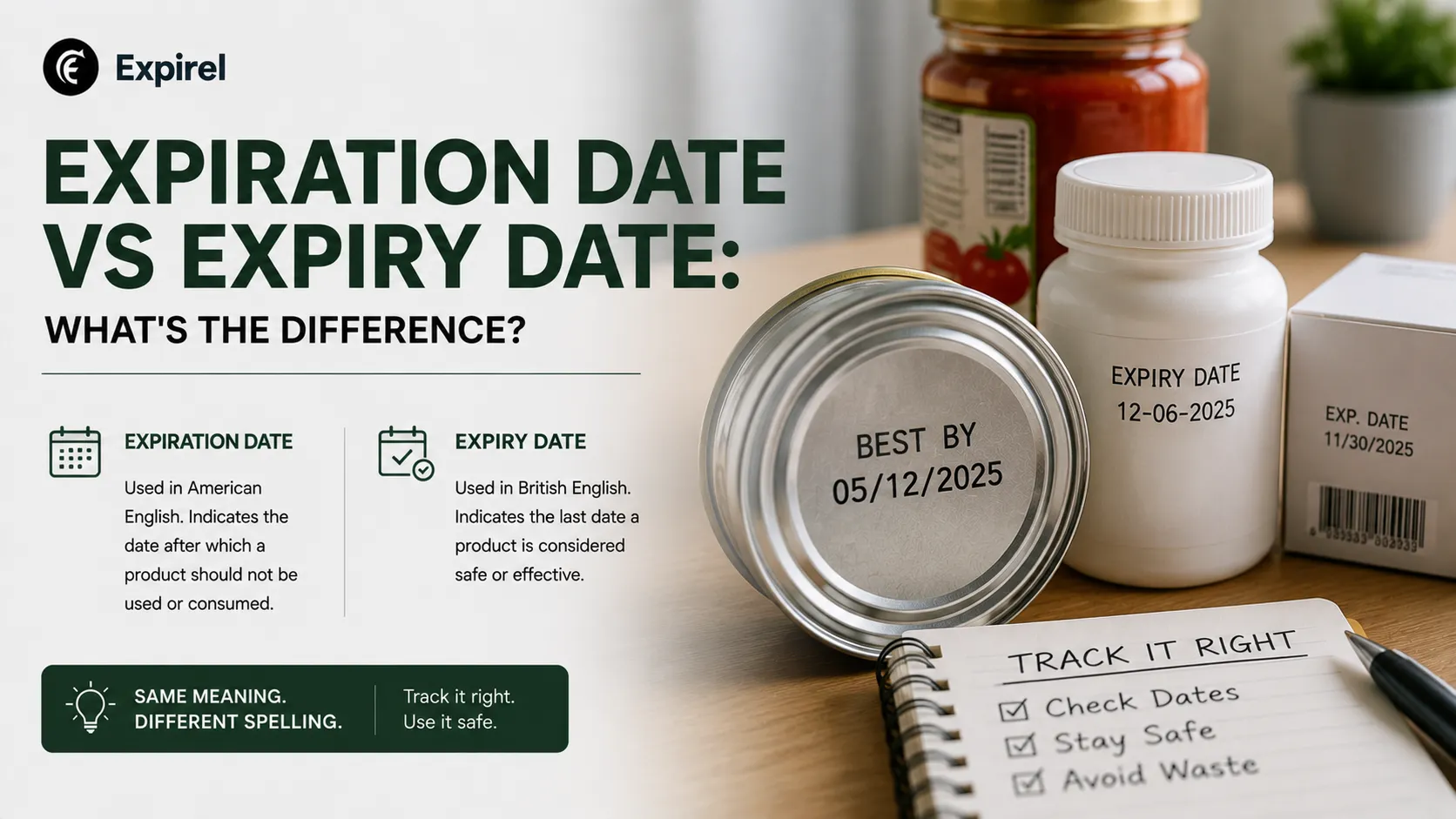
An expiration date (US) and an expiry date (UK) mean the same thing: the last date a product's safety or quality is guaranteed. This guide explains the difference between expiration date, expiry date, best before, use by, and sell by labels, and gives you a step-by-step system to track them so you stop wasting food, medicine, and missed renewals.
This guide is for US and UK households managing food, medicine, cosmetics, and important documents like passports and subscriptions, and anyone who wants a system to stop items expiring unnoticed.
What Is an Expiration Date?
An expiration date is the date a manufacturer sets as the point after which a product should no longer be used, sold, or relied on. It is the term most commonly used in the United States, and it appears in several contexts, not just food.
Food and drinks, such as a milk carton or a bottle of salad dressing.
Medicine, such as a prescription bottle or an over-the-counter pain reliever.
Documents and cards, such as a passport, a driver's license, or a credit card.
Cosmetics, subscriptions, and warranties, where the date marks when a benefit or guarantee ends.
What happens after an expiration date depends on what it is attached to. A credit card simply stops working. A passport becomes invalid for travel. Food and medicine are more nuanced: many packaged foods stay safe past the printed date if they show no signs of spoilage, while medicine may lose potency gradually rather than becoming dangerous overnight. This is general guidance, not medical or legal advice. When in doubt, check the product label or ask a pharmacist.
What Is an Expiry Date?
An expiry date means the same thing as an expiration date. It is simply the more common term in British English, and it is what you will see on packaging in the UK, Ireland, Canada, Australia, India, and most other Commonwealth countries.
UK food labels typically pair an expiry-style date with the words best before or use by rather than the word expiry itself.
UK medicine packs almost always print EXP followed by a month and year.
Passports, driving licences, and visas across the UK and Commonwealth countries use expiry date as the standard label.
Contracts, insurance policies, and subscriptions in the UK often use expiry date to mark renewal deadlines.
In both regions, the underlying idea is identical: the date marks when the manufacturer or issuer stops guaranteeing the product's quality, safety, or validity under the stated storage conditions.
Expiration Date vs Expiry Date: Key Differences
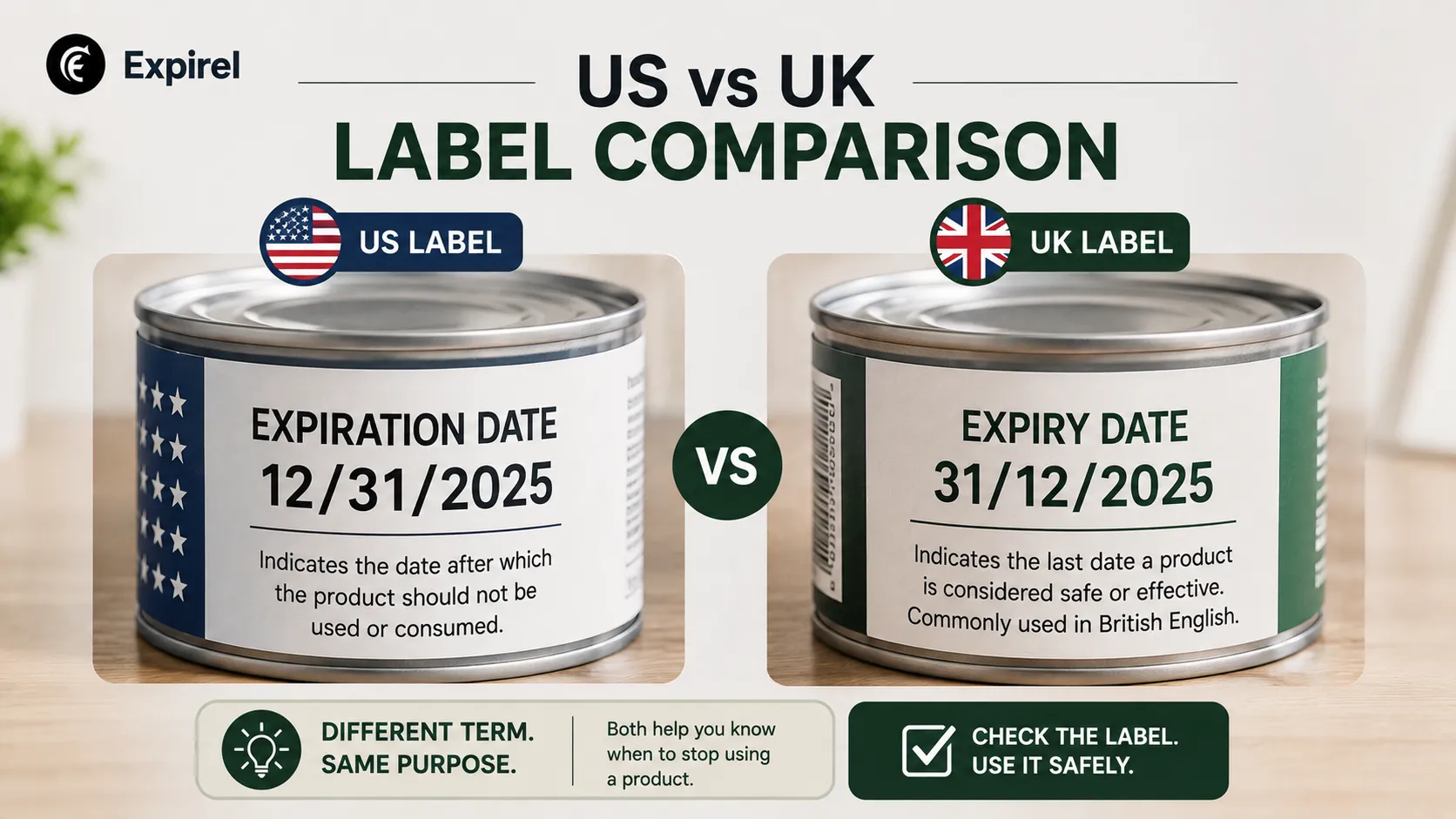
For almost every consumer product, expiration date and expiry date are not two different things. They are the same concept, described in two dialects of English. The real difference is regional word choice, not a separate legal category.
Term | Common Region | Typical Label Examples |
Expiration date | United States | Milk cartons, medicine bottles, passports, credit cards |
Expiry date | United Kingdom, Canada, Australia, India, and most Commonwealth countries | Food packaging, medicine packs, passports, driving licences |
There are a few edge cases where one term is preferred for reasons beyond geography. Pharmaceutical companies operating globally often print expiry date on packaging even for the US market, since many manufacture centrally and localize labels only where required. Government-issued documents almost always match the issuing country's standard English, so a US passport says expiration date while a UK passport says expiry date, even though both mean the same thing to a border officer.
How These Differ From "Best Before," "Use By," and "Sell By"
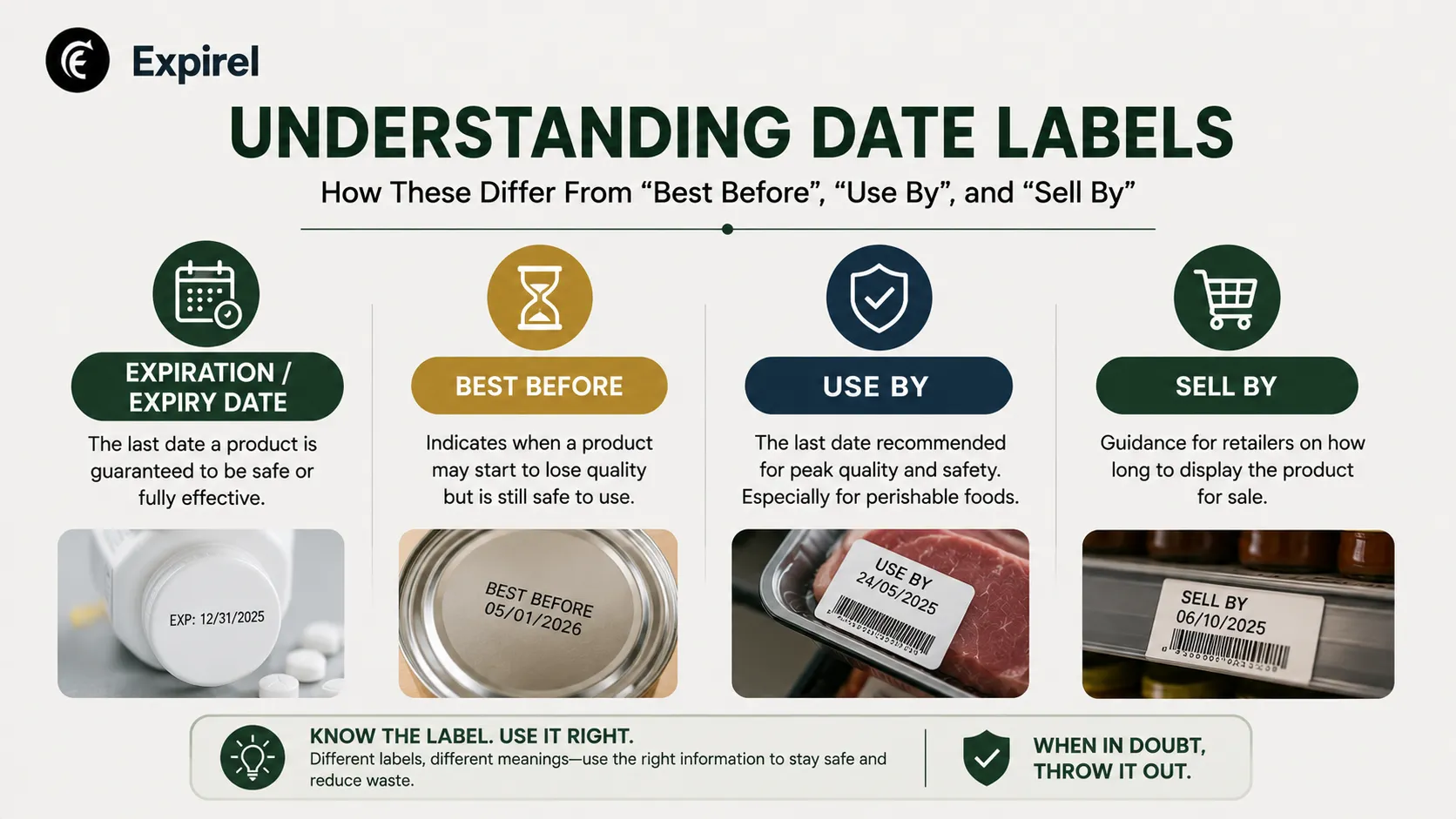
Expiration and expiry dates are general terms. Best before, use by, and sell by are specific label types that often appear instead of, or alongside, an expiration date, especially on food.
Best before
A best before date is about quality, not safety. After this date, a product like pasta, crackers, or canned goods may lose some flavor, texture, or nutritional value, but it is generally still safe if it shows no signs of spoilage.
Use by
A use by date is safety critical. It appears on perishable items such as fresh meat, dairy, and ready-to-eat salads. Once a use by date passes, the product should be discarded, since the risk of foodborne illness rises even if the item still looks and smells normal.
Sell by
A sell by date is an instruction for the retailer, not a direct safety signal for the shopper. It tells the store how long to display an item for sale. Many products remain safe to eat for some time after the sell by date, particularly if stored properly at home.
A simple decision rule helps here: if you see a use by date, treat it like a hard deadline. If you see a best before or sell by date, use your judgment, your senses, and proper storage as your guide instead of discarding automatically.
Why Expiration and Expiry Dates Matter for Money, Safety, and Waste
Ignoring expiration and expiry dates has three real costs, and most households underestimate all three until they add them up.
Wasted food and medicine. Items pushed to the back of a fridge or cabinet quietly cross their date and get thrown away unused, which is a direct financial loss.
Health and safety risk. Using certain medicines or perishable foods well past their date can reduce effectiveness or increase the risk of illness.
Missed renewals. A passport, visa, insurance policy, or software subscription that lapses unnoticed can cause a cancelled trip, a coverage gap, or an awkward auto-renewal charge.
Consider a household with a shared pantry, a medicine cabinet for three family members, and a folder of important documents. Without a system, dates get missed in all three places at once: forgotten spices, an unfinished course of antibiotics nobody tracked, and a child's passport that expired two months before a booked trip. Households that track dates systematically tend to see two clear results: less food thrown away each month, and fewer last-minute scrambles over medicine or documents. The value is not the tracking itself. It is catching the problem while there is still time to act.
How to Track Expiration and Expiry Dates Effectively
A reliable tracking system does not need to be complicated. It needs to run on a schedule instead of on memory.
Step 1: Audit what you already have
Go through your pantry, fridge, freezer, medicine cabinet, and a folder of important documents in one sitting. Note anything with a date already close, expired, or unreadable.
Step 2: Decide what to track
Not everything needs the same level of attention. A reasonable starting set of categories is food, medicine, cosmetics, documents, and subscriptions.
Step 3: Log each item properly
For every item worth tracking, record four things: the name, the category, the expiration or expiry date, and how much lead time you want before an alert, for example seven days before a medicine runs low on potency or thirty days before a passport expires.
Step 4: Set reminders on more than one channel
A single app notification is easy to miss during a busy week. Reminders sent by email and WhatsApp, in addition to an in-app alert, are far less likely to be missed entirely.
Step 5: Speed up logging with scanning tools
Typing every date by hand is where most tracking systems fall apart. An AI photo scan that reads dates directly off a receipt or label, or a barcode scanner that pulls up a product automatically at the grocery store or pharmacy, turns a two-minute task into a five-second one.
Step 6: Review on a set schedule
A weekly review for food and a monthly review for medicine, cosmetics, and documents keeps the list accurate. Remove expired items safely, and note any pattern, such as one ingredient that keeps going to waste before it gets used.
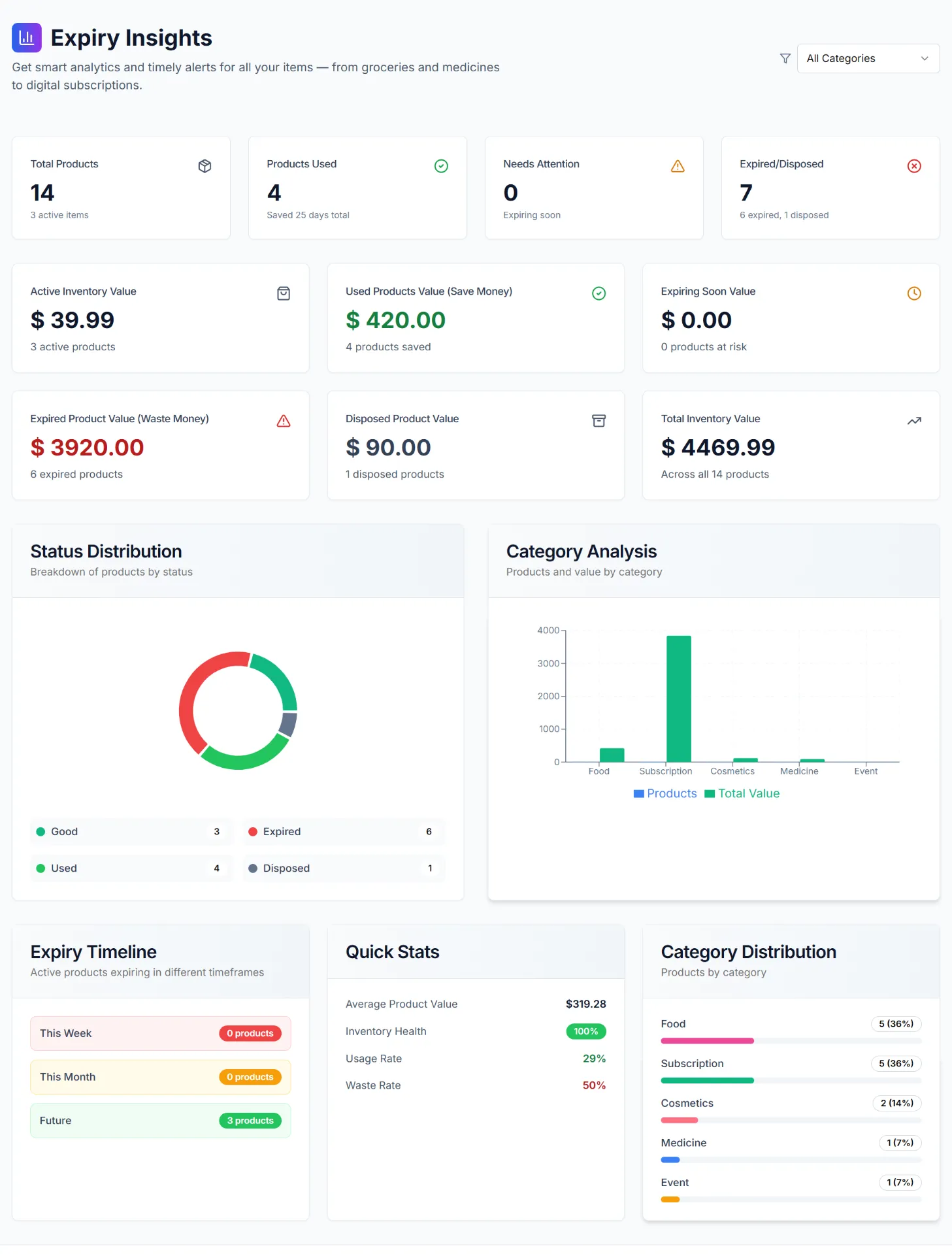
This is the workflow Expirel is built around. Log items with its AI Photo Scan or Barcode Scanner, then get Smart Reminders by email and WhatsApp before anything expires. Shared items, like a family medicine cabinet or joint pantry, run through Family Sharing, and the built-in Pantry & Medicine Tracker keeps food and medicine dates in one place instead of scattered notes. Analytics show money saved and waste reduced over time, so the benefit is a number you can see, not just a feeling.
Common Mistakes People Make With Expiration and Expiry Dates
Ignoring storage conditions. A best before date assumes correct storage. Tip: check storage instructions, not just the date, especially after opening.
Confusing best before with use by. Treating a quality date as a hard safety cutoff wastes food unnecessarily. Tip: match your response to the label type.
Not updating dates after opening. Many items have a shorter shelf life once opened. Tip: write the open date on the package or log it right away.
Forgetting shared household items. Shared items like a spice rack or medicine cabinet often have no single owner tracking them. Tip: use a shared system everyone can see.
Only tracking food, not medicine or documents. Passports and prescriptions expire too, often at a higher cost than wasted food. Tip: track all categories in one place.
Relying on memory instead of a schedule. Undated reminders get forgotten. Tip: set an alert lead time for every item so the system does the work.
Start Tracking Expiration and Expiry Dates Today
Expiration date and expiry date describe the same idea in two versions of English: the point after which a product's safety, quality, or validity is no longer guaranteed. Whether you call it an expiration date or an expiry date, the real risk is not the terminology. It is not having a system to track the date at all, which quietly leads to wasted food, wasted medicine, and missed renewals.
A simple habit fixes most of this: log the date once, set a reminder ahead of time, and review your list on a regular schedule. Expirel is built to make that easy, with an AI photo scan and barcode scanner for fast logging, smart reminders by email and WhatsApp, family sharing for shared household items, and analytics that show exactly how much money and waste you have saved over time.
Start tracking your expiration and expiry dates in 2 minutes and stop wasting money on forgotten items: Get started with Expirel.
Frequently Asked Questions
Q: Is it safe to use products after the expiration or expiry date?
It depends on the product. Many shelf-stable foods and some medicines remain usable for a period after the printed date if stored correctly and showing no signs of spoilage. Perishable foods with a use by date and certain medicines are riskier to use past the date. When in doubt, check the specific product guidance or ask a pharmacist rather than guessing.
Q: Do expiration dates mean the product is unsafe immediately after that date?
No, not automatically. Best before and sell by dates relate mainly to quality, not an immediate safety cutoff. Use by dates are the exception, set specifically around safety for perishable items.
Q: Which term should I use on my website or packaging: expiration or expiry?
Match your audience: expiration date for a US audience, expiry date for a UK, Canadian, Australian, or other Commonwealth audience. For a mixed audience, introduce both terms once, then use whichever fits the context.
Q: How can I get reminders before items expire?
The most reliable approach is a system that logs the date once and reminds you automatically through more than one channel, such as email and WhatsApp, ahead of the actual date. Expirel's Smart Reminders are built specifically for this, with an adjustable lead time for each item.
Q: What's the best way to track food and medicine expiry dates at home?
Start with a single system that covers both categories instead of separate lists. Log the name, category, and date for each item, set a reminder lead time, and review the list on a weekly or monthly schedule. Tools like an AI photo scan or barcode scanner make the logging step fast enough that the system is actually easy to stick with.

Fahad Ahmad
Founder of EXPIREL · Digital Entrepreneur · Product Management Specialist
Fahad Ahmad is the founder of EXPIREL and a digital entrepreneur with over 10 years of experience in SaaS development, SEO, and digital product creation. He focuses on building practical solutions that help individuals and businesses manage product expiration dates, organize inventory, track habits, and improve daily productivity.
Through EXPIREL, Fahad shares actionable guides, product management tips, barcode scanning tutorials, and research-backed insights designed to help users reduce waste, stay organized, and make smarter decisions.
Related Articles
View all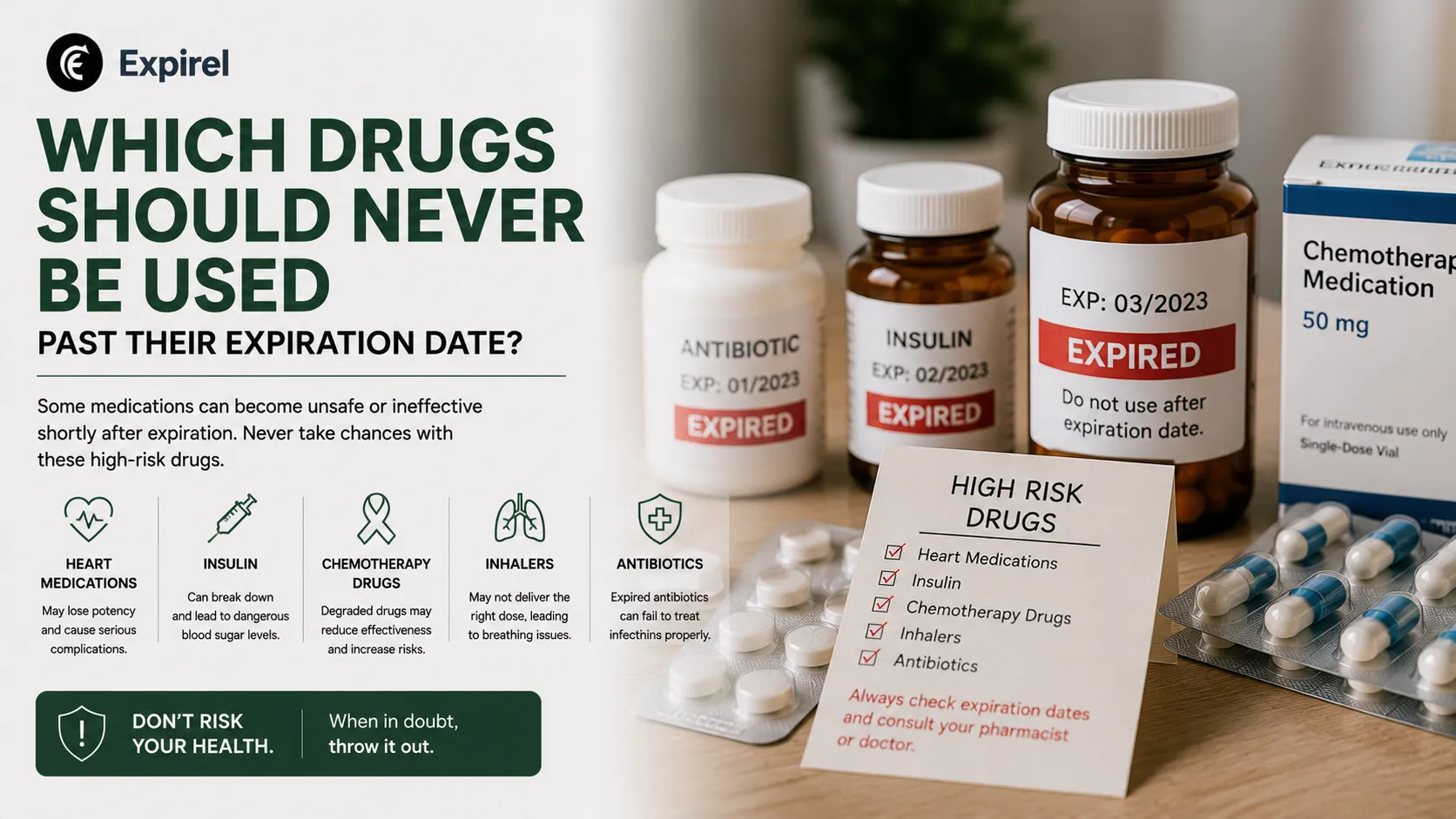
Which Drugs Should Never Be Used Past Their Expiration Date
July 24, 2026
Not all expired medicine is equally risky. See exactly which drugs turn toxic or fail dangerously after their date, and what to do instead.
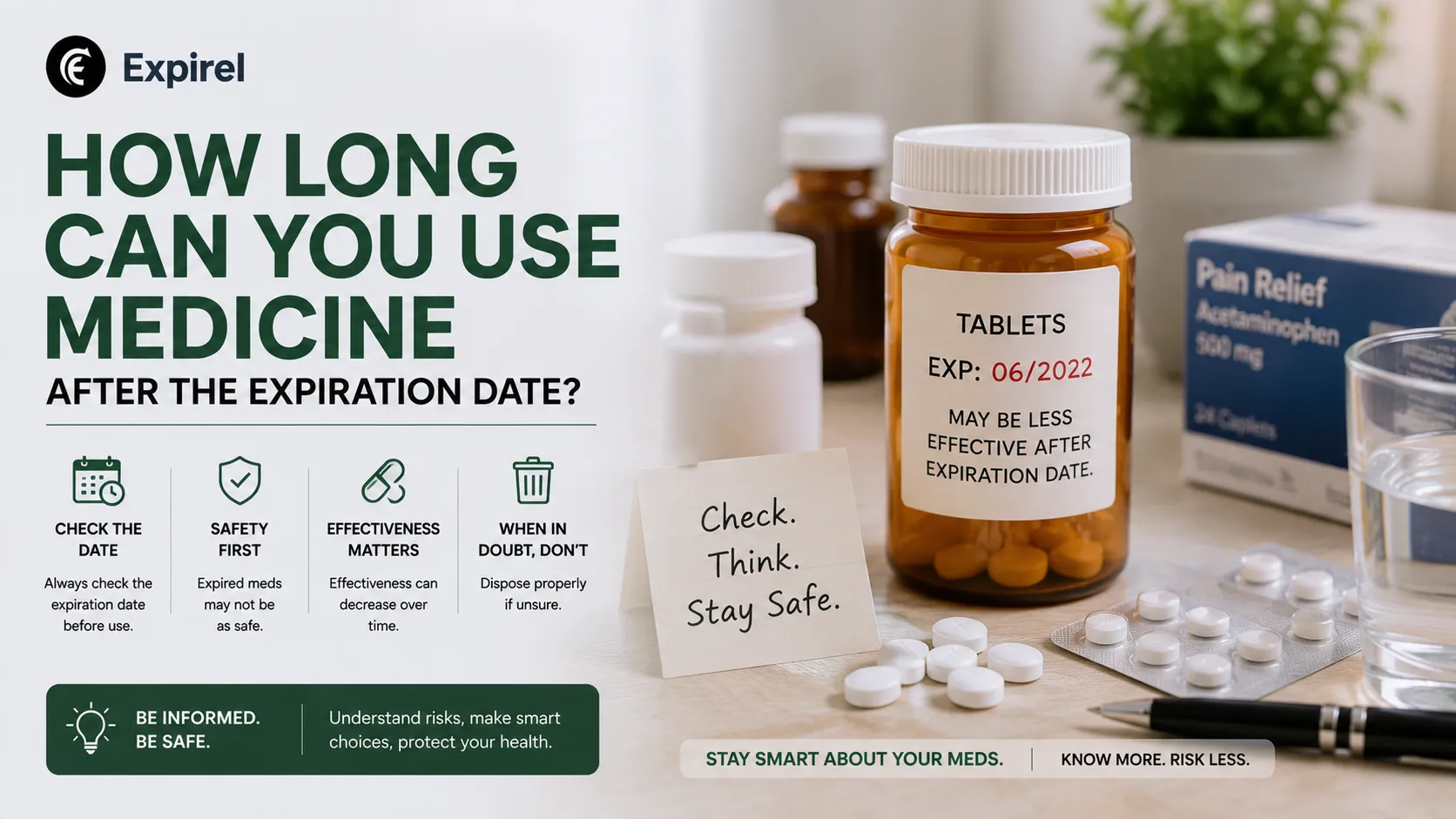
How Long Can You Use Medicine After the Expiration Date?
July 22, 2026
That old bottle in your cabinet isn't automatically trash. See which medicines are safe past their expiration date, and which ones truly are not.
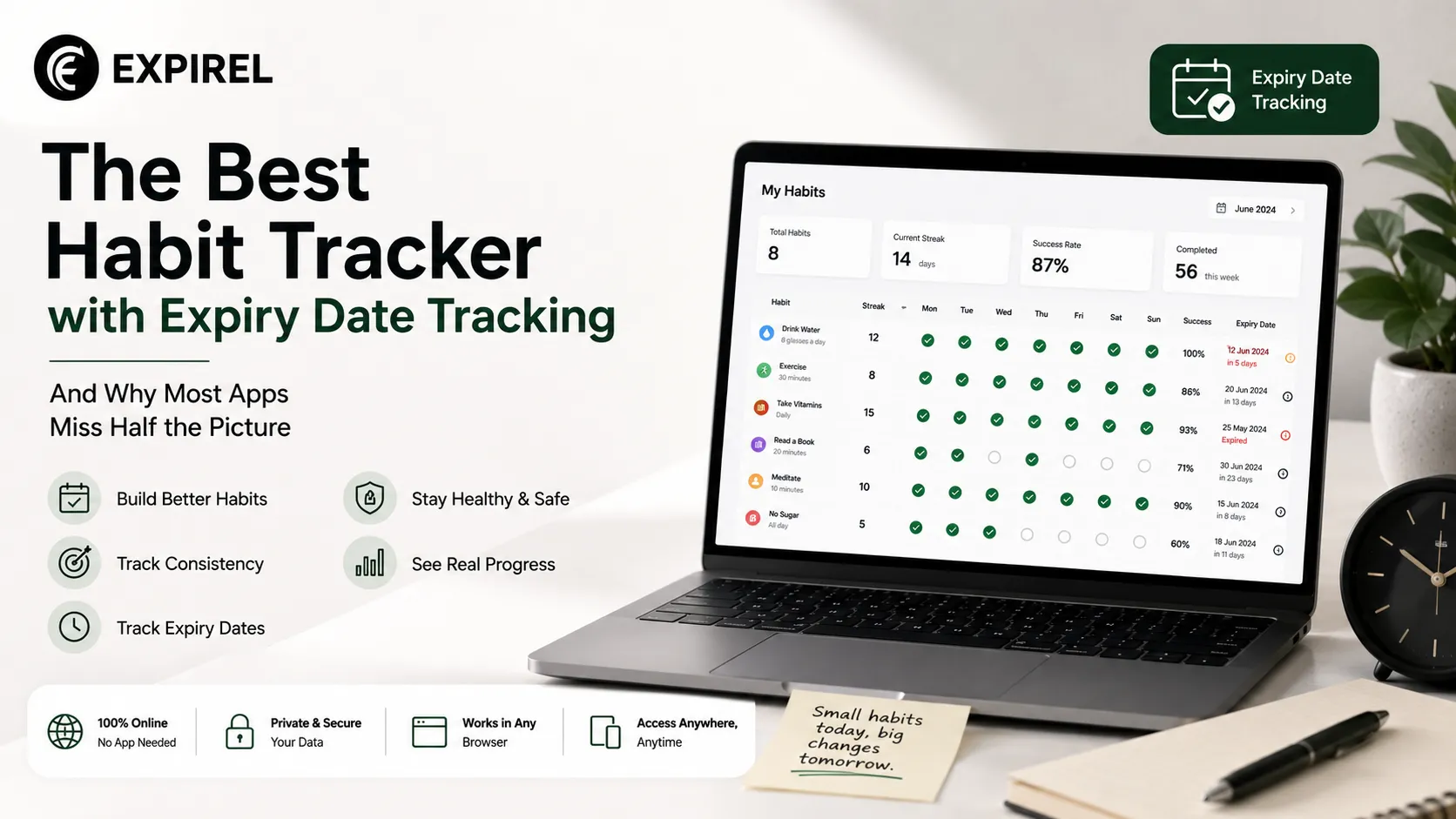
The Best Habit Tracker with Expiry Date Tracking - And Why Most Apps Miss Half the Picture
June 16, 2026
Most habit trackers ignore real life. Expirel tracks daily habits AND expiry dates like food, medicine, subscriptions, and freebies in one dashboard.