How Long Can You Use Medicine After the Expiration Date?
That old bottle in your cabinet isn't automatically trash. See which medicines are safe past their expiration date, and which ones truly are not.
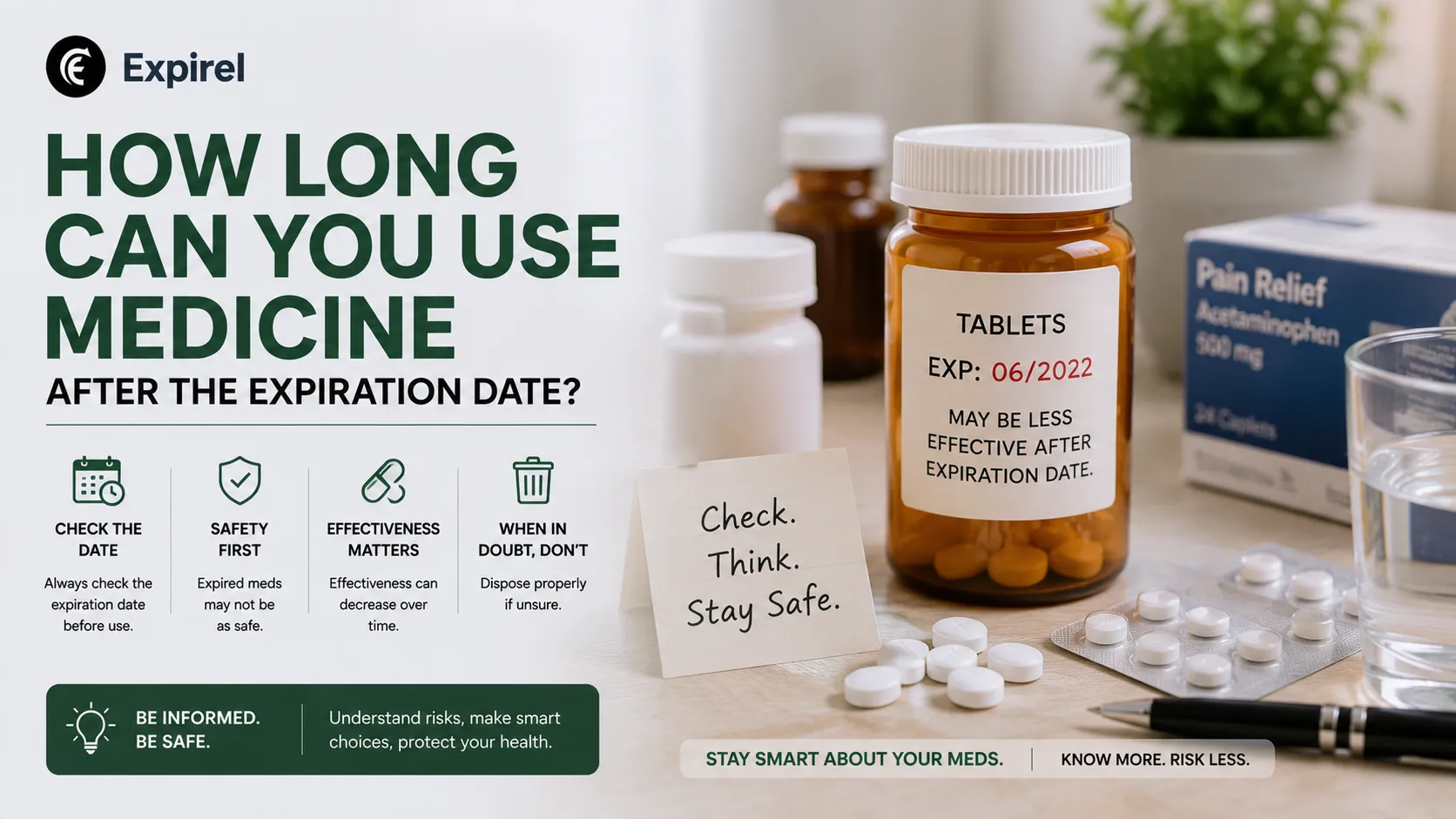
The honest answer is that most solid, properly stored medicines keep meaningful potency for one to five years past the printed date, but a small number of drugs become genuinely unsafe well before that, and no one, including your pharmacist, can tell you exactly where any single pill in your cabinet sits just by looking at it. That uncertainty is the actual problem this article solves. Instead of a flat yes or no, you get the specific factors that matter, the medicine categories that are the exceptions, and a decision framework for whatever is in your own medicine cabinet right now.
This guide covers the science behind expiration dates, how long specific drug categories actually last, the medicines you should never stretch past their date, UK-specific guidance, and a practical framework for deciding what is safe to keep and what to throw out today.
Expiration Guidance by Medicine Type
Medicine Type | General Guidance |
|---|---|
Solid tablets and capsules (ibuprofen, acetaminophen/Tylenol) | Often retain much of their potency for 1 to 5 years past the date if stored cool and dry, per FDA-supervised testing, but strength gradually declines rather than dropping off a cliff |
Liquid medicines and reconstituted antibiotics | Shortest safe window of any category; discard at or before the printed date, and sooner once opened or mixed with water |
Tetracycline-class antibiotics (including old doxycycline) | Never use past expiration; degraded tetracyclines have caused documented kidney injury |
Epinephrine auto-injectors (EpiPen) and insulin | Do not rely on these past expiration in an emergency; potency loss is well documented, and the stakes are too high |
Nitroglycerin | Loses potency quickly; do not use past its date for chest pain |
Prescription medicine repackaged by a pharmacy | Often dated one year from fill date regardless of the manufacturer's original date, as a safety margin |
Why Medicines Get an Expiration Date in the First Place
Since 1979, the FDA has required drug manufacturers to print an expiration date on every prescription and over-the-counter medicine. That date is not the point at which a drug definitely stops working. It is the point through which the manufacturer has data proving the drug meets its full potency and purity specification. Manufacturers are not required to test beyond that window, since extending stability testing for years adds real cost, and a drug company has limited incentive to prove its own product lasts longer than the label states.
This is the detail most articles on this topic skip: an expiration date is a guaranteed floor, not a measured ceiling. The manufacturer knows the drug is good through that date. Almost none of them have tested, or published, what happens in year four or five, because the test was never designed to answer that question.
What the Government's Own Testing Program Actually Found
The most direct evidence on this question comes from the Shelf Life Extension Program, a joint FDA and Department of Defence initiative started in 1986 to test military drug stockpiles before destroying them. Researchers tested 3,005 lots covering 122 different drug products near or past their labeled expiration date, evaluating potency, pH, dissolution, and physical appearance. The result: 88 percent of those lots got a new, later date, extended by 66 months on average, more than five years past the original one, with a drug needing to retain at least 85 percent of labelled strength to qualify.
A separate, frequently cited study went further, testing drugs 28 to 40 years past expiration. Roughly 86 percent still retained at least 90 percent of labelled potency. Two caveats matter, and most coverage of this study leaves them out. These drugs were stored in sealed, military-grade packaging under controlled conditions, not a bathroom cabinet. And the researchers measured potency, not safety, and were explicit that retained potency does not confirm the safety profile stayed unchanged over decades.
The Factors That Actually Determine How Long a Medicine Lasts
Four variables matter more than the number of years since the printed date.
Physical form. Solid, dry tablets and capsules are chemically the most stable form, since there is little moisture to drive degradation. Liquids, reconstituted antibiotics, creams, and eye drops are far less stable, because water accelerates chemical breakdown and microbial growth.
Storage conditions. The FDA specifically recommends a cool, dry place such as a drawer or closet, and warns against a bathroom cabinet, since heat and humidity from showers accelerate breakdown.
Original packaging. SLEP testing involved drugs left sealed in original manufacturer packaging. Once a pill moves into a weekly organizer, or a prescription is decanted into a pharmacy vial, it is exposed to air and moisture on a different schedule than what was tested.
What the drug actually is. Chemical stability varies enormously by class. Some antibiotics form actively harmful breakdown products. Some hormone-based drugs like insulin lose potency in ways that are not visible. Category matters more than a universal number of months, which is why the rest of this guide breaks the answer down by specific medicine type.
Ibuprofen and Tylenol: The Two Most-Searched Pain Relievers
Both are solid, dry tablets, which puts them in the most chemically stable category of medicine. Independent testing of drugs in this category has repeatedly found meaningful potency retained one to five years past the printed date when stored properly. Neither is on the list of medicines documented to become actively dangerous as they degrade, unlike liquid antibiotics or tetracyclines. The practical risk with an old bottle is reduced effectiveness, not new toxicity, provided the tablets look and smell normal and were kept dry. A significantly under-strength pain reliever for a genuinely serious symptom is still a case where buying a fresh bottle beats gambling on an old one.
How Long Can You Use Allergy, Cold, and Cough Medicine After the Expiration Date?
Most oral allergy medicine follows the same solid-dose stability pattern as ibuprofen and Tylenol, and Harvard Health specifically notes that taking an allergy medication a month past its expiration date carries relatively low risk for most people. Cold medicine and cough medicine are more mixed: tablet and capsule versions behave like other solid medicines, while liquid cough syrups and liquid cold medicines fall into the less stable category and should not be stretched past their date, particularly once opened, since preservative systems in liquid formulations break down over time and can allow microbial growth.
Prescription Medicine: Why the Rules Are Different
A pharmacy-filled prescription often carries a shorter expiration date than the manufacturer's original date on the bulk bottle it came from. Many states require pharmacists to cap the dispensed expiration at one year from the fill date, a standard tracing back to a 1985 U.S. Pharmacopoeia recommendation. This is not excess caution for its own sake. Repackaging exposes the medicine to a new container and handling conditions the original testing did not account for, and it builds in a checkpoint for your doctor to confirm the same medicine is still the right call a year later. The date on your prescription bottle reflects a deliberately conservative safety window layered on top of the underlying chemistry, not necessarily how long the drug itself would remain stable.
Medicines You Should Never Use Past Their Expiration Date
A small number of drug categories are genuine exceptions to the general "often still fine" pattern, either because they become actively harmful as they degrade, or because reduced potency is too risky to gamble on.
Tetracycline antibiotics, including older doxycycline formulations. As tetracyclines degrade, they can form toxic breakdown compounds. Documented medical case reports describe Fanconi syndrome, a serious kidney tubule disorder, following ingestion of outdated, degraded tetracycline, a finding replicated across multiple case series since the 1960s.
Liquid antibiotics, including anything reconstituted with water by a pharmacist. These are typically stable for only 10 to 14 days once mixed.
Epinephrine auto-injectors such as an EpiPen. In a severe allergic reaction, an under-potent dose can be the difference between manageable and life-threatening, so an expired auto-injector should be replaced, not relied on.
Insulin. Heat, freezing, and time all degrade its effectiveness in ways invisible to the eye, and under-dosing a condition like diabetes carries real short-term risk.
Nitroglycerin, which loses potency relatively quickly, a serious concern for a drug used to treat acute chest pain.
Any liquid, cream, or eye drop after its in-use date, even if the outer box has not expired. Preservative systems degrade on their own timeline once opened.
How to Tell If a Specific Medicine Is Still Usable: A Practical Checklist
Check whether it is a solid tablet/capsule or a liquid/reconstituted form. Liquids get discarded at or before the date, no exceptions.
Confirm it is not on the never-use-expired list above: tetracyclines, liquid antibiotics, epinephrine auto-injectors, insulin, or nitroglycerin.
Inspect it. Discolouration, an unusual smell, crumbling, or cloudiness in a liquid are signs of degradation regardless of the printed date, and mean discard it immediately.
Consider how it was stored. A bottle kept in a cool, dry drawer gets more benefit of the doubt than one kept in a bathroom or a car.
Weigh what it is treating. A modest potency loss in a headache reliever is low stakes. The same loss in a heart medication or rescue inhaler is not worth the risk; replace it instead.
When in doubt on a prescription medicine, call your pharmacist. This is fast, free, and a question pharmacists field constantly.
Common Mistakes People Make With Expired Medicine
Treating every expired medicine as equally risky, when risk varies enormously by drug class.
Storing the medicine cabinet in the bathroom, the worst common location due to heat and humidity.
Saving leftover antibiotics for a future infection, a documented driver of antibiotic resistance.
Flushing medicine down the toilet by default instead of using a pharmacy take-back location.
Not writing the opened date on liquids and creams, which expire faster than the unopened box.
Reading This in Hindi
This guide is published in English, matching how most people research drug safety from international health authorities like the FDA and NHS. If you searched for this topic in Hindi, the same core rule applies regardless of language: solid tablets generally tolerate some time past their date if stored cool and dry, while liquids, tetracyclines, insulin, and epinephrine auto-injectors should not be used past their expiration date under any circumstances.
Medicine Expiration in the UK: What NHS Guidance Says
UK guidance is notably more conservative than the framing common in US coverage of this topic. NHS-affiliated guidance consistently advises against taking any medicine once its expiry date has passed, and recommends returning expired or unused medicines to a community pharmacy for disposal rather than assessing them for continued use at home. It does note the same underlying pattern seen in US data: tablets generally outlast liquids, with most tablet expiry dates ranging from one to five years, while liquids lose effectiveness within months of being opened. The practical difference for a UK reader is the standard of care: expired means dispose of it through a pharmacy, not evaluate it yourself.
What Reddit Discussions Actually Get Right and Wrong
Threads on this topic tend to circulate the SLEP military testing data accurately, and the general point that solid tablets often retain potency for years is broadly correct. Where these discussions go wrong is treating that finding as a blanket rule. The SLEP data came from sealed military-grade storage, not a kitchen cabinet, and it does not extend to liquid antibiotics, tetracyclines, insulin, or epinephrine, categories where the evidence points the opposite direction. A comment recommending you take expired doxycycline because "drugs last longer than the label says" is repeating a fact from the wrong drug category.
Building a System So This Decision Never Catches You Off Guard
The best time to deal with an expiring medicine is before it expires, not while standing in the bathroom guessing about a five-year-old bottle. A recurring, date-based reminder solves this more reliably than memory or an occasional cabinet clear-out. Expirel expiry tracker lets you log medicine bottles with their expiration dates and get notified before they lapse, so a genuinely time-sensitive item, like a rescue inhaler, an EpiPen, or a prescription you rely on, gets replaced on schedule instead of discovered expired at the exact moment you need it. For households managing medicine for multiple people, Expirel family sharing feature means everyone can see what is coming up for renewal instead of one person remembering it for the whole household.
Conclusion
There is no single number of months or years that answers this question for every medicine in your cabinet. Solid tablets like ibuprofen and Tylenol often hold up well past their printed date if stored cool and dry, backed by decades of FDA-supervised military testing. Liquids, reconstituted antibiotics, tetracyclines, insulin, and epinephrine auto-injectors are the real exceptions, and stretching those past their date is not worth the risk. Use the checklist above on what is actually sitting in your cabinet, and build a simple reminder system so the next expiration date does not catch you by surprise.
Frequently Asked Questions
Q: How long can you use medicine after the expiration date?
Most solid tablets and capsules retain meaningful potency for one to five years past the printed date if stored cool and dry, based on FDA-supervised testing. Liquids, reconstituted antibiotics, insulin, and epinephrine auto-injectors should not be used past their date.
Q: How long can you use ibuprofen after the expiration date?
As a solid tablet, ibuprofen sits in the more chemically stable category and has shown retained potency for one to five years past the printed date when stored properly. It is not on the list of medicines known to become harmful as they degrade.
Q: How long can you use Tylenol after the expiration date?
Acetaminophen (Tylenol) behaves similarly to ibuprofen as a solid tablet and often retains meaningful potency for one to several years past its date. The main risk of an old bottle is reduced effectiveness, not new toxicity, provided the tablets look and smell normal.
Q: How long can you use liquid medicine after the expiration date?
Liquid medicines have the shortest safe window of any category and should be discarded at or before the printed date. Once opened or reconstituted with water, many liquid antibiotics are stable for only 10 to 14 days.
Q: Is it safe to use expired medicine in the UK?
NHS-affiliated guidance advises against taking any medicine past its expiry date and recommends returning expired medicines to a community pharmacy for disposal rather than assessing them for continued use at home.
Q: What medicines should never be used after they expire?
Tetracycline-class antibiotics, liquid or reconstituted antibiotics, epinephrine auto-injectors, insulin, and nitroglycerin should never be used past their expiration date, since these become chemically harmful or lose potency in ways that carry serious risk.
Q: How long can you use OTC medicine after the expiration date?
Over-the-counter (OTC) medicine follows the same rule as prescription drugs: solid OTC pain and allergy tablets often retain potency for one to five years past the date, while liquid OTC products should be discarded at or before their printed date.
Q: How long can you use pain medicine after the expiration date?
Solid pain medicine like ibuprofen and acetaminophen tablets often retains meaningful strength one to five years past expiration when stored cool and dry. For severe pain, replace an old bottle rather than risk reduced effectiveness.

Fahad Ahmad
Founder of EXPIREL · Digital Entrepreneur · Product Management Specialist
Fahad Ahmad is the founder of EXPIREL and a digital entrepreneur with over 10 years of experience in SaaS development, SEO, and digital product creation. He focuses on building practical solutions that help individuals and businesses manage product expiration dates, organize inventory, track habits, and improve daily productivity.
Through EXPIREL, Fahad shares actionable guides, product management tips, barcode scanning tutorials, and research-backed insights designed to help users reduce waste, stay organized, and make smarter decisions.
Related Articles
View all
Expiration Date vs Expiry Date: What's the Difference?
August 10, 2026
Learn what expiration date and expiry date mean, differ by region (US vs UK), and how to track them with smart reminders so you waste less and save money.
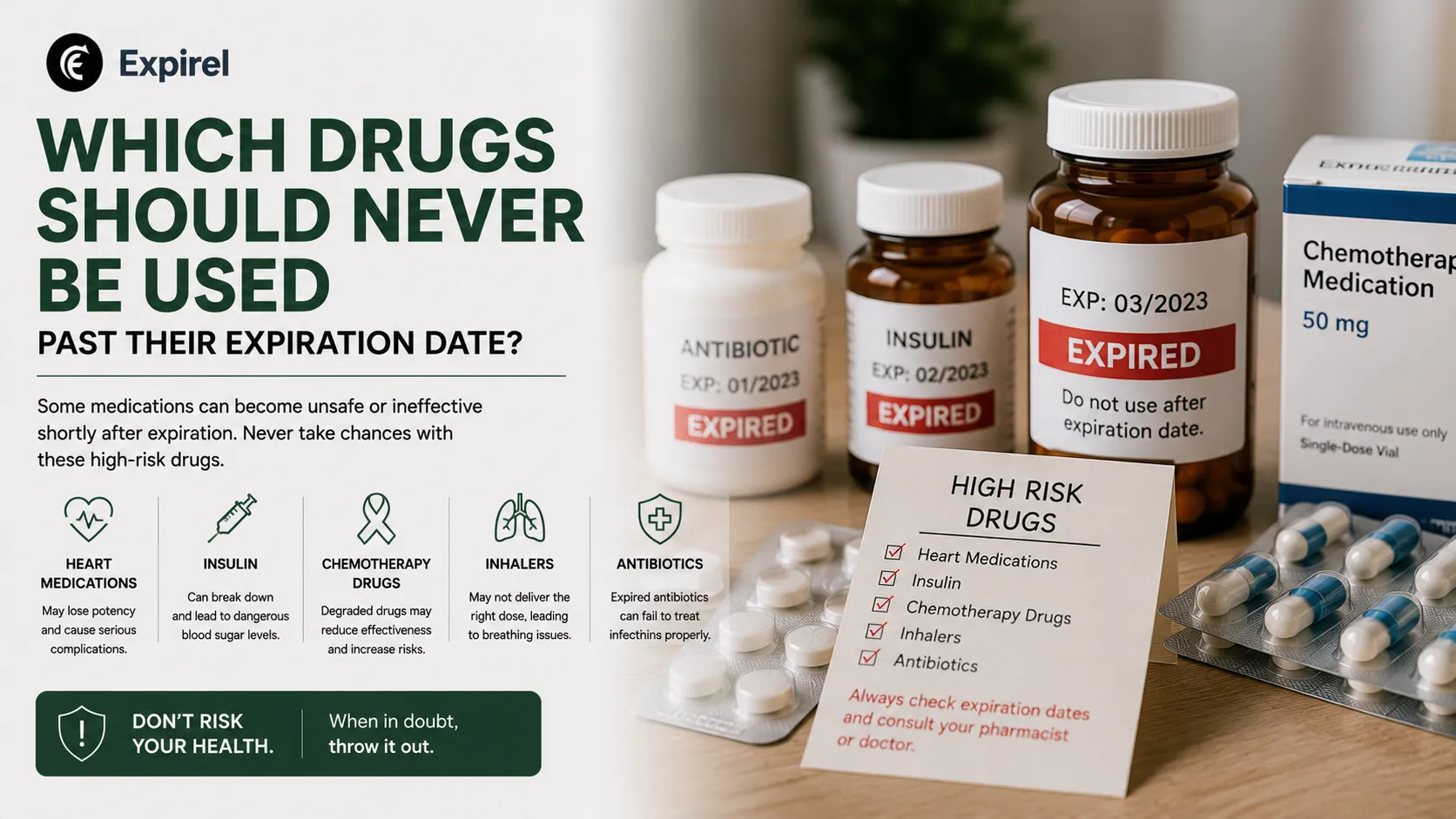
Which Drugs Should Never Be Used Past Their Expiration Date
July 24, 2026
Not all expired medicine is equally risky. See exactly which drugs turn toxic or fail dangerously after their date, and what to do instead.
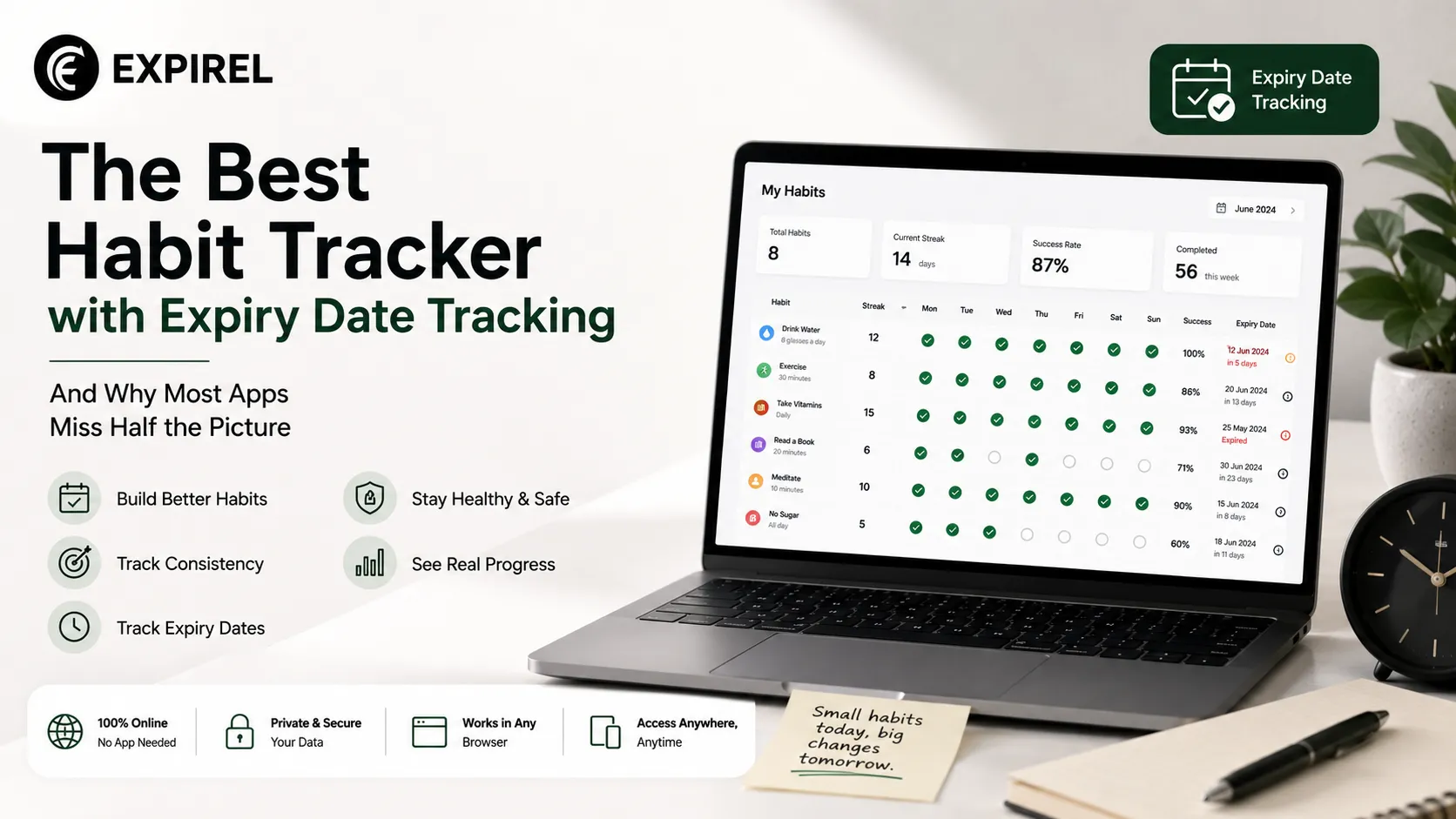
The Best Habit Tracker with Expiry Date Tracking - And Why Most Apps Miss Half the Picture
June 16, 2026
Most habit trackers ignore real life. Expirel tracks daily habits AND expiry dates like food, medicine, subscriptions, and freebies in one dashboard.