How to Build a Job-Search Routine That Actually Lands Interviews
Build a weekly job search routine that lands more interviews. Track habits, tailor applications, and network smarter, without the burnout.
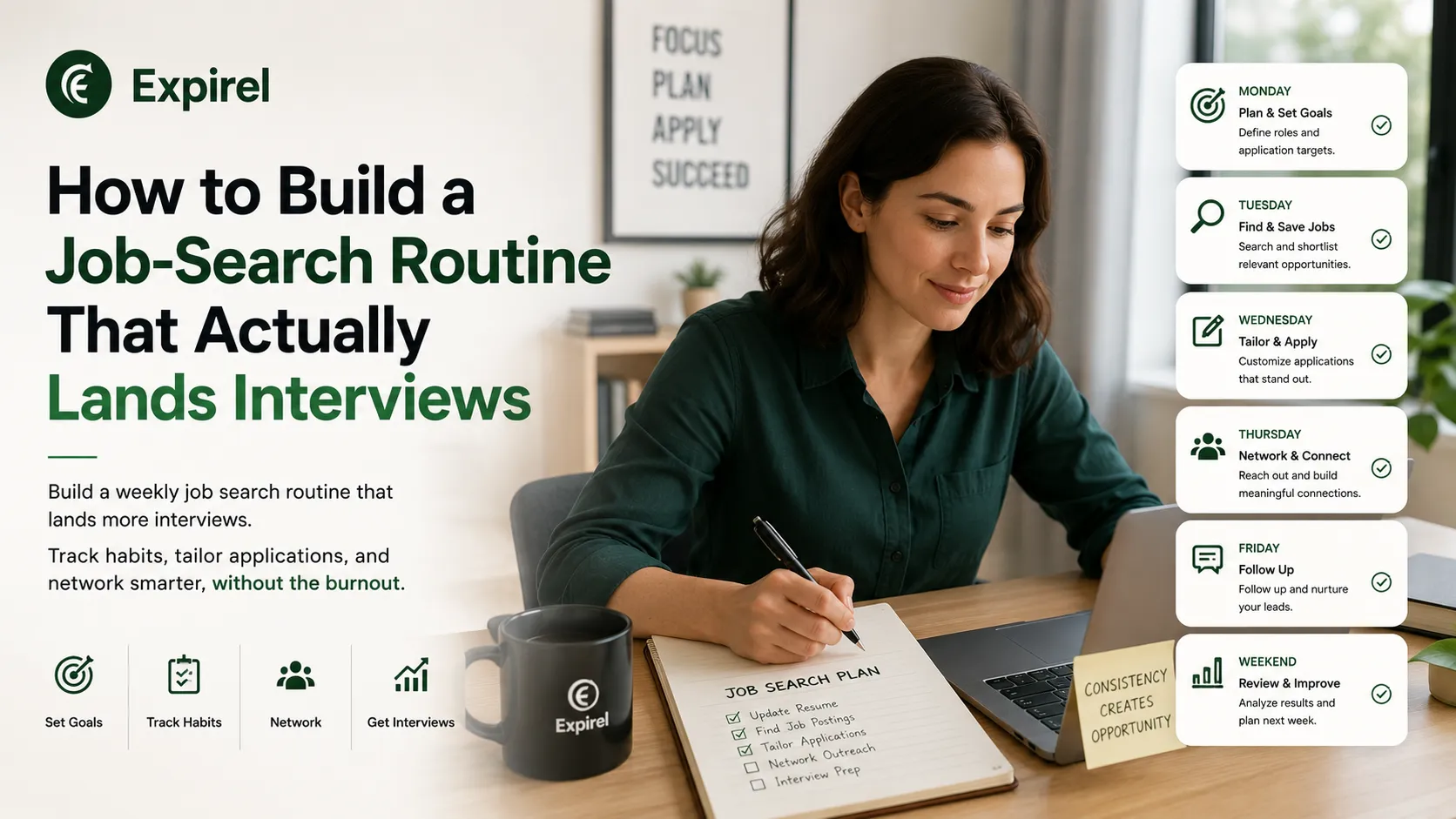
Job hunting rewards consistency more than intensity. People who land interviews rarely do it in one frantic weekend of applying, they show up in small, repeatable ways day after day. If you already believe in tracking habits and streaks, you already have the right mindset for this. Below is a weekly job-search routine built to produce real interviews without the burnout that comes from applying to everything, all day, every day. Once the system is running, it actually takes less willpower to keep going, not more.
Why a Routine Beats Motivation
Motivation runs out. Routines don't. A job search can stretch across weeks or months, and relying on feeling driven every single day is a losing bet. Turning the search into a system, a short list of small daily and weekly actions, keeps you moving even on the days you'd rather not open your laptop. It protects your mental health too: fixed working hours for the search mean you're not refreshing job boards at midnight or letting the search swallow every free hour you have.
There's a practical payoff as well. A search run on a routine produces stronger applications, because you're working from a calm, focused place instead of a panicked one. Recruiters can usually tell the difference between a tailored application and a rushed, copy-pasted one sent at 1 a.m. On average, it takes over 50 days to fill a role, according to Indeed's hiring data, so this isn't a sprint you can win on adrenaline alone. Protecting your energy and your standards at the same time is what makes each application count for more, which is what actually shortens a search.
The Weekly Job-Search System
Run this loop every week. It keeps quality high and stops the search from turning into a numbers-only grind.
Define your target roles and must-have criteria
Sharpen your resume and tailor it per role
Apply in focused batches, not scattershot
Follow up on applications and network with intention
Track every application, status, and contact
Review weekly: what worked, what needs to change

A handful of targeted, well-tailored applications will consistently outperform a flood of generic ones sent to every listing that vaguely fits.
Build These Five Habits
Turn the system above into habits you can track the same way you'd track any streak.
Habit | Why It Works | Cadence |
|---|---|---|
Tailor each application | Matching the role beats mass-applying, every time | Every application |
Apply in a fixed time block | Protects focus and stops all-day job-board scrolling | Daily |
Follow up after 5 to 7 days | A polite nudge keeps you visible to the recruiter | Weekly |
Network with two people | Referrals convert far better than cold applications | Weekly |
Review your numbers | Shows you what's working and what needs to change | Weekly |
If you already use a habit tracker for other parts of your life, this is a natural place to point it. Logging "applied," "followed up," and "networked" as daily checkboxes turns a stressful search into something closer to a routine you're just maintaining, not a crisis you're managing.
Your Resume Is the Foundation
Every part of this routine runs through one document: your resume. If it doesn't clear an applicant tracking system and hold a recruiter's attention in the few seconds they actually spend scanning it, everything else you do is working against a closed door. That means a clean, ATS-friendly layout, a strong summary near the top, and bullet points that lead with results and role-relevant keywords, tailored per application rather than copied everywhere.
Getting that foundation right takes real effort, and it's the one part most people struggle to judge objectively about their own experience. If writing it yourself feels like too much, ResumeCroc's resume writing service can turn your work history into an interview-ready document that clears the ATS and still reads well to a human. Whether you write it yourself or bring in help, treat the resume as the asset the rest of the routine depends on, and keep revising it as you learn what actually earns responses.
One small efficiency worth building in: keep two or three base versions of your resume for different types of roles, so tailoring each application takes minutes instead of a rewrite from scratch. Small time-savers like this are what keep a daily habit sustainable over a long search, and they remove "I was too tired" as an excuse to send something generic.
Track Your Progress and Protect Your Energy
What gets tracked gets improved. Log every application: the date, the status, and any follow-up, so you can actually see your funnel and where it's leaking. If applications rarely turn into responses, the fix is usually the resume or the targeting. If interviews rarely turn into offers, the fix is interview prep. Either way, you need the data first.
Protecting your energy matters just as much as tracking your output. Set a firm end time each day, note small wins as they happen, and take real breaks instead of letting the search bleed into every spare hour. Streak-based tools with milestone tracking can help here too, since seeing a 10-day or 20-day streak of "did something toward the search today" is a very different feeling than an open-ended to-do list with no end in sight. A search you can sustain for eight weeks beats one that burns you out in ten days.
A Sample Week in Practice
Here's how the system plays out across a real week, kept to roughly two focused hours a day so it's actually sustainable long-term.
Monday: Review target roles, refresh your shortlist, update your resume if needed.
Tuesday through Thursday: Apply to three to five well-matched roles a day, tailoring each one rather than blasting the same file everywhere. Reserve part of each session for one networking action: a message to a former colleague, a thoughtful comment on an industry post, or a request for a short referral chat.
Friday: Follow up on anything sent five to seven days earlier, then run a short weekly review: how many applications went out, how many responses came back, and what the numbers are telling you.
Weekends: Keep light or fully off. The goal isn't to fill every hour, it's steady, repeatable progress you can sustain for as many weeks as the search takes.
Common Job-Search Mistakes to Avoid
A handful of habits quietly sink otherwise strong candidates:
Mass-applying with one generic resume. It feels productive, but it rarely clears ATS filters or catches a recruiter's attention.
Relying only on job boards. Referrals and direct outreach convert at a much higher rate, so networking needs to be a built-in part of the routine, not an afterthought.
Skipping the follow-up. A short, polite nudge after a week keeps you visible while decisions are actually being made.
Never reviewing the numbers. Without tracking your funnel, you can't tell whether the real problem is the resume, the targeting, or the interview itself.
Letting the search consume every hour. An always-on search leads to burnout and weaker applications, not more offers.
When You Land the Interview
The payoff of the whole routine is the interview, so prep deserves its own habit rather than a last-minute scramble the night before. Research the company, prepare three or four stories that show results using a simple situation, action, result structure, and have a few thoughtful questions ready to ask. Run a short mock interview beforehand, and afterwards, note what went well and what to sharpen next time. The same track-and-review loop that filled your pipeline also steadily improves your close rate, turning more of those interviews into offers.
Make Networking Part of the Routine
Referrals consistently outperform cold applications, yet networking is the step most job seekers skip because it feels awkward to ask. It doesn't have to. Build it into the routine as one small, repeatable action a week: reconnect with a former colleague, comment thoughtfully on an industry post, or ask someone at a target company for a short chat about their role. You're not asking for a job, you're building visibility. According to research from ADP, referred candidates get hired roughly 55% faster than non-referred applicants, which is a meaningful edge over a search that runs on job boards alone. Treat networking as a habit to check off, not a favour you dread asking for, and over a multi-week search it tends to become one of your highest-return activities.
Conclusion
A job search doesn't have to be chaotic or draining. Build it into a weekly system, turn each step into a trackable habit, and anchor everything to a resume that actually works. Show up a little every day, measure what's happening, and adjust as you go, and the interviews follow, without needing to run on willpower alone.
Frequently Asked Questions
Q: How many jobs should I apply to per week?
Quality beats volume. Ten to fifteen well-tailored applications typically outperform fifty generic ones. Focus on roles you genuinely match and customise each one.
Q: How long should a job search take?
It varies by field, level, and market conditions, often anywhere from a few weeks to a few months. A consistent weekly routine shortens it by keeping your pipeline full and your approach improving over time. Senior and niche roles usually take longer, so focus on the inputs you control (tailored applications, follow-ups, and networking) rather than fixating on the calendar.
Q: Do I really need to tailor my resume every time?
For roles you actually care about, yes. Tailoring to a job's specific keywords and requirements is one of the biggest levers for clearing ATS filters and catching a recruiter's eye in those first few seconds.
Q: How do I stay motivated during a long search?
Lean on the routine, not motivation. Track streaks, note small wins like a callback or a good networking conversation, set daily boundaries, and review weekly so you always know your next step.

Fahad Ahmad
Founder of EXPIREL · Digital Entrepreneur · Product Management Specialist
Fahad Ahmad is the founder of EXPIREL and a digital entrepreneur with over 10 years of experience in SaaS development, SEO, and digital product creation. He focuses on building practical solutions that help individuals and businesses manage product expiration dates, organize inventory, track habits, and improve daily productivity.
Through EXPIREL, Fahad shares actionable guides, product management tips, barcode scanning tutorials, and research-backed insights designed to help users reduce waste, stay organized, and make smarter decisions.
Related Articles
View all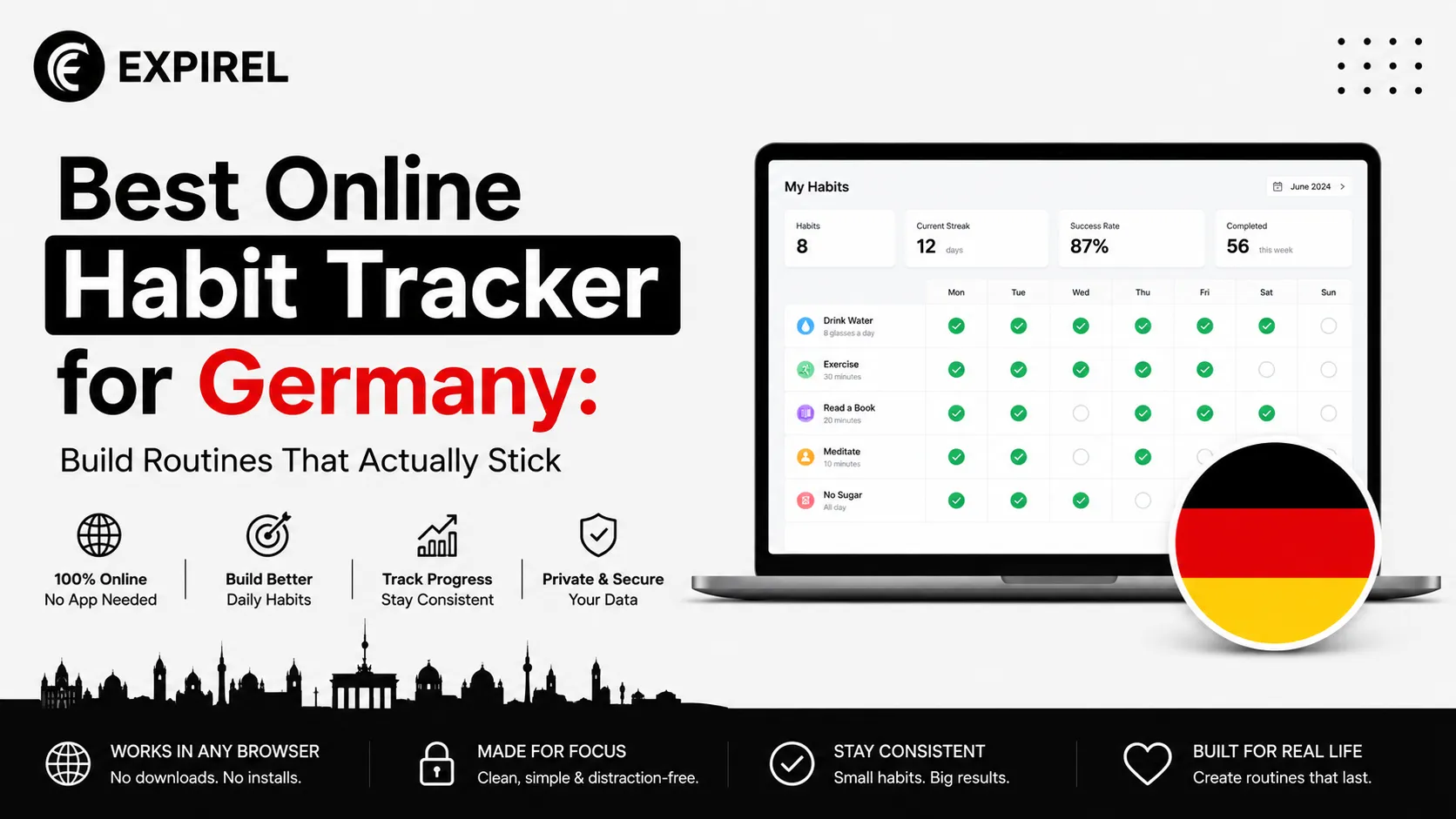
Best Online Habit Tracker for Germany: Build Routines That Actually Stick
June 12, 2026
Best habit tracker in Germany? Expirel lets you track daily habits, build streaks, and get WhatsApp & email reminders, no app download, works on any device.
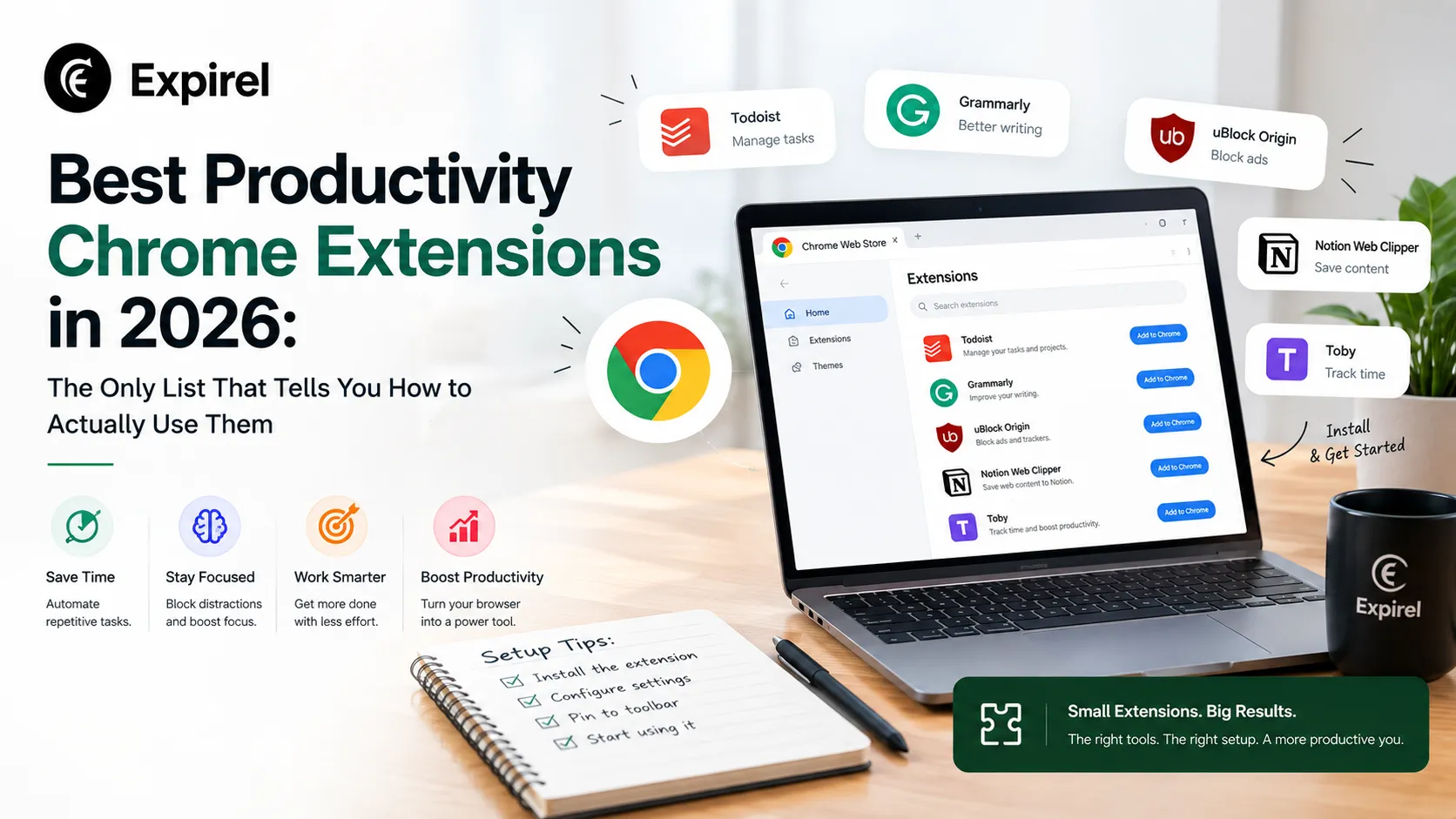
Best Productivity Chrome Extensions in 2026: The Only List That Tells You How to Actually Use Them
September 8, 2026
13 Best productivity Chrome extensions in 2026 with setup tips, privacy ratings, Cold Turkey vs StayFocusd, Google extensions, and persona-based picks.
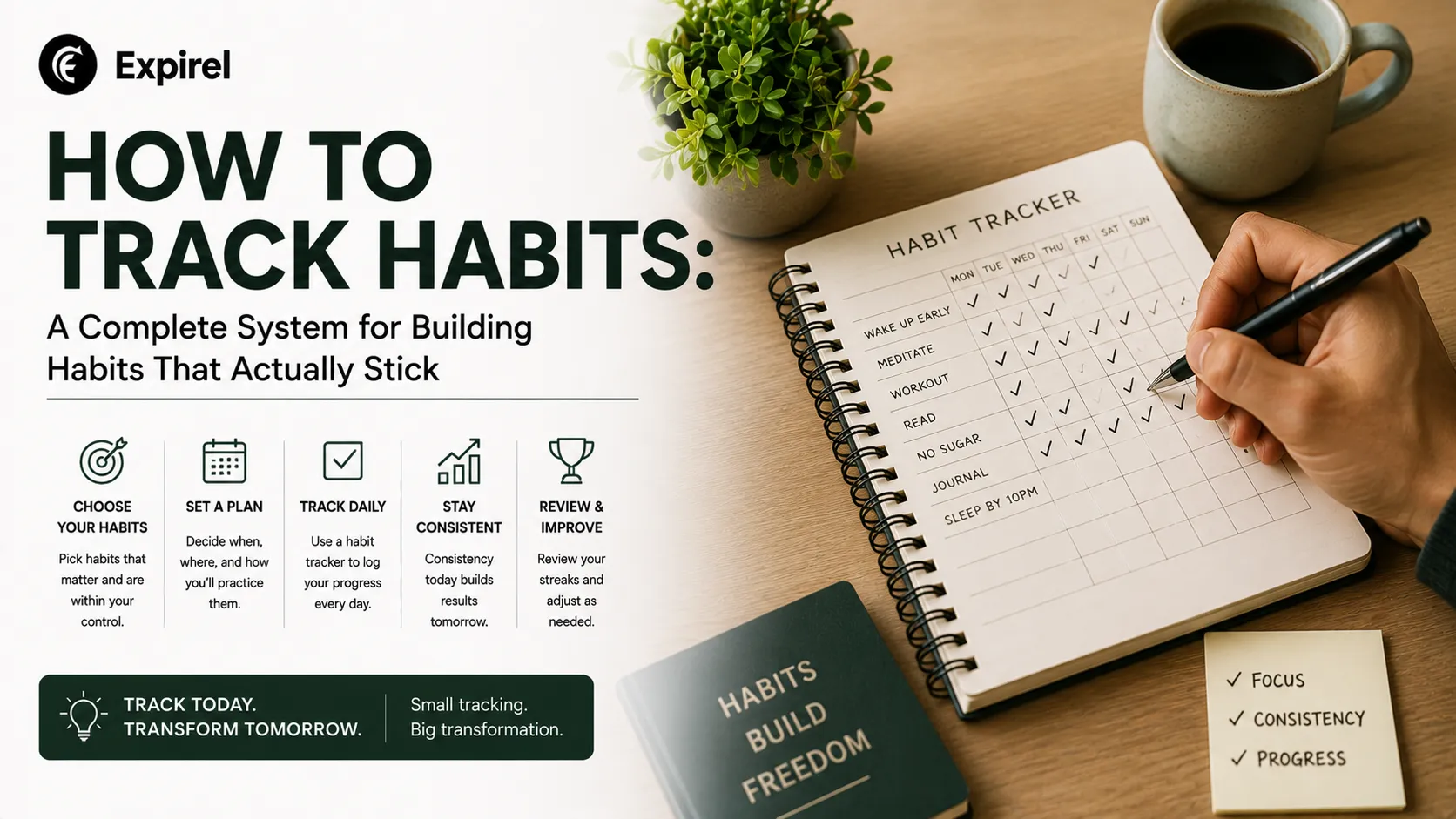
How to Track Habits: A Complete System for Building Habits That Actually Stick
August 3, 2026
Tired of abandoned habit trackers? Get a step-by-step system for daily, weekly, and long-term habits, plus a free 30-day checklist you can start today.