Personal Growth Coach: What They Do, What It Costs, and How to Find the Right One
Find a qualified personal growth coach with real cost figures, red flags to avoid, UK salary data, ICF certification explained, and a step-by-step hiring guide.
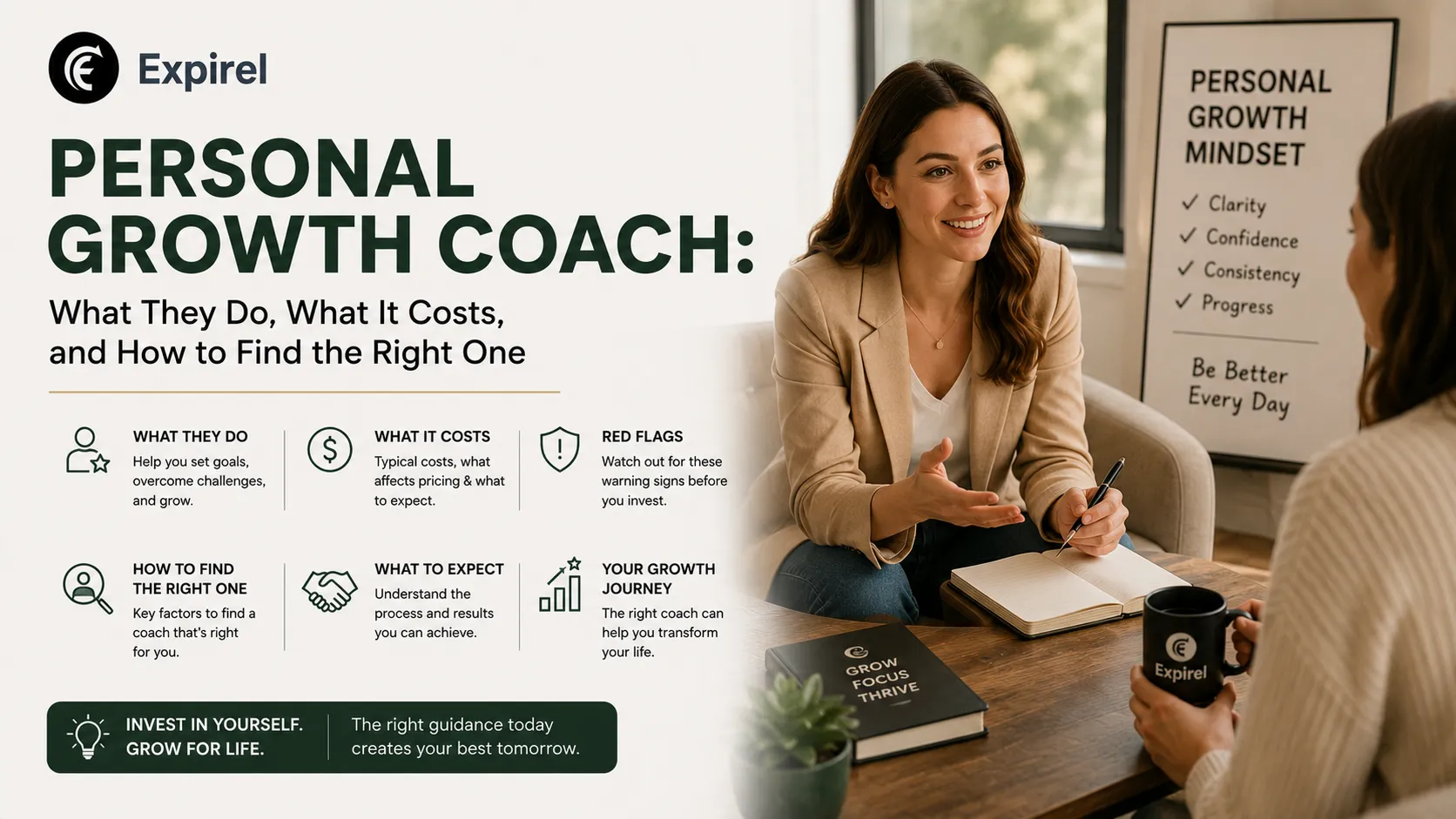
A personal growth coach is a trained professional who identifies specific gaps between where you are and where you want to be, then builds a structured plan to close them through regular sessions, accountability, and targeted exercises. Sessions run 45 to 60 minutes, usually fortnightly. According to the ICF 2025 Global Coaching Study, the average session fee in North America is approximately $234. In the UK, qualified coaches charge between £60 and £250 per session depending on credential level. Look for ICF, EMCC, or AC accreditation when choosing one.
Industry at a glance — ICF 2026 Global Coaching Study
The global coaching industry has grown to $5.34 billion in revenue with over 122,000 coach practitioners worldwide. The life coaching market in the US is projected to reach $3.08 billion by 2033, growing at 5.05% annually (Grand View Research). Demand for qualified coaches particularly in personal development, leadership, and wellbeing is rising across all major markets.
What Is a Personal Growth Coach?
A personal growth coach is a trained, often accredited professional who works with you one-to-one to accelerate your development across one or more areas of life. Unlike a mentor, they do not advise based on their own experience. Unlike a therapist, they do not work on diagnosing or treating mental health conditions. The work sits firmly in the present and future, not the past.
The role combines accountability, structured reflection, and skill-building. A skilled practitioner challenges your assumptions, builds self-awareness you cannot develop alone, and holds you to the commitments you make in sessions. The process is collaborative, not prescriptive; the coach does not tell you what to do. They help you work out what you actually want, why you have not done it yet, and what specifically needs to change.
The terms "personal growth coach" and "personal development coach" describe the same service. The difference is typically in positioning: practitioners who work more on life satisfaction and identity lean toward 'personal growth,' while those who focus on professional effectiveness prefer 'personal development.' Both use the same core methodology and draw on the same body of coaching research.
This type of coaching accelerates development by providing structure, honest challenge, and accountability that are nearly impossible to generate on your own, no matter how motivated or self-aware you already are.
Coach, Therapist, or Mentor? How to Know Which Professional You Actually Need
This is the question most people ask, and most articles answer vaguely. Here is a direct comparison so you can make the right call before spending money on the wrong professional:
Type | Focus area | Past or future? | Regulated? |
Personal growth coach | Identity, habits, mindset, life satisfaction | Present and future | No accreditation matters |
Life coach | Broad goals, transitions, motivation | Future-focused | No — anyone can claim this title |
Therapist/counsellor | Mental health, trauma, diagnosis, healing | Past and present | Yes — legally regulated |
Personal business coach | Leadership, performance, career decisions | Present and future | No — experience background matters |
Mentor | Career advice drawn from their own experience | Experience-based | No usually informal |
The most important distinction for most people: if you are dealing with clinical anxiety, depression, trauma, or any diagnosed mental health condition, a therapist is the correct professional. Coaching works best when you are already functioning well and want to function better. A personal business coach overlaps significantly with development coaching but focuses specifically on professional performance, leadership style, communication, and career trajectory. Many practitioners offer both.
If you are unsure which professional you need, ask yourself this: are you trying to heal something from the past, or build something for the future? The answer tells you which door to open.
What Actually Happens in a Coaching Session? A Real Breakdown
Competitors rarely answer this specifically. Here is an honest account of what a coaching engagement looks like from the first session to the last.
Session 1: Discovery and Baseline
The first session is not coaching. It is an assessment. A skilled coach will ask detailed questions about where you are, what has not worked before and why, what you actually want versus what sounds good to say, and what your real constraints are. They will also explain their methodology clearly and be honest about what the process can and cannot do.
If a coach skips the assessment and tells you what your problem is after 10 minutes, walk away. Skilled practitioners listen far more than they speak in early sessions. Diagnosis without depth is a performance, not a service.
Sessions 2 to 6: Identification and Structure
These sessions identify the real gap between your current state and your goal, then build a structured plan. A skilled practitioner uses specific frameworks, wheel of life assessments, values alignment exercises, cognitive reframing, habit design, and accountability contracts, not generic encouragement. You should leave each session with one to three specific actions to take before the next one. Not intentions. Specific actions with a clear completion criteria.
Sessions 7 Onward: Accountability and Adjustment
Later sessions review what worked, what did not, and why. A good coach does not let you off the hook when you have not followed through — but they also do not shame you. They help you identify the real reason for the gap: was the action too large, the anchor wrong, the motivation unclear, or is there a hidden belief blocking progress? That iterative, honest review is what separates ongoing coaching from reading a self-help book. The book cannot ask you why you stopped.
If you consistently leave sessions feeling inspired but doing nothing differently, you need a different coach. The output of a good session is not a feeling; it is a specific commitment and a concrete next step.
5 Honest Signs You Would Benefit From Working With a Coach
Most articles list 'you feel stuck' or 'you want to grow.' Here are the specific, honest signals:
You know what to do and consistently do not do it. This is the most common reason people hire a coach. The gap is not knowledge; it is follow-through. External accountability and structured commitment close this gap in a way self-discipline alone rarely sustains.
Every time you try to change, you drift back to the same pattern within six weeks. This signals something deeper than a habit problem usually, a belief or identity issue. A skilled practitioner identifies the pattern beneath the behavior, not just the behavior itself.
You are succeeding externally but feel persistently flat or directionless. High performance without alignment to personal values is one of the most common and least-discussed reasons people seek coaching. The results look fine. The internal experience does not match.
You are in a significant transition and navigating it alone. Career change, relocation, redundancy, relationship shift, early parenthood. Transitions are the highest-value moment for coaching because the decisions made during them compound for years afterward.
You have insight but no traction. You know your patterns. You have read the books. You have journaled. Nothing shifts. This is precisely what structured coaching is designed for: converting insight into sustained behavior change through accountability and honest challenge. For smaller day-to-day productivity problems, practical tools can also help remove friction before it becomes a bigger habit problem. Our guide to the best productivity Chrome extensions covers tools for reducing distractions, managing tabs, tracking time, and creating a more focused browsing environment.
How to Find a Personal Growth Coach Near You and Online
The search 'personal growth coach near me' gets thousands of monthly searches, but for most people, location is no longer the main factor. Here is how to approach the search effectively:
Start With Accreditation Body Directories
The fastest route to a vetted coach is through the official directories of the three main accreditation bodies. These organisations have minimum training hours, supervision requirements, and ethics codes that unaccredited practitioners do not:
ICF (International Coaching Federation): icf.org/find-a-coach — the largest global directory. Filter by specialty, country, language, and credential level (ACC, PCC, MCC).
EMCC (European Mentoring and Coaching Council): emccglobal.org/find-a-coach strong in the UK and Europe. Well-suited for personal development and leadership coaching.
AC (Association for Coaching): associationforcoaching.com/find-a-coach — UK-headquartered, strong in personal growth and wellbeing coaching.
Online vs In-Person: What the Evidence Shows
Research consistently shows that remote coaching produces outcomes equivalent to in-person work for personal development purposes. This means geography should not limit your choice. A highly credentialed coach in a different city or country is a better option than a mediocre one nearby. The only genuine advantage of in-person sessions is for people who find video calls significantly harder to engage with authentically.
Finding a Personal Development Coach in the UK
The UK coaching market is mature and well-represented at the accreditation level, even though coaching itself is not legally regulated. The AC and EMCC are both UK-headquartered, and their directories are the best starting point. Average session rates in the UK range from £60 for associate-level practitioners to £200 and above for senior specialists with niche expertise. Remote delivery is now standard and removes geographic limitations entirely.
How to choose: a practical 5-step checklist
1. Search the ICF, EMCC, or AC directory for your country and specialty. 2. Shortlist three coaches whose background matches your specific goal. 3. Request a chemistry call (most offer 20 to 30 minutes free). 4. Ask specifically: what methodology do you use, how do you measure progress, and what happens when a client does not follow through? 5. Choose the practitioner whose answers are most concrete and honest, not most inspiring.
How Much Does a Personal Growth Coach Cost? Real Figures for 2025–2026
This is the question all three top competitors on this topic either avoid or answer vaguely. Here are real market figures:
Entry-level coaches (associate credential, under 3 years experience): £60 to £90 per session in the UK. $100 to $150 in the US.
Mid-level coaches (professional credential, 3 to 7 years): £100 to £170 per session in the UK. $175 to $250 in the US.
Senior or specialist coaches (master credential, 7+ years, niche expertise): £200 to £350+ per session in the UK. $280 to $450+ in the US.
North America average (ICF 2025): The ICF's 2025 Global Coaching Study found the average hourly coaching fee in North America is approximately $234 per session, with most clients investing between $2,000 and $6,000 over a 3 to 6-month engagement.
Packages vs pay-per-session: Most coaches offer packages of 6 or 12 sessions at 10 to 20 percent below the individual session rate. A 6-session package with a mid-level UK coach typically runs £520 to £880. A 12-session package: £940 to £1,700.
Hidden costs to check: Some coaches charge separately for psychometric assessments (StrengthsFinder, DISC, or similar), email support between sessions, or emergency calls. Always confirm exactly what is included before signing a contract.
The most common mistake people make is choosing the cheapest available option. A less qualified practitioner who needs twice as many sessions to reach the same outcome costs more in total, not less.
Budget for at least 6 sessions before evaluating whether it is working. Meaningful identity-level change rarely emerges in 2 to 3 sessions, regardless of how skilled the coach is.
Red Flags When Hiring a Coach: What the Top Articles Never Mention
None of the original three competitor articles covering this topic includes a red flags section. This is the most trust-building content you can offer a reader who is nervous about spending money on something unregulated.
No accreditation and a vague training background. Anyone can call themselves a life coach or growth coach with zero training. If a practitioner cannot name a specific training programme, awarding body, or credential level, that is a serious warning sign.
They tell you what your problem is in the first session. Skilled coaches ask questions. They do not diagnose you after 10 minutes. A practitioner who quickly explains your psychology back to you is performing, not coaching.
No chemistry call or free initial consultation. Any reputable coach offers a short introductory conversation before you commit money. Refusing to do so suggests they prioritise sign-ups over fit.
Guaranteed outcomes. No ethical coach guarantees specific results. Coaching outcomes depend substantially on the client's engagement and follow-through. A practitioner who promises transformation is selling, not coaching.
Vague methodology when you ask directly. When you ask how they work, the answer should be specific: particular frameworks, session structure, between-session accountability method. If the answer is purely inspirational and contains no concrete process, the practice is likely thin.
High-pressure upselling to long packages upfront. A confident, ethical practitioner lets the work speak for itself. Pressure to commit to 12 sessions before your first conversation is a commercial tactic, not a professional one.
Personal Growth Coach Certification and Training: What Actually Matters
Whether you are evaluating a coach to hire or considering becoming one, here is how the credentialing system actually works not how training programme marketing describes it.
The Three Main Accreditation Bodies
ICF — International Coaching Federation: The global gold standard. Three credential levels: ACC (Associate Certified Coach minimum 60 training hours and 100 coaching hours), PCC (Professional Certified Coach minimum 125 training hours and 500 coaching hours), MCC (Master Certified Coach minimum 200 training hours and 2,500 coaching hours). ICF-accredited programmes are the most globally recognised.
EMCC — European Mentoring and Coaching Council: Strong in the UK, Europe, and increasingly global. Four levels: Foundation, Practitioner, Senior Practitioner, Master Practitioner. Particularly respected in corporate and organisational contexts.
AC — Association for Coaching: UK-based and well-regarded for personal growth and wellbeing work. Levels include Associate Coach, Accredited Coach, and Senior Accredited Coach. Strong ethics framework and ongoing CPD requirements.
Personal Growth Coach Training: What to Look for in a Programme
Not all training programmes carry equal weight. When evaluating a certification route for this type of coaching specifically, look for:
ICF-accredited or EMCC-approved programme status the programme itself, not just the awarding organisation.
A minimum of 60 hours of coach-specific training, not general personal development content.
Supervised coaching hours with structured feedback from a qualified supervisor.
A clear pathway to an internationally recognised credential after completion.
Peer coaching practice built into the curriculum, not just recorded lectures.
Recognised ICF-accredited training routes in the UK include programmes through Animas Centre for Coaching, the Coaching Academy, and Barefoot Coaching. In the US, the Co-Active Training Institute (CTI) and iPEC are well-regarded ICF-accredited options, with programme costs ranging from $4,000 to $15,000 depending on level.
A coaching certification confirms a training programme was completed. An ICF, EMCC, or AC credential on top of it confirms the programme met a professional standard and that the practitioner has real supervised hours behind them. Both matter. Neither alone is sufficient.
Personal Development Coach Salary and Jobs: Current Market Data
Salary Ranges: UK and US
UK employed coaches (organisational or HR roles): £28,000 to £45,000 per year. Senior L&D coaches or internal executive coaches in large firms: £50,000 to £75,000+.
UK self-employed (part-time practice, 8 to 15 clients per month): £18,000 to £35,000 per year.
UK self-employed (full practice with corporate contracts): £40,000 to £90,000+ per year for established practitioners.
US median total pay (Glassdoor data, 2025): Life and personal development coaches in the US earn a median total pay of approximately $81,000 annually, including base and additional compensation such as profit-sharing and bonuses.
US self-employed full practice: $60,000 to $120,000+ depending on niche, credential level, and whether the practitioner works with corporate clients.
Where Personal Development Coach Jobs Are
Coaching roles exist across three main markets: private practice, corporate and organisational, and digital platforms.
Private practice: Built through referrals, accreditation body directories, and content marketing. The highest income ceiling but the slowest to build from zero.
Corporate and organisational: L&D departments, HR business partner roles, leadership development programmes. Search on LinkedIn and Indeed using 'internal coach,' 'L&D coach,' or 'leadership coach' alongside the personal development label.
Digital platforms (remote roles): BetterUp, CoachHub, Torch, and Ezra are the major enterprise platforms that hire credentialed coaches for remote delivery. Noomii and Bark are marketplace platforms for self-employed practitioners.
Personal Development Coach Jobs Remote: What the Market Looks Like
Remote coaching is now the norm rather than the exception. The major enterprise platforms hire almost exclusively for remote delivery. Standard requirements: an ICF PCC credential or EMCC Senior Practitioner equivalent, a minimum of 500 documented coaching hours, and a professional video conferencing setup. Platform pay rates typically run $75 to $200 per session depending on the platform and credential level. Demand for remote personal development coach jobs grew substantially from 2020 onward and remained strong through 2025 and 2026.
How to Become a Personal Growth Coach: The Honest Step-by-Step Path
This is the realistic version, not the version that makes it sound faster than it is.
Complete an ICF-accredited or EMCC-approved training programme. Minimum 60 hours for an entry credential. Budget 3 to 6 months for a part-time programme. Cost: £1,500 to £6,000 in the UK. $4,000 to $15,000 in the US.
Log supervised coaching hours during and after training. You need 100 real client sessions for an ICF ACC credential. These must be observed and supervised by a qualified practitioner not peer practice alone.
Apply for your first credential. ICF ACC or EMCC Foundation/Practitioner depending on your route. This is what allows you to list a verifiable credential in directories and to prospective clients.
Narrow your niche. This type of coaching covers broad ground. Specialising in a specific client group (professionals in transition, people in midlife, entrepreneurs, new parents) makes marketing far more effective and referrals more frequent.
Build your practice infrastructure. A professional website, a simple booking and payment system, and a structured intake process. List immediately in at least one accreditation body directory after credentialing.
Maintain ongoing supervision and CPD. ICF, EMCC, and AC all require continuing professional development for credential renewal. Supervision working with a more senior coach on your client cases is both a requirement and the fastest route to improving your actual skill level.
Accelerating Progress Between Sessions
One of the most consistently underused parts of any coaching engagement is the time between sessions. Most real behaviour change happens outside the session, not inside it. You can also create videos to reflect on your progress, document key insights between sessions, and identify patterns that may be easier to notice when reviewing your thoughts over time. The session sets direction. What you do in the next two weeks determines whether anything actually changes.
The most common reason between-session actions do not happen is that they exist only in a notebook or a vague mental note made while you were in the room. Using a structured habit tracker eliminates this. Expirel Habit Tracker is built specifically for short, repeatable personal growth actions exactly the kind assigned between coaching sessions. Log each action, track your streak, and arrive at your next session with actual behavioral data rather than a general impression. That data makes the session meaningfully more productive because your coach can see the real pattern, not just hear your summary of it.
Conclusion
Working with a skilled coaching professional is one of the highest-leverage investments you can make in yourself when you choose the right person, at the right time, with the right structure. The right time is when you have enough self-awareness to know you are stuck but not enough external accountability to move. The right practitioner is credentialed, specific about how they work, and honest about what they can and cannot deliver.
Use the red flags list in this article before signing anything. Request a chemistry call. Verify the credential in the relevant directory. And once you begin, treat the time between sessions as deliberately as the sessions themselves because that is where the real change either happens or does not.
Frequently Asked Questions
Q: What does a personal growth coach do?
A personal growth coach works with you one-to-one to identify the gap between where you are and where you want to be, then builds a structured plan to close it. Sessions are 45 to 60 minutes, usually fortnightly, and focus on mindset, habits, emotional regulation, relationships, and purpose. A qualified coach holds an ICF, EMCC, or AC accreditation and works through specific frameworks, not generic encouragement.
Q: How do I find a personal development coach near me?
Start with the official directories of the ICF (icf.org/find-a-coach), EMCC, or AC. Filter by location, specialty, and credential level. For most personal development work, a remote coach produces outcomes equivalent to in-person sessions, so expanding the search beyond your city often gives you significantly better options at comparable cost.
Q: What is the difference between a growth coach and a life coach?
The terms overlap significantly. Growth-focused coaches tend to work on identity, habits, and internal development. Life coaches often work on broader goals and life transitions. The distinction that matters more than the label is accreditation: a credentialed practitioner (ICF, EMCC, or AC) has verified training hours and supervised practice, regardless of what title they use.
Q: How much does hiring a coach cost?
In the UK, expect to pay £60 to £90 per session for an associate-level practitioner and £100 to £200+ for mid to senior-level. In North America, the ICF 2025 Global Coaching Study found the average session fee is approximately $234. Most clients invest $2,000 to $6,000 over a full 3 to 6-month engagement. Package deals for 6 or 12 sessions are typically 10 to 20 percent cheaper than the per-session rate.
Q: What is the best certification for personal growth coaching?
The ICF credential is the most globally recognised, with three levels (ACC, PCC, MCC) based on training hours and coached experience. The EMCC credential is the strongest choice in the UK and Europe. The AC credential is well-regarded for personal growth and wellbeing specialisms in the UK. For training programmes, look for ICF-accredited or EMCC-approved status on the programme itself — not just the awarding organisation.
Q: What does a personal development coach earn?
In the UK, employed coaches in organisational roles earn £28,000 to £75,000 depending on seniority and sector. Self-employed practitioners with an established practice earn £40,000 to £90,000+. In the US, Glassdoor data (2025) shows a median total pay of approximately $81,000 annually for coaching professionals. Established self-employed coaches working with corporate clients can earn $100,000 to $120,000+.
Q: What is a personal business coach and how is it different?
A personal business coach focuses specifically on professional performance: leadership style, communication, decision-making, and career trajectory. The methodology is the same as personal growth coaching, but the focus is narrower and more performance-oriented. Many practitioners offer both, and many clients benefit from combining both when their personal and professional development needs are closely linked.
Q: How do I find a personal development coach in the UK?
Use the AC or EMCC directories, both UK-headquartered with strong personal development listings. Filter by credential level and specialty. Average UK rates are £60 to £200 per session depending on experience. Remote delivery is standard, which removes geographic limitations and gives you access to the full UK market rather than just practitioners near you.
Q: How long does it take to become a qualified coach?
An ICF ACC credential requires a minimum of 60 training hours and 100 coaching hours. Most people complete an accredited training programme in 3 to 6 months part-time, then spend another 6 to 12 months logging required client hours before applying for the credential. Realistic total timeline from starting training to holding a verifiable ICF ACC: 9 to 18 months.

Fahad Ahmad
Founder of EXPIREL · Digital Entrepreneur · Product Management Specialist
Fahad Ahmad is the founder of EXPIREL and a digital entrepreneur with over 10 years of experience in SaaS development, SEO, and digital product creation. He focuses on building practical solutions that help individuals and businesses manage product expiration dates, organize inventory, track habits, and improve daily productivity.
Through EXPIREL, Fahad shares actionable guides, product management tips, barcode scanning tutorials, and research-backed insights designed to help users reduce waste, stay organized, and make smarter decisions.
Related Articles
View all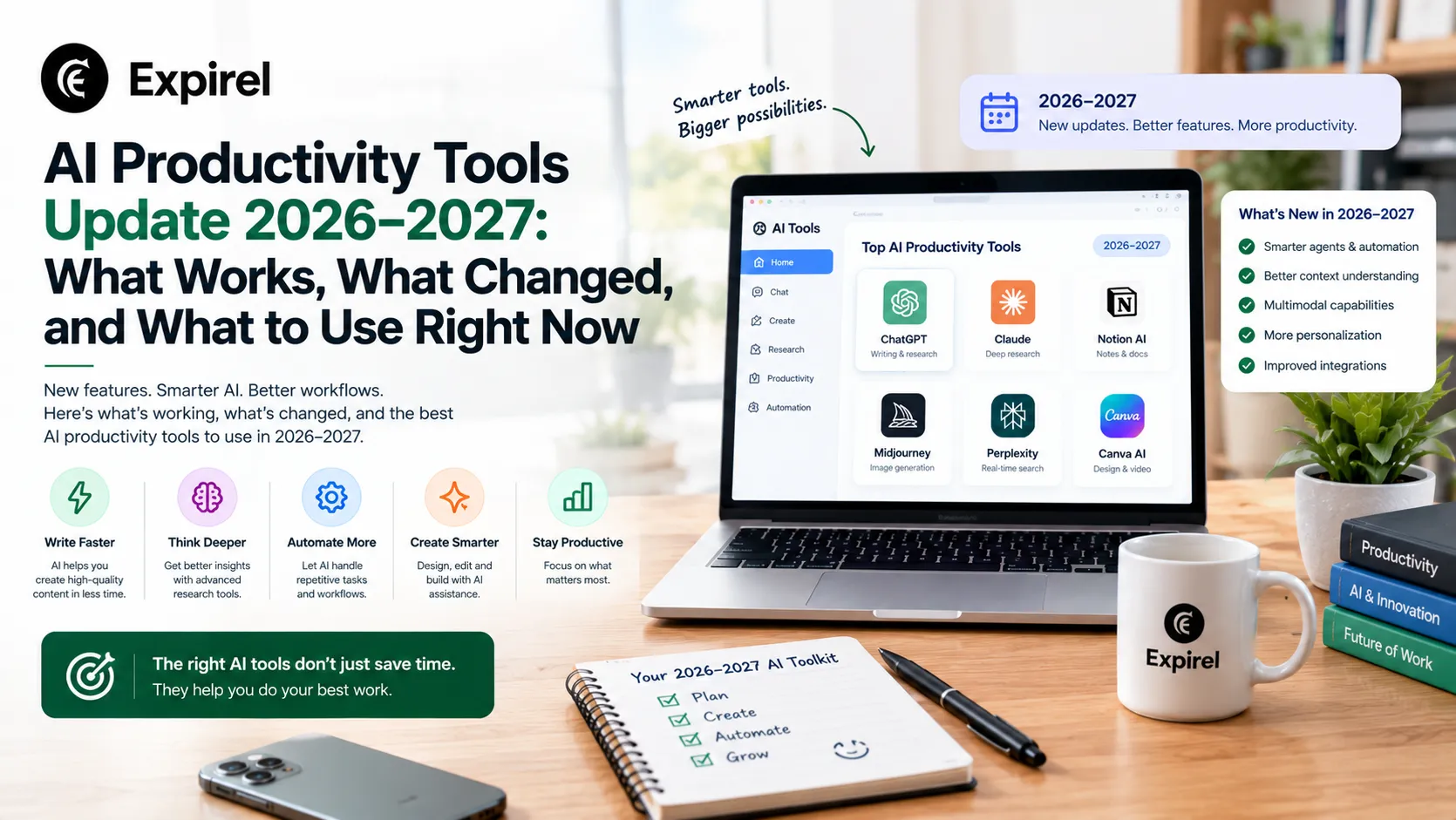
AI Productivity Tools Update 2026–2027: What Works, What Changed, and What to Use Right Now
September 18, 2026
AI productivity tools in 2026 and heading into 2027. What they mainly reduce the best tools by role, free options, and how to evaluate any tool before adopting.
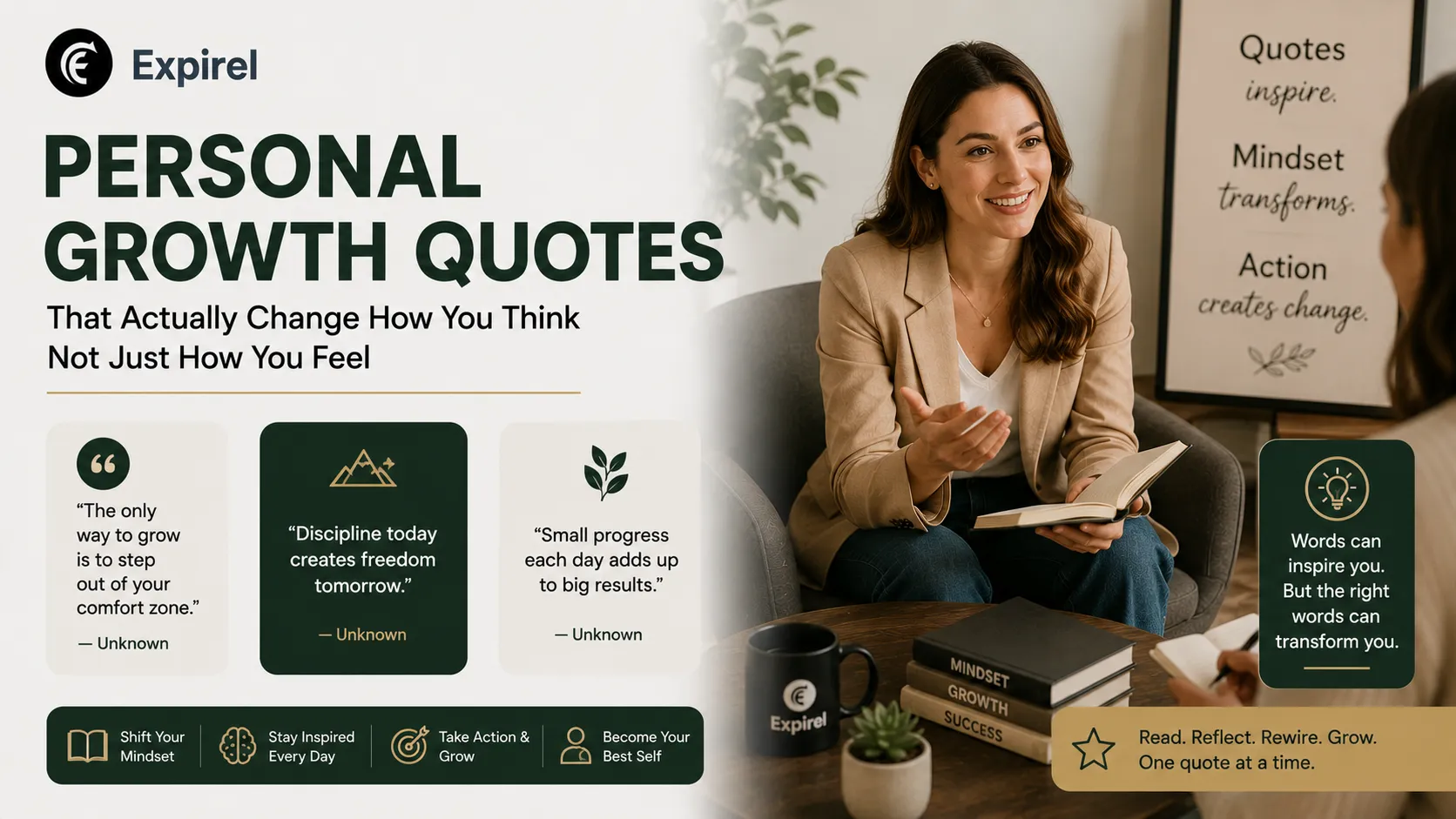
Personal Growth Quotes That Actually Change How You Think Not Just How You Feel
July 9, 2026
From Marcus Aurelius to John Maxwell, personal growth quotes that actually work, each paired with a specific action so you use them, not just save them.
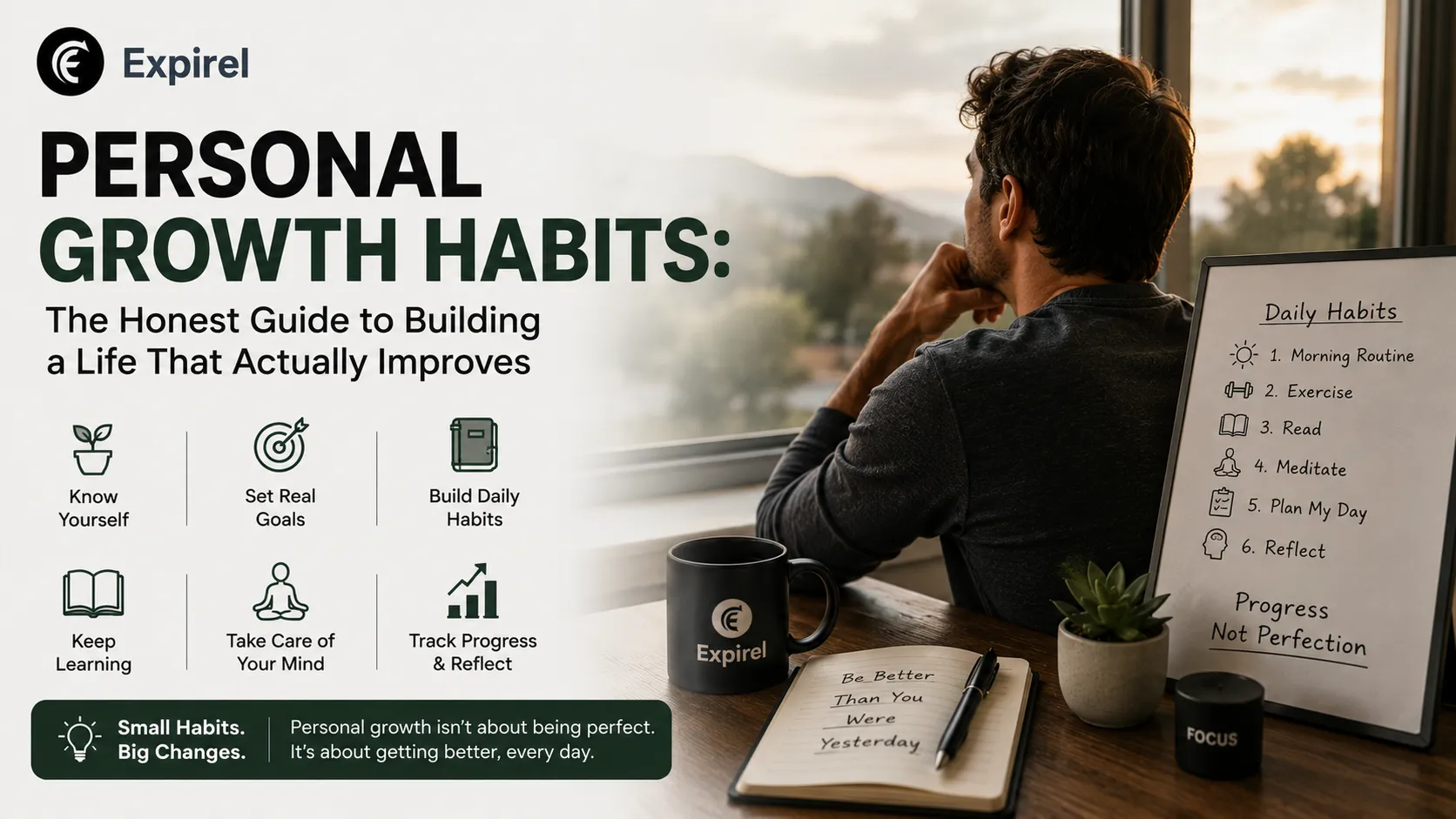
Personal Growth Habits: The Honest Guide to Building a Life That Actually Improves
July 2, 2026
Discover 25 powerful personal growth habits that improve mindset, discipline, relationships, and purpose. Build a better life one day at a time.