18 Habits That Are Killing You Slowly
Discover 18 habits that are silently damaging your health, finances, and mindset, plus science-backed ways to break each one starting today.
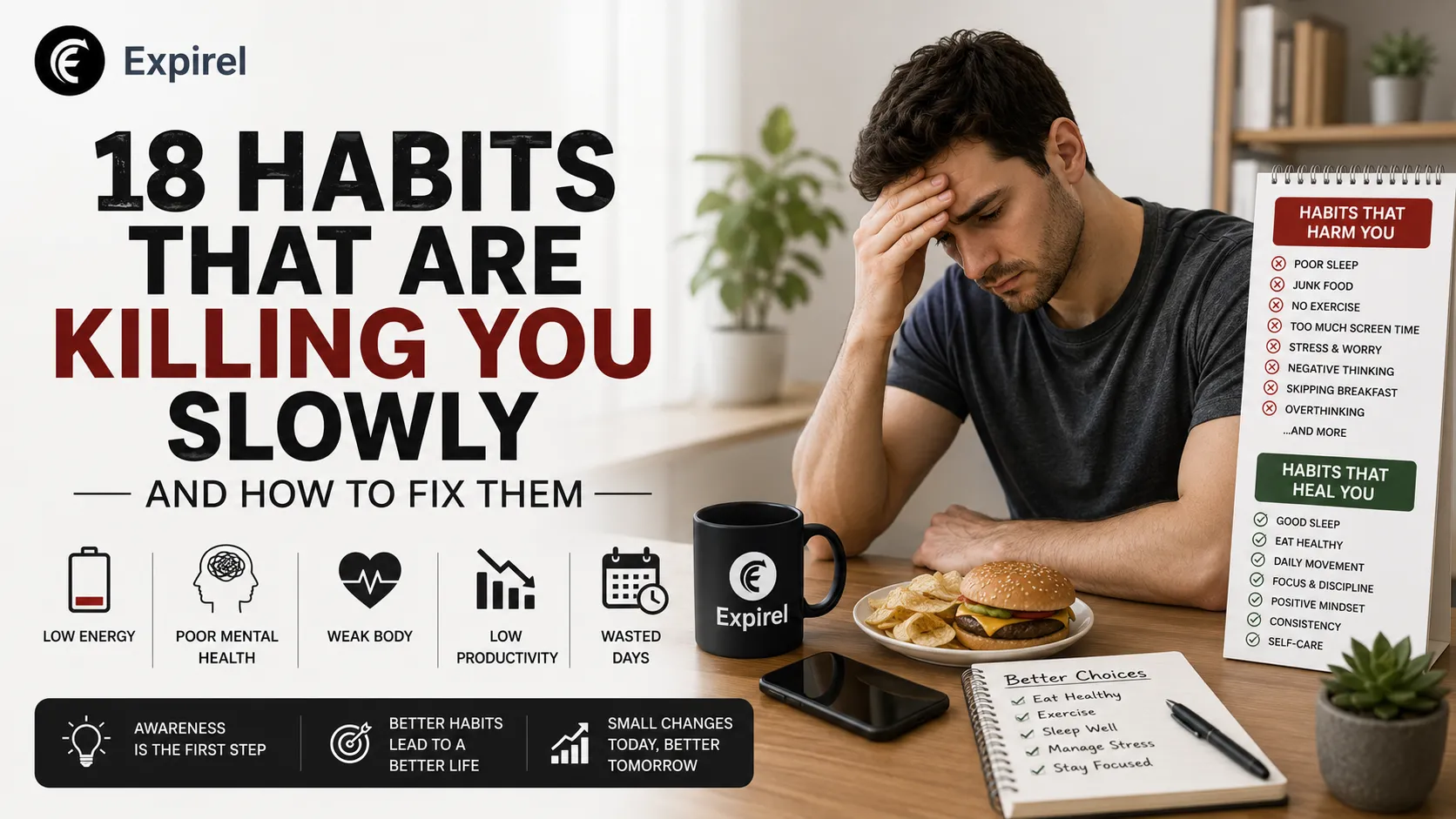
Most people don't get sick overnight. They don't burn out in a single week. They don't fall into financial trouble from one bad decision. The real damage happens quietly through small, repeated choices that feel harmless in the moment but compound into serious consequences over months and years.
The habits on this list are not extreme. They are ordinary. You probably recognise several of them in your own daily routine. That's exactly what makes them dangerous, as they hide in plain sight, normalised by a culture that treats busyness, poor sleep, and processed food as default settings.
This article covers all 18 habits in depth: what each one actually does to your body, mind, and life; the warning signs most people ignore; and specific, practical steps to reverse the damage. Where a digital habit tracker genuinely helps, like medication schedules or sleep consistency, you'll find a note on that too.
This is not a scare piece. It is an honest, evidence-informed guide to the patterns that quietly reduce your quality of life and what you can genuinely do about them.
📋 The 18 Habits at a Glance |
|
|
|
|
|
|
|
|
|
|
|
|
|
|
|
|
|
|
Habit 1: Too Little or Too Much Sleep
Sleep is the single most restorative function your body performs. Adults need seven to nine hours per night, according to the American Academy of Sleep Medicine. Yet millions regularly sleep under six hours or swing to the opposite extreme by oversleeping on weekends, further disrupting their circadian rhythm.
Chronic sleep deprivation raises cortisol levels, impairs memory consolidation, weakens immune response, and is independently linked to increased risk of type 2 diabetes, cardiovascular disease, and depression. Oversleeping, often a sign of underlying depression or sleep apnea, carries similar metabolic risks.
⚠️ Warning Signs | 🩺 How It Harms You | ✅ How to Fix It |
|
|
|
🔔 Track It with Expirel Set a nightly sleep reminder and log your bedtime each evening. After two weeks, the pattern becomes obvious and so does the fix. |
Habit 2: Overuse of Medication
Taking a painkiller for every headache, using sleep aids several nights a week, or self-prescribing antibiotics, these behaviours feel responsible but quietly create serious problems. The human body adapts to pharmaceutical inputs. Over time, the same dose becomes less effective, side effects accumulate, and dependency can develop without any conscious decision.
Over-the-counter NSAIDs like ibuprofen, taken frequently, can damage the gastric lining and impair kidney function. Antibiotic overuse contributes to antimicrobial resistance, a public health crisis that directly reduces the effectiveness of treatments for future infections. Benzodiazepine dependency can develop within weeks of regular use.
⚠️ Warning Signs | 🩺 How It Harms You | ✅ How to Fix It |
|
|
|
🔔 Track It with Expirel A medication and expiry tracker removes the guesswork, so you always know what you're taking, when you last took it, and whether it's still safe to use. |
Habit 3: Skipping Exercise
Physical inactivity is now classified by the World Health Organisation as the fourth leading risk factor for global mortality. A sedentary lifestyle does not just affect your weight; it reshapes your biology. Muscle mass declines, insulin sensitivity drops, bone density decreases, and mental health deteriorates in the absence of regular movement.
The good news is that the threshold for benefit is lower than most people think. Research published in the British Journal of Sports Medicine found that even 11 minutes of moderate exercise per day significantly reduces all-cause mortality risk. You do not need a gym membership to protect your health.
⚠️ Warning Signs | 🩺 How It Harms You | ✅ How to Fix It |
|
|
|
💡 Practical Tip Write your movement goal somewhere you'll see it daily, a sticky note on your monitor or a recurring phone reminder works. Visibility is what turns intention into a streak. |
Habit 4: Excessive Food Intake
Overeating is rarely about hunger. It is usually about stress, boredom, social context, or the engineered palatability of ultra-processed foods. The food industry spends billions optimising products for maximum consumption, and it works. The result is a global obesity epidemic that is driving parallel epidemics of type 2 diabetes, fatty liver disease, and cardiovascular illness.
Beyond quantity, food quality matters enormously. Diets dominated by refined carbohydrates, seed oils, and added sugars promote chronic low-grade inflammation, a condition now linked to everything from depression and anxiety to Alzheimer's disease and certain cancers.
⚠️ Warning Signs | 🩺 How It Harms You | ✅ How to Fix It |
|
|
|
💡 Practical Tip Keep a simple daily note of how you felt after each meal: too full, satisfied, or still hungry. This single habit builds the body awareness that most overeating patterns override. |
Habit 5: Lack of Social Activities
Loneliness is not a feeling; it is a physiological state with measurable health consequences. A landmark meta-analysis by Julianne Holt-Lunstad found that social isolation increases mortality risk by 29%, an effect comparable to smoking 15 cigarettes a day. This is not about introversion. Even introverts need meaningful human connections.
Chronic loneliness elevates inflammatory markers, disrupts sleep, impairs immune function, and dramatically increases the risk of clinical depression. In an age of digital connection, genuine social isolation has quietly become one of the most dangerous public health conditions.
⚠️ Warning Signs | 🩺 How It Harms You | ✅ How to Fix It |
|
|
|
💡 Practical Tip Put one social commitment on your calendar at the start of each week, the same way you would schedule a meeting. Social health rarely happens by accident it has to be planned. |
Habit 6: Too Much Screen Time
The average adult now spends over seven hours per day looking at screens. This is not a personal failure, it is the result of technology intentionally engineered to maximise attention capture. But the consequences are real: disrupted sleep from blue-light exposure, shorter attention spans, increased anxiety from constant information overload, and reduced capacity for deep thinking.
For children, excessive screen time is linked to delayed language development and reduced emotional regulation. For adults, it correlates with higher rates of depression, anxiety, and what researchers describe as 'continuous partial attention ', a state where you are never fully present in anything.
For a broader look at the everyday behaviors that can quietly affect long-term health, see our guide to what habits kill a human slowly, which examines 12 research-backed patterns and practical ways to replace them.
⚠️ Warning Signs | 🩺 How It Harms You | ✅ How to Fix It |
|
|
|
🔔 Track It with Expirel A daily check-in for a 'screen-free morning' habit makes the pattern visible. Most people are surprised by how quickly a tracked streak changes their relationship with their phone. |
Habit 7: Too Much Sugar and Salt
Sugar and salt are not inherently harmful. In appropriate quantities, they serve genuine biological functions. The problem is quantity. The average person consumes more than double the recommended daily sugar intake and well above the safe sodium threshold, primarily through processed and restaurant foods where these additives are invisible.
Excess sugar drives insulin resistance, promotes visceral fat accumulation, feeds chronic inflammation, and has been directly linked to non-alcoholic fatty liver disease. Excess sodium raises blood pressure, strains the cardiovascular system, and is a leading modifiable risk factor for stroke worldwide.
⚠️ Warning Signs | 🩺 How It Harms You | ✅ How to Fix It |
|
|
|
💡 Practical Tip Pick one swap and stick with it for two weeks before adding another, for example, water instead of soda. One sustained change beats five abandoned ones. |
Habit 8: Overworking
Hustle culture has made overworking a status symbol. Working 60 or 70 hours a week is framed as dedication. But the evidence tells a different story. A study by University College London tracked over 600,000 workers and found that working more than 55 hours per week increases stroke risk by 33% and heart disease risk by 13%, compared to standard working hours.
Beyond physical health, chronic overwork destroys cognitive performance. Research shows that productivity per hour drops sharply after 50 hours of work per week. You work more but produce less, while accumulating health debt, you will eventually have to repay.
⚠️ Warning Signs | 🩺 How It Harms You | ✅ How to Fix It |
|
|
|
💡 Practical Tip Tell one colleague or family member your daily cutoff time and ask them to hold you to it. External accountability works faster than internal willpower for boundary-related habits. |
Habit 9: Not Relaxing
Many people confuse exhaustion with relaxation. Collapsing on the sofa and scrolling through social media is not rest it is passive stimulation. True relaxation involves a genuine reduction in cognitive and physiological arousal: lower heart rate, reduced cortisol, and activation of the parasympathetic nervous system.
Without deliberate recovery, the body operates in a sustained state of low-level stress activation. Over time, this suppresses immune function, disrupts digestion, worsens sleep quality, and contributes to anxiety disorders. The failure to rest is not a sign of strength it is a risk factor.
⚠️ Warning Signs | 🩺 How It Harms You | ✅ How to Fix It |
|
|
|
💡 Practical Tip Block 20 minutes on your calendar labelled 'rest' the same way you'd block a meeting. Unscheduled rest gets sacrificed first; scheduled rest survives a busy day. |
Habit 10: Staying in an Unhealthy Relationship
Chronic relationship stress is one of the most underestimated health risks. Whether a romantic partnership, a friendship, or a family dynamic, sustained exposure to criticism, conflict, emotional manipulation, or neglect elevates cortisol and inflammatory markers in measurable, lasting ways.
Research published in Psychoneuroendocrinology found that couples in high-conflict relationships show significantly higher inflammatory markers than those in supportive partnerships. Over the years, this chronic stress load has contributed to cardiovascular disease, impaired immune function, and dramatically worsened mental health outcomes.
⚠️ Warning Signs | 🩺 How It Harms You | ✅ How to Fix It |
|
|
|
💡 Practical Tip After spending time with someone, briefly note how you felt energised or drained. A simple daily note over a few weeks reveals patterns that are easy to miss in the moment. |
Habit 11: Skipping Sunlight
Humans evolved outdoors. Natural light is not optional for optimal biological function. It is foundational. Sunlight triggers vitamin D synthesis in the skin, regulates the circadian rhythm, stimulates serotonin production, and suppresses melatonin at appropriate times to maintain alertness.
Vitamin D deficiency affects an estimated one billion people globally and is associated with impaired immune function, bone loss, increased depression risk, and higher susceptibility to respiratory infections. The simple act of spending 15 to 20 minutes outdoors in natural light each morning produces measurable improvements in mood, sleep quality, and energy within days.
⚠️ Warning Signs | 🩺 How It Harms You | ✅ How to Fix It |
|
|
|
💡 Practical Tip Pair sunlight exposure with something you already do your morning coffee, a phone call, or the walk to your car. Stacking habits onto existing routines makes them far easier to sustain. |
Habit 12: Negative Thinking
The mind is not a neutral observer. It is a prediction machine, and what it expects, it finds. Habitual negative thinking catastrophizing, ruminating, self-criticism, assuming the worst is not just unpleasant. It is physically harmful. Studies using neuroimaging show that chronic negative thought patterns alter the structure of the prefrontal cortex over time, reducing the brain's capacity to regulate emotion and make clear decisions.
Cognitive Behavioural Therapy research consistently shows that habitual negative thinking is a modifiable pattern, not a fixed personality trait. The brain remains plastic throughout life. New thought habits can and do physically reshape neural pathways.
⚠️ Warning Signs | 🩺 How It Harms You | ✅ How to Fix It |
|
|
|
💡 Practical Tip Keep a short daily note of one thing that went well, however small. Over weeks, this gradually re-trains what your brain notices first, a well-documented effect in cognitive psychology. |
Habit 13: Sitting for Long Hours
Sitting is not inherently dangerous. Sitting for eight to twelve uninterrupted hours every day is. The human body was not designed for prolonged static positions. When you sit for extended periods, circulation slows, posture collapses, hip flexors tighten, and the muscles responsible for metabolic regulation go largely inactive.
A landmark study published in the Annals of Internal Medicine found that sitting for more than eight hours per day with low physical activity is associated with a mortality risk comparable to the risks posed by obesity and smoking. More concerning, this risk persists even in people who exercise regularly if they sit for most of the remaining day.
⚠️ Warning Signs | 🩺 How It Harms You | ✅ How to Fix It |
|
|
|
💡 Practical Tip Set a recurring hourly alarm labelled 'stand up.' A two-minute movement break every hour adds up to over 20 minutes of extra daily activity you currently aren't getting. |
Habit 14: Bad Body Posture
Modern posture problems are a direct consequence of screen-dominated work. Forward head posture, rounded shoulders, and anterior pelvic tilt have become so common that they are sometimes called 'tech neck' and 'desk body.' For every inch your head moves forward from its neutral position, the effective load on your cervical spine increases by approximately 10 pounds.
Poor posture is not just aesthetic. It compresses the lungs, reducing breathing capacity by up to 30%, impairs lymphatic circulation, reduces blood flow to the brain, and contributes to chronic headaches, jaw pain, and upper back pain that becomes progressively harder to reverse.
⚠️ Warning Signs | 🩺 How It Harms You | ✅ How to Fix It |
|
|
|
💡 Practical Tip Doing a 2-minute posture reset at the same time each day, right after lunch, works well for most people. Consistency over weeks produces structural change; sporadic effort does not. |
Habit 15: Spending Before Earning
Financial stress is physiologically identical to physical stress. Chronic financial anxiety activates the same cortisol pathways, impairs the same cognitive functions, and produces the same long-term health consequences as other chronic stressors. The habit of spending before earning, buying on credit, living beyond income, and treating purchases as emotional regulation traps people in a cycle of debt that becomes increasingly difficult to escape.
Research from the American Psychological Association consistently ranks money as the top source of stress for adults. And the data shows that financial stress disproportionately affects sleep quality, relationship stability, and physical health outcomes across all income levels.
⚠️ Warning Signs | 🩺 How It Harms You | ✅ How to Fix It |
|
|
|
💡 Practical Tip Spend five minutes each evening reviewing what you spent that day. This single daily review builds more lasting financial awareness than a once-a-month budget session. |
Habit 16: Excessive Alcohol Consumption
Alcohol is deeply normalised in most cultures. Social drinking is viewed as harmless, even healthy in small quantities, based on older research that has since been significantly revised. A comprehensive 2018 study published in The Lancet, analysing data from 195 countries and 28 million people, concluded that the safest level of alcohol consumption for overall health is zero.
Alcohol is a Group 1 carcinogen, the same classification as tobacco. Regular consumption damages the liver, disrupts sleep architecture, suppresses immune function, and is directly linked to seven types of cancer, including breast, liver, and colorectal cancer. It also significantly worsens anxiety and depression despite providing short-term relief.
⚠️ Warning Signs | 🩺 How It Harms You | ✅ How to Fix It |
|
|
|
💡 Practical Tip Mark alcohol-free days on a calendar at the end of each month. Most people are surprised by how few truly alcohol-free days they have, seeing the count is often the wake-up call itself. |
Habit 17: Living Life on Autopilot
Autopilot living is perhaps the most invisible habit on this list. It describes a state where days, weeks, and years pass without conscious intention. You wake up, follow the same routine, react to the same patterns, have the same conversations, and arrive at the end of each year wondering where it went.
Psychological research on 'hedonic adaptation' shows that humans quickly normalise new circumstances, good and bad. Without intentional reflection and deliberate choice, most people default to inherited patterns from their upbringing, peer groups, and passive media consumption rather than consciously designed lives.
⚠️ Warning Signs | 🩺 How It Harms You | ✅ How to Fix It |
|
|
|
💡 Practical Tip End each day by writing down one choice you made intentionally, not out of habit or obligation. Over a month, this builds a clear record of how much of your life is genuinely chosen. |
Habit 18: Always Aggressive Behaviour
Chronic anger and aggression are not personality traits; they are stress responses that have become habitual. And like all chronic stress, sustained anger has real physiological consequences. Each episode of intense anger activates the sympathetic nervous system, releasing adrenaline and cortisol, raising blood pressure, and increasing the risk of cardiovascular events.
Research published in the Journal of the American Heart Association found that anger episodes increase the short-term risk of heart attack by nearly five times in the two hours following an outburst. Beyond personal health, chronic aggression erodes relationships, professional standing, and social support, the very resources that buffer against other health risks.
⚠️ Warning Signs | 🩺 How It Harms You | ✅ How to Fix It |
|
|
|
💡 Practical Tip Practice the physiological sigh once daily, even when calm, so it becomes automatic under stress. Rehearsing a regulation technique in advance makes it far more reliable in the heat of the moment. |
How to Actually Break These Habits
Knowing what harms you is only useful if it leads to change. And change requires a system, not just motivation. Here is a framework that works across all 18 habits above.
Step 1: Identify, Don't Criticise
Self-awareness without self-judgment is the starting point. You are not broken because you have these habits. You developed them for reasons that made sense at the time. The goal now is to see them clearly, not to feel guilty about them.
Step 2: Pick One Habit at a Time
Attempting to fix all 18 simultaneously guarantees failure for everyone. Choose the habit causing the most harm right now. Fix that one first. Build momentum before adding the next.
Step 3: Design Your Environment
Willpower is unreliable. The environment is consistent. Make the bad habit harder to access and the good habit easier. Put the phone in another room. Remove junk food from the kitchen. Put your running shoes by the front door. The environment does a lot of the behavioural work for you.
Step 4: Track and Make It Visible
What gets measured gets managed. A visible record of your daily practice creates accountability that outlasts motivation. Whether it's a paper calendar or a digital habit tracking app, seeing your pattern in objective data is uniquely motivating and uniquely honest.
Step 5: Never Miss Twice
Missing one day is human. Missing two in a row is the beginning of a new pattern. The rule is simple: whatever happens, never miss twice. A minimum viable version of the habit on hard days keeps the identity intact.
Conclusion
None of the 18 habits on this list will destroy your health tomorrow. That is precisely what makes them so dangerous. The slow accumulation of small daily choices compounding quietly over months and years is responsible for most of the preventable illness, unhappiness, and regret that people experience in their lives.
The opposite is also true. Small improvements, compounded consistently, produce remarkable results. Sleeping one hour better each night, walking ten minutes per day, reducing your sugar intake by half, and moving every 45 minutes, none of these changes feels dramatic. All of them, sustained over time, are genuinely life-changing.
You do not need to fix everything at once. Pick one habit from this list, the one costing you the most right now. Build a system around changing it. Track it every day. When it feels automatic, pick the next one.
Your future health is not determined by your genes or your luck. It is determined by what you do between now and then, one day at a time.
🛡️ Start Protecting Your Health Today Breaking bad habits is easier when you can see your progress. Expirel helps you track daily habits, set health reminders, and build consistency one day at a time. Whether you want to sleep better, move more, cut down on screen time, or improve your mental health, Expirel gives you the system to make it real. 👉 Start Free at expirel.com — No Credit Card Required |
Frequently Asked Questions
Q: What are the most dangerous everyday habits for long-term health?
The most damaging everyday habits are those that compound silently over time: chronic sleep deprivation, physical inactivity, excessive sugar and salt intake, prolonged sitting, and chronic stress from overwork or unhealthy relationships. Each of these has strong research evidence linking it to significantly increased disease risk and reduced lifespan.
Q: Can bad habits actually kill you?
Yes, though rarely overnight. The mechanism is cumulative damage. Habits like excessive alcohol, smoking, sedentary behaviour, and chronic stress independently increase mortality risk by measurable percentages documented in large-scale epidemiological studies. The compounding effect of multiple bad habits across years is the mechanism behind most preventable deaths globally.
Q: How long does it take to break a bad habit?
Research from University College London found an average of 66 days to form a new habit, with a range of 18 to 254 days depending on the complexity and the individual. Breaking a habit follows a similar timeline. The key variable is not time but consistency: how many days in a row you practice the replacement behaviour.
Q: What is the easiest habit to fix first?
Start with the one causing the most pain and the one where the fix is clearest. Hydration is often the most accessible entry point. Drinking more water costs nothing, requires no skill, and produces noticeable improvements in energy and focus within days. Sleep consistency is a close second. Both create a foundation that makes fixing harder habits easier.
Q: Does habit tracking actually help?
Research consistently shows it does. A study by Dr Gail Matthews at Dominican University found that people who track their goals in writing are 42% more likely to achieve them. Habit tracking adds a visual feedback loop, the streak itself becomes a motivator, and objective data removes the self-deception that often allows bad habits to persist.
Q: How does negative thinking affect physical health?
Chronic negative thinking activates the body's stress response, elevating cortisol and inflammatory markers. Over time, this suppresses immune function, impairs cardiovascular health, disrupts sleep, and has been shown in neuroimaging studies to alter the structure of the prefrontal cortex. The mind-body connection in this context is well-established science, not metaphor.
Q: Is there a tool to help track and break bad habits?
Yes. Digital habit trackers like Expirel let you log daily practices, set reminders, visualise streaks, and identify patterns in your behaviour. The combination of reminder systems and visual progress tracking addresses two of the biggest reasons habits fail: forgetting to do them and losing sight of cumulative progress.

Fahad Ahmad
Founder of EXPIREL · Digital Entrepreneur · Product Management Specialist
Fahad Ahmad is the founder of EXPIREL and a digital entrepreneur with over 10 years of experience in SaaS development, SEO, and digital product creation. He focuses on building practical solutions that help individuals and businesses manage product expiration dates, organize inventory, track habits, and improve daily productivity.
Through EXPIREL, Fahad shares actionable guides, product management tips, barcode scanning tutorials, and research-backed insights designed to help users reduce waste, stay organized, and make smarter decisions.
Related Articles
View all
How to Track Habits: A Complete System for Building Habits That Actually Stick
August 3, 2026
Tired of abandoned habit trackers? Get a step-by-step system for daily, weekly, and long-term habits, plus a free 30-day checklist you can start today.
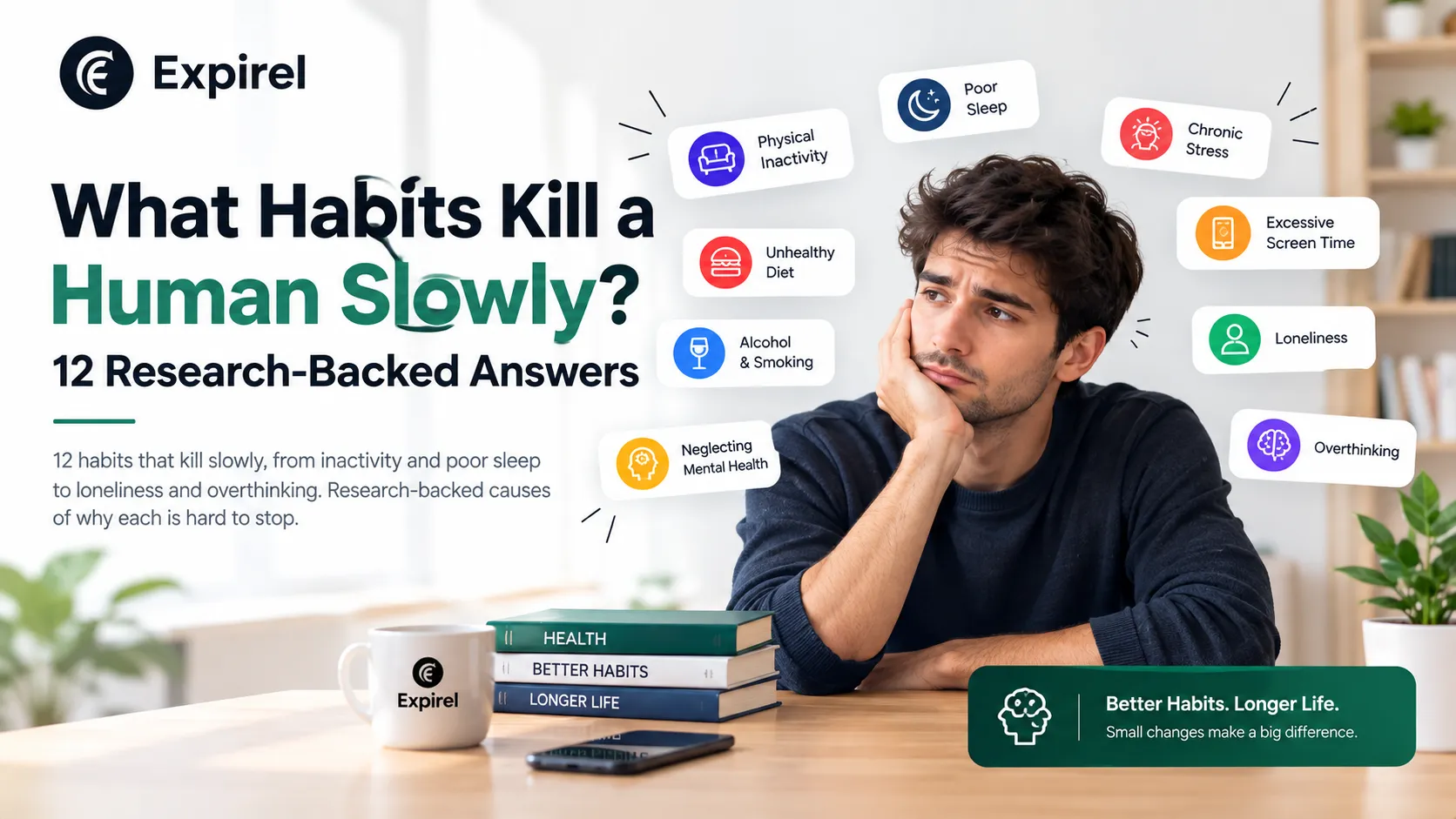
What Habits Kill a Human Slowly? 12 Patterns Research Has Linked to Early Death and How to Stop Each One
September 9, 2026
12 habits that kill slowly, from inactivity and poor sleep to loneliness and overthinking. Research-backed causes of why each is hard to stop.

Habits for Productivity: The Ones That Actually Compound, by Life Stage and Style
July 31, 2026
Most habit lists ignore fit. See daily, micro, morning, and Japanese habits for productivity, matched to your actual energy and life stage.