The Complete Morning Routine for Success: A Step-by-Step System to Win Your Day
A proven best morning routine for success with a step-by-step checklist, daily habit tips, and tools to stay consistent every single day.

Why Most Mornings Fail Before They Start
You set the alarm for 6 AM. By 6:45, you've already hit snooze twice, scrolled through your phone, and skipped breakfast. By the time you reach your desk, you feel scattered, reactive, and behind, and the day has barely started.
This is not a discipline problem. It is a systems problem.
The world's most effective people, from CEOs to athletes to artists, do not rely on willpower alone. They rely on a structured morning routine that removes decisions, builds momentum, and sets the tone for everything that follows.
This article gives you a complete, practical morning routine for success: what to do, why it works, how to stick to it, and the common mistakes that derail even the most motivated people. Whether you are building from scratch or fixing a broken routine, you will leave with a morning routine list you can actually follow.
What Is a Morning Routine and Why Does It Matter?
A morning routine is a fixed sequence of morning activities you perform each day, usually within the first 60 to 90 minutes of waking up. It is not about waking up at 4 AM or meditating for an hour. It is about intentional structure that prepares your mind and body for high performance.
Research published in the European Journal of Social Psychology found that habits take an average of 66 days to form. The morning is the most powerful window to build those habits because your willpower and decision-making capacity are freshest after sleep.
The Science Behind Morning Routines
When you wake up, your cortisol levels naturally peak, a phenomenon known as the cortisol awakening response (CAR). This morning spike is your brain's natural energy boost. A structured morning routine harnesses that peak. A chaotic morning wastes it.
Neuroscientist and Stanford professor Dr. Andrew Huberman points out that getting natural sunlight within the first 30 minutes of waking anchors your circadian rhythm, improves alertness, and boosts mood for the rest of the day. This single daily practice costs nothing and takes five minutes.
A good morning routine is not a luxury. It is a daily investment in your cognitive performance, emotional regulation, and physical health.
Four Examples of Routine Decisions That Shape Your Day
Most people underestimate how many micro-decisions happen in the morning. Here are four examples of routine decisions that your morning system should eliminate or automate:
What to wear (decision fatigue starts here for most people)
What to eat for breakfast (impulsive choices drain focus)
Which task to tackle first (without a plan, urgency hijacks priority)
Whether to exercise (motivation-dependent decisions rarely win)
When these decisions are built into your morning routine, you save mental energy for work that actually matters.
The Complete Morning Routine Checklist
Below is a proven morning routine checklist built around the principles of productivity, habit science, and time management. You do not need to do everything from day one. Start with three to four steps and build from there.
⏰ Morning Routine Checklist at a Glance |
|
|
|
|
|
|
|
|
|
Step 1: Wake Up at a Fixed Time
Consistency is more important than the specific time. Waking at 6:00 AM every day is more effective than waking at 5:00 AM three days and 8:00 AM on weekends. Your brain craves predictability. Irregular sleep-wake cycles disrupt melatonin production and impair cognitive function.
Practical tip: Set your alarm for the same time seven days a week for the first 30 days. Use this period to calibrate your natural rhythm.
Step 2: No Phone for the First 30 Minutes
Checking your phone first thing floods your brain with reactive information, news, messages, and notifications before you've had the chance to set your own agenda. This puts you in a response mode rather than a creation mode.
Leave your phone in another room overnight if possible. Replace the morning scroll with movement, hydration, or quiet reflection.
Step 3: Hydrate Immediately
You wake up dehydrated after six to eight hours without water. Before coffee, before breakfast, drink 16 oz (500 ml) of water. This simple morning activity rehydrates your brain, jumpstarts your metabolism, and reduces the mid-morning energy crash.
Step 4: Get Sunlight and Move Your Body
Walk outside for five to ten minutes. If the weather doesn't allow it, stand near a bright window. Combine this with light movement stretching, a short walk, or a 10-minute yoga session. You don't need a full gym session to activate your body. The goal is to elevate your heart rate and signal to your brain that the day has begun.
Studies consistently show that morning exercise improves executive function, working memory, and mood throughout the day, all critical for sustained productivity.
Step 5: Eat a Focused Breakfast
A high-protein breakfast stabilizes blood sugar and supports mental clarity. Eggs, Greek yoghurt, nuts, or a protein smoothie are practical choices. Avoid high-sugar cereals or ultra-processed foods that cause an energy spike followed by a crash.
If you practice intermittent fasting, hydration and movement still apply. Plan your first meal window deliberately rather than eating reactively.
Step 6: Set Your Daily Priorities
Before you open an email or any reactive communication, write down your top three priorities for the day. Not ten things three. This morning's work practice forces you to distinguish between what is urgent and what is actually important.
A useful question to ask: 'If I only accomplished one thing today, what would make the most meaningful difference?' That task goes first.
Step 7: Start With One Focused Task
Spend 10 to 25 minutes on your most important work before the day's noise begins. This is called 'eating the frog', tackling the hardest thing first when your cognitive capacity is highest. Over time, this daily practice compounds into remarkable output.
Step 8: Review Your Habit Tracker
A habit tracker makes your routine visible and measurable. Research by Dr. Gail Matthews at Dominican University found that people who write down their goals are 42% more likely to achieve them. A digital habit tracker extends that effect by showing streaks, trends, and accountability data over time.
Tools like Expirel let you log daily habits, set reminders, and visualise your consistency, making it easier to maintain momentum even on difficult days.
Daily Habit Menu: Choose What Works for You
Not every morning activity suits every person. Below is a daily habit menu organized by category. Think of this as a buffet, select the items that align with your goals and schedule, and rotate as your needs evolve.
Category | Daily Habit Options |
Physical | Walk, yoga, strength training, stretching, and a cold shower |
Mental | Journaling, reading, meditation, and gratitude practice |
Nutritional | Protein breakfast, hydration, supplements, and meal prep |
Productive | Deep work block, reviewing priorities, learning 15 min |
Organizational | Habit tracking, calendar review, and to-do list update |
Relational | Morning call with a loved one, gratitude message |
The goal is not to do all of these. It is to choose three to five that move you toward your specific goals and make them non-negotiable.
How to Stick to a Routine: The Real Challenge
Building a morning routine is the easy part. Sticking to it is where most people fail. Here is why, and what to do instead.
The Three Reasons Morning Routines Break Down
The routine is too ambitious from the start, going from zero structure to a 2-hour morning is unsustainable.
There is no accountability system; motivation fluctuates, but systems don't.
One missed day becomes two, then a week; the 'all-or-nothing' trap destroys consistency.
Practical Strategies to Stay Consistent
Start with a 20-minute version. A short, doable routine you repeat daily beats an elaborate one you abandon in a week.
Stack new habits onto existing ones. If you already make coffee, add two minutes of journaling while it brews. Habit stacking reduces the friction of starting.
Use a tracking system. Mark every day you complete your routine. The visual streak becomes a motivator in itself; you will not want to break the chain.
Plan for interruptions. Life happens like travel, illness, and early meetings. Have a 10-minute 'minimum viable routine' ready for hard days. Even a stripped-down version maintains the identity of being someone who has a morning routine.
Review and adjust monthly. A routine that worked in winter may not work in summer. Flexibility within structure is not failure, it is sustainability.
Real-World Morning Routine Examples
Abstract advice is easy to ignore. Here are three realistic morning routine examples from different daily life scenarios to show how the principles apply in practice.
Example 1: The Working Parent (60-Minute Routine)
5:45 AM — Wake up, drink water, 5 minutes of stretching
6:00 AM — Review top 3 priorities for the day
6:10 AM — 20-minute jog while kids sleep
6:35 AM — Protein breakfast with family
7:00 AM — 15-minute deep work block (writing, planning, or learning)
7:15 AM — School drop-off or work prep begins
Why it works: it is realistic, fits around family constraints, and includes both physical and cognitive anchors.
Example 2: The Remote Freelancer (90-Minute Routine)
7:00 AM — Wake up, no phone, glass of water
7:10 AM — 20 minutes of yoga or bodyweight training
7:35 AM — Shower and breakfast
8:00 AM — 30-minute focused deep work block
8:30 AM — Habit tracker check-in and calendar review
8:45 AM — Open email and start client communications
Why it works: the deep work block before email prevents reactive work patterns, a common trap for freelancers.
Example 3: The Student (45-Minute Routine)
7:15 AM — Wake up, phone stays off
7:20 AM — 10-minute walk outside with sunlight exposure
7:30 AM — Breakfast while reviewing study notes
7:50 AM — Journal: 3 things to accomplish today
8:00 AM — Classes or study session begins
Why it works: it is simple enough to sustain on busy class days while still including movement, clarity, and nutrition.
Common Mistakes People Make With Morning Routines
Even well-intentioned people sabotage their morning routines. Here are the most common mistakes and exactly how to fix them.
Mistake 1: Copying Someone Else's Routine Exactly
Tim Cook wakes at 3:45 AM. That works for Tim Cook. It probably does not work for you. Your morning routine must match your chronotype, work schedule, and personal priorities. Use other people's routines as inspiration, not blueprints.
Mistake 2: Making the Routine Too Long
A five-step morning routine you complete daily is worth more than a fifteen-step routine you abandon by day four. Start small. A consistent 25-minute routine builds more long-term value than an aspirational two-hour routine that collapses under real-life pressure.
Mistake 3: Skipping the Night Before
Your morning begins the night before. Poor sleep, late-night screens, and no prep work make a good morning almost impossible. Set out your workout clothes the night before. Write your priority list the night before. Go to bed at a consistent time. The morning is the reward for a disciplined evening.
Poor sleep and late-nigt screens do more than ruin your morning. They are two of the daily habits most closely linked to long-term health decline. If your evenings are the problem, see our breakdown of the everyday habits quietly damaging your health for the full picture.
Mistake 4: Treating a Missed Day as Failure
Missing one day does not break a routine. Missing two days in a row starts a new pattern. The rule is simple: never miss twice. One slip is human. A pattern is a choice.
Mistake 5: No System for Tracking Progress
What gets measured gets managed. Without a tracking system, your routine exists only in your head, and good intentions fade. A digital habit tracker or a simple paper checklist creates tangible evidence of your consistency, which reinforces the behaviour over time.
The Role of Tracking in Building a Sustainable Routine
Habit tracking is not about obsession. It is about awareness. When you track your morning routine, you create a feedback loop: you can see which habits you're nailing, which ones you're skipping, and how your consistency affects your performance and mood.
Digital tracking platforms have made this dramatically easier. Instead of paper charts or vague memories, you can log daily habits in seconds, receive reminders before your routine begins, and review trends over weeks and months.
How Expirel Supports Your Daily Practice
Expirel was designed for people who want to stay organised across different areas of their life, from tracking the expiry dates of household products to managing consistent daily habits. Within your morning routine, Expirel can serve as a lightweight but powerful accountability tool:
Set daily reminders for each habit in your routine
Log completions with a single tap
Track streaks to maintain momentum
Receive prompts when you haven't checked in for a day
Pair your habit tracker with product and health reminders for a fully organised daily life
The idea is not to add complexity to your morning. It is to reduce the mental overhead of tracking so you can focus on doing. A good system works quietly in the background while you focus on your priorities.
Best Practices for Long-Term Routine Building
A morning routine is not a sprint. It is a long-term daily practice that evolves as you do. These best practices will help you maintain it for months and years, not just days.
Anchor to identity, not outcomes. Don't say 'I'm trying to exercise.' Say 'I am someone who moves every morning.' Identity-based habits are more durable than goal-based ones.
Use environmental design. Make healthy defaults easier than unhealthy ones. Put your water glass on the nightstand. Put your running shoes by the door. Remove your phone charger from the bedroom.
Build in a weekly review. Every Sunday, spend five minutes reviewing your habit data from the previous week. What worked? What didn't? Small adjustments compound into big results.
Celebrate small wins. Completing your morning routine is an accomplishment. Acknowledge it as a checkmark, a journal entry, or even a simple mental note, which reinforces the behaviour.
Link your routine to your values. If health is your core value, tie your exercise habit to it. If family is your priority, make your morning work protect your family time. Routines driven by values outlast routines driven by trends.
Conclusion
Success is not built in dramatic moments. It is built in the first 60 minutes of every ordinary day. A structured morning routine gives you control, clarity, and momentum before the world has a chance to pull your attention in ten directions.
You don't need a perfect routine. You need a consistent one. Start with three habits. Build your morning routine list around them. Track your progress. Adjust as you grow.
The compound effect of a well-designed morning is real, and it starts tomorrow morning.
🚀 Ready to Build Your Success Routine? Expirel helps you track your daily habits, build consistency, and stay organised from morning routines to expiry date reminders. Start your free account today and make every morning count. 👉 Try Expirel Free at expirel.com |
Frequently Asked Questions
Q: What is the best morning routine for success?
The best morning routine is one you can sustain consistently. It should include hydration, physical movement, a moment of clarity or planning, and protection of your first 30 to 60 minutes from reactive inputs like social media and email. The specifics depend on your schedule, goals, and energy patterns.
Q: How long should a morning routine be?
For most people, 30 to 90 minutes is ideal. Beginners should start with 20 to 30 minutes covering three to four habits. The goal is not length, it is consistency. A 25-minute routine done every day outperforms a two-hour routine done three times a week.
Q: How do I stick to a morning routine when I'm not a morning person?
Start by shifting your bedtime earlier in 15-minute increments. Reduce evening screen use to improve sleep quality. Design a routine so simple and rewarding that you actually look forward to it. Use a habit tracker to maintain streaks that make skipping feel costly.
Q: What should I include in my morning routine checklist?
A strong morning routine checklist includes: waking at a fixed time, drinking water, getting sunlight or movement, eating a nutritious breakfast, reviewing your top three priorities, and spending focused time on your most important task. Add or remove habits based on your goals.
Q: Can I build a morning routine if I have kids or an unpredictable schedule?
Yes. The key is designing a 'minimum viable routine' a three-step version for chaotic days. Even on difficult mornings, drinking water, writing one priority, and taking five minutes of movement can anchor the day. Flexibility within structure is the mark of a sustainable routine.
Q: Is habit tracking necessary for a morning routine?
Not strictly necessary but highly effective. Tracking makes your progress visible, creates accountability, and helps you identify patterns. Studies show that people who track habits consistently are significantly more likely to maintain them over the long term.
Q: What are some examples of morning activities for productivity?
Effective morning activities include: journaling (5 minutes), reviewing priorities (5 minutes), a focused deep work block (15 to 25 minutes), physical movement (10 to 30 minutes), reading or listening to educational content (10 minutes), and reviewing your habit tracker. Choose based on your goals, not popularity.
Q: How do I build a daily habit that actually sticks?
Use habit stacking and attach a new habit to an existing one. Make the new habit tiny at first (two minutes or less). Track it daily. Create environmental cues that trigger it. And remember: consistency over intensity. Doing something small every day beats doing something big occasionally.

Fahad Ahmad
Founder of EXPIREL · Digital Entrepreneur · Product Management Specialist
Fahad Ahmad is the founder of EXPIREL and a digital entrepreneur with over 10 years of experience in SaaS development, SEO, and digital product creation. He focuses on building practical solutions that help individuals and businesses manage product expiration dates, organize inventory, track habits, and improve daily productivity.
Through EXPIREL, Fahad shares actionable guides, product management tips, barcode scanning tutorials, and research-backed insights designed to help users reduce waste, stay organized, and make smarter decisions.
Related Articles
View all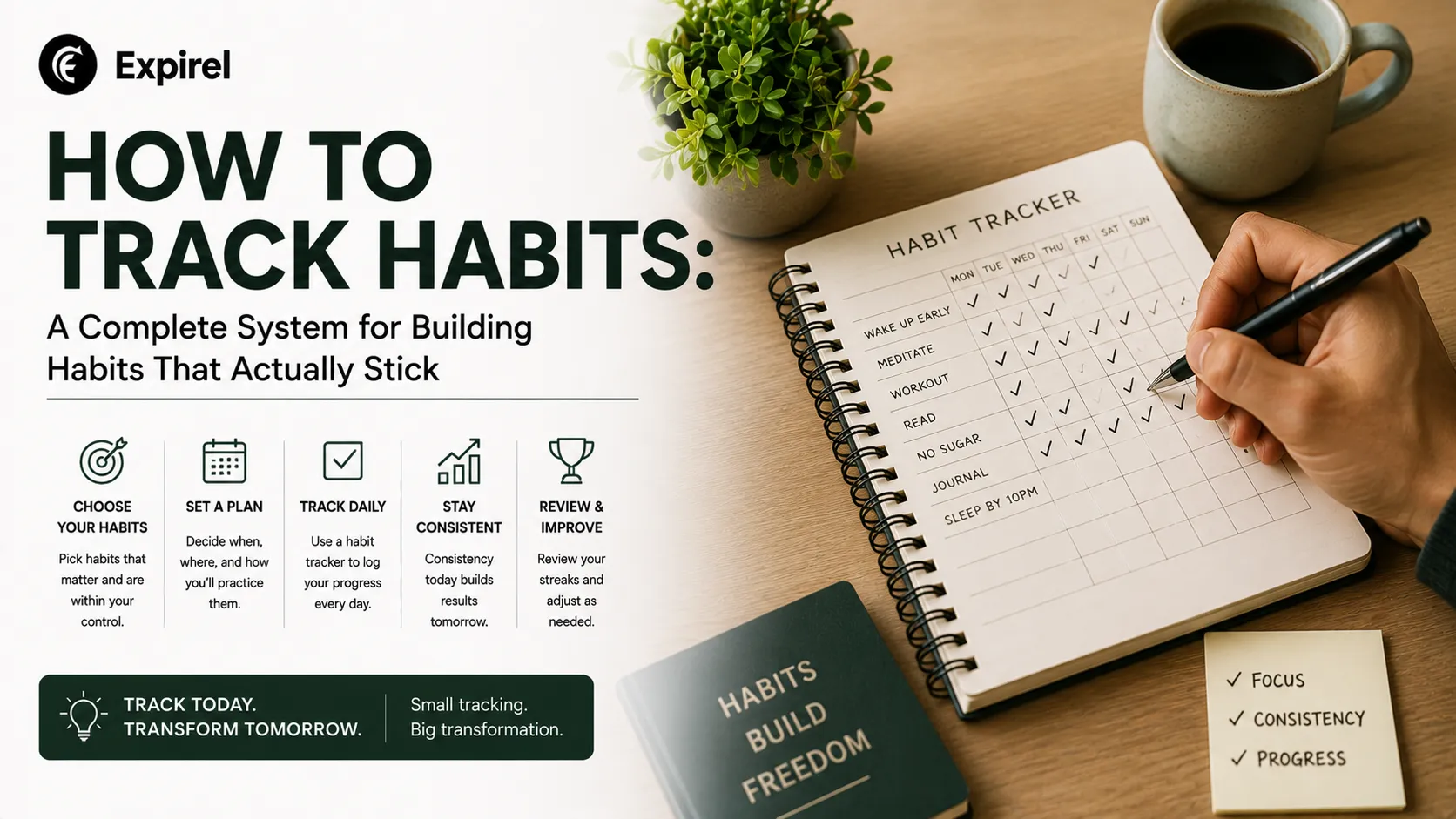
How to Track Habits: A Complete System for Building Habits That Actually Stick
August 3, 2026
Tired of abandoned habit trackers? Get a step-by-step system for daily, weekly, and long-term habits, plus a free 30-day checklist you can start today.
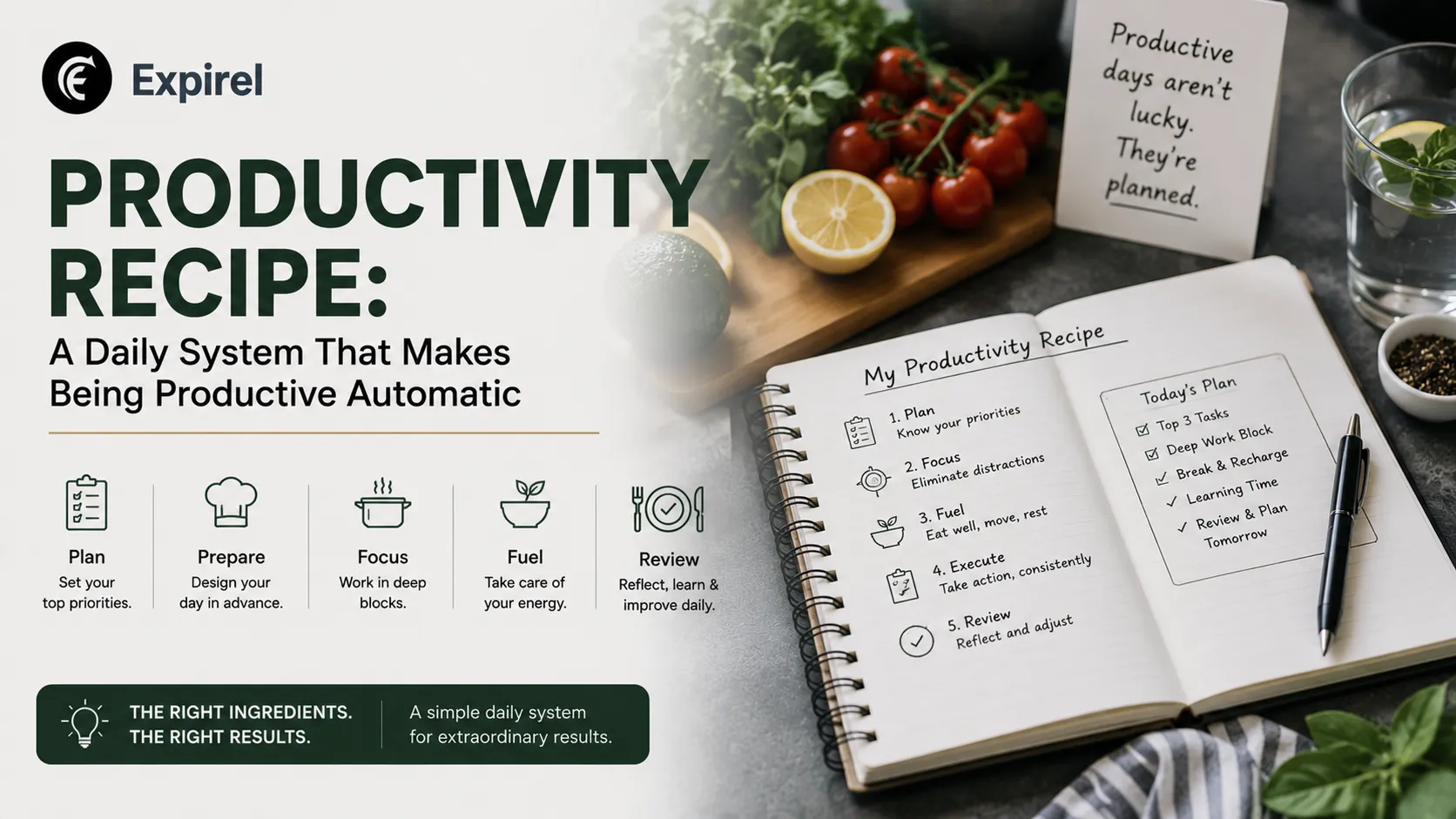
Productivity Recipe: A Step-by-Step System for Turning Effort Into Consistent Results
July 17, 2026
Tired of productivity hacks that fade by week two? This productivity recipe gives you the exact steps, a Google Sheets template, and the mistakes to avoid.

How to Build a Job-Search Routine That Actually Lands Interviews
August 24, 2026
Build a weekly job search routine that lands more interviews. Track habits, tailor applications, and network smarter, without the burnout.