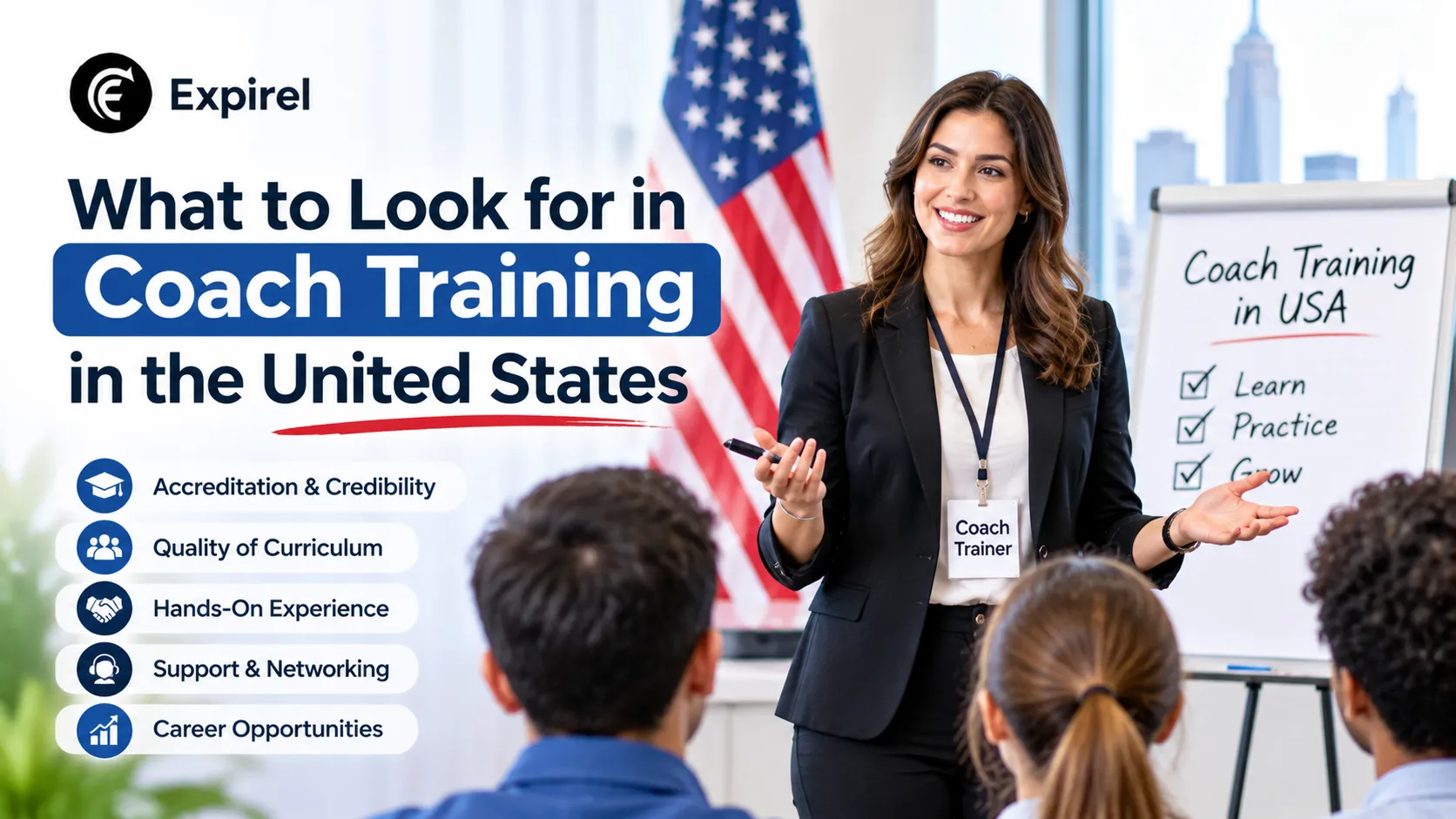
What to Look for in Coach Training in the United States
Compare coach training in the United States: ICF accreditation, ACC and PCC hours, mentor coaching, formats and costs, plus a checklist.
Becoming a coach takes more than good listening skills. You need structured training, supervised practice, and a clear plan for turning those skills into client work. The right program shortens that path. The wrong one can cost thousands of dollars and still leave you short of a recognized credential.
Choosing is hard because programs differ so much. Some focus on personal growth, while others cover leadership, business, or health. Prices, schedules, and credential paths also vary, and marketing often blurs the differences.
When comparing coach training in the United States, start with four checks: accreditation, hands-on practice, instructor support, and total cost. This guide shows you how to run each check, what the International Coaching Federation (ICF) actually requires, and which questions to ask before you pay.
How Do You Choose a Coach Training Program?
Use this checklist to screen any program quickly:
Confirm the program's current ICF accreditation status on the ICF website.
Check that its education hours match the credential you want (ACC or PCC).
Ask how many live practice sessions and feedback rounds you will get.
Find out whether mentor coaching is included or sold separately.
Request a written total cost, including assessments and exam fees.
Match the course content to your niche, such as life, executive, or health coaching.
Check Accreditation and Credential Paths
The ICF sets widely used standards for coach education and issues individual credentials. Two points trip up new coaches. First, a training certificate and an ICF credential are different things. Second, completing a course does not award the credential on its own.
ICF's ACC paths page explains that every path to the Associate Certified Coach credential has the same five requirements: education, experience, mentor coaching, a performance evaluation, and an exam. Level 1, Level 2 and Accredited Coach Training Programs build the education hours, mentor coaching and performance evaluation into the course. The PCC paths page says the same for the Professional Certified Coach credential. Compare the main requirements below:
Credential | Coach-specific education | Coaching experience | Mentor coaching |
|---|---|---|---|
ACC | 60+ hours | 100+ hours, at least 75 paid | 10 hours |
PCC | 125+ hours | 500+ hours, at least 450 paid | 10 hours |
MCC | 200+ hours | 2,500+ hours | 10 hours |
If you use non-accredited programs or continuing education units to meet the hours, ICF requires you to apply through its Portfolio path, which asks for more documentation. Rules change, so check the latest ICF requirements before you enroll.
Ask every provider these questions:
Is the program currently accredited, and at which level?
Which credential path does it support?
How does it assess my coaching skills?
What extra fees exist beyond tuition?
Is Coach Certification Required in the United States?
No general coaching license applies nationwide, so you can legally call yourself a coach without one. Even so, training and credentials help you build trust. ICF's 2023 global study, which International Coach Academy cites on its USA page, reports that 80 percent of coaches agree clients expect their coach to be certified or credentialed.
Be careful at the edges. If your coaching touches therapy, medical advice or nutrition prescriptions, other professional rules may apply. Check your state's requirements before you offer those services.
Look for Hands-On Coaching Practice
Reading about coaching teaches vocabulary. Coaching real people teaches skill. Look for a program that makes you practice and then gives you specific feedback. A strong course usually includes:
Peer coaching: regular sessions with other students
Live demonstrations: watching experienced coaches work with real clients
Feedback: clear notes on what you do well and what needs work
Recorded sessions: a way to review your own performance
Mentor coaching matters just as much. ICF requires 10 hours for the ACC credential, spread over at least three months. A mentor coach watches you coach and tells you what they see. Check whether the course includes these sessions. If not, ask how you will complete them and what they will cost.
Start logging client hours early. ICF counts coaching experience from the start of your coach-specific education, so you do not need to wait until graduation. Keep a simple log with the date, client, hours and whether the session was paid. Many coaches also schedule weekly practice and logging with a habit tracker, which makes the routine harder to skip.
Compare Learning Formats, Schedules and Costs
Your training must fit your daily life. If you work full time, a flexible schedule may matter more than a famous brand name. Coach training runs online, in person, or in a mix of both. Compare the formats below:
Format | Main benefit | What to check |
|---|---|---|
Online live | Study from home | Class times in your time zone |
In person | Meet instructors and classmates | Travel and lodging costs |
Hybrid | Mix of live and online lessons | Attendance rules |
Self-paced | Study at your own speed | How you get feedback and practice |
Costs vary widely by provider, course length, and services. Published tuition differs between schools, and some pages list more than one price, so ask for a written total. Compare these items side by side:
Tuition and payment plan terms
Learning materials
Mentor coaching sessions
Performance evaluation and exam fees
ICF application fees
Match the Program to Your Coaching Niche
Your career goal shapes which program fits. Life coaching helps clients work toward personal goals. Executive coaching focuses on leadership and work performance. Health coaching helps clients build healthy habits. If you want to focus on relationships, look for courses that cover communication and personal boundaries.
Read the full course outline before you enroll. A program that fits your niche should show real examples, practice scenarios, and instructors with experience in that area. If you plan to recommend tools to clients between sessions, it also helps to know how different goal-setting apps support accountability, since follow-through is where many coaching engagements stall.
Review Instructor Support and Career Options
A good program supports you throughout your training. Check the instructors' experience and ask how they help students. Before you enroll, ask:
Can I contact instructors for help between classes?
Will I get written feedback on my coaching sessions?
Can I practice with other students regularly?
Does the program cover the basics of running a coaching business?
International Coach Academy is one example to review. According to its USA page, it offers Level 1 and Level 2 programs, each with 10 hours of mentoring, and says its programs meet ICF education requirements for the ACC and PCC paths. Use the same questions with every provider you compare, because strong marketing and strong teaching do not always match.
Think about your plans after training. You may want to start your own practice or use coaching skills in your current job. Either way, remember that a provider's certificate shows you completed its course, and each provider sets its own rules. An ICF credential has separate requirements.
Keep Your Credential Active After Training
Training is not the finish line. ICF requires renewal every three years and asks for 40 Continuing Coach Education credits per cycle. Of those, at least 24 must be in core competencies, and at least three must cover coaching ethics. ACC holders also need 10 hours of mentor coaching during each renewal cycle.
Missed deadlines cost time and money, so track the date from day one. Add your credential expiry date to an expiry tracker and set a reminder several months ahead. Log each credit as you earn it, instead of searching for certificates at the end of three years.
Common Mistakes When Choosing Coach Training
Assuming a certificate equals an ICF credential. The credential needs experience hours, mentor coaching, and an exam.
Choosing on price alone. Cheap programs can leave you paying separately for mentoring and assessments.
Ignoring practice time. Skills grow through feedback, not lectures.
Waiting to log client hours. Hours count from the start of your coach-specific education.
Skipping the renewal plan. An expired credential is harder to recover than a renewed one.
Final Thoughts
The right program fits your goals, schedule and budget. Check accreditation, ask for a written total cost, and compare at least three providers on practice, feedback, and mentoring.
Focus on practical skills and honest feedback, then plan your renewal before you graduate. These steps give you a strong base for a coaching career.
Frequently Asked Questions
Q: Do I need certification to become a coach in the United States?
No general coaching license is required nationwide. Training and credentials still help you show your skills, and special rules may apply to certain services such as health advice.
Q: How long does it take to become an ICF-credentialed coach?
It depends on the program and credential. You must complete the required education, log coaching hours, finish mentor coaching, pass a performance evaluation, and pass an exam. The ACC needs 100 coaching hours, so most people take many months.
Q: What is the difference between ACC and PCC?
ACC requires 60 education hours and 100 coaching hours. PCC requires 125 education hours and 500 coaching hours, so it suits coaches with more experience.
Q: What should I look for in a coach training program?
Check accreditation, course content, practice hours, mentor coaching, instructor support, schedule, and total cost. Then match the program to the kind of coaching you want to do.