100+ Habit Tracker Ideas to Build Better Daily Habits (for Adults, Students, and Bullet Journal Lovers)
Most habit trackers fail in two weeks. Here are 100+ habit tracker ideas organised by category, frequency, and life stage.
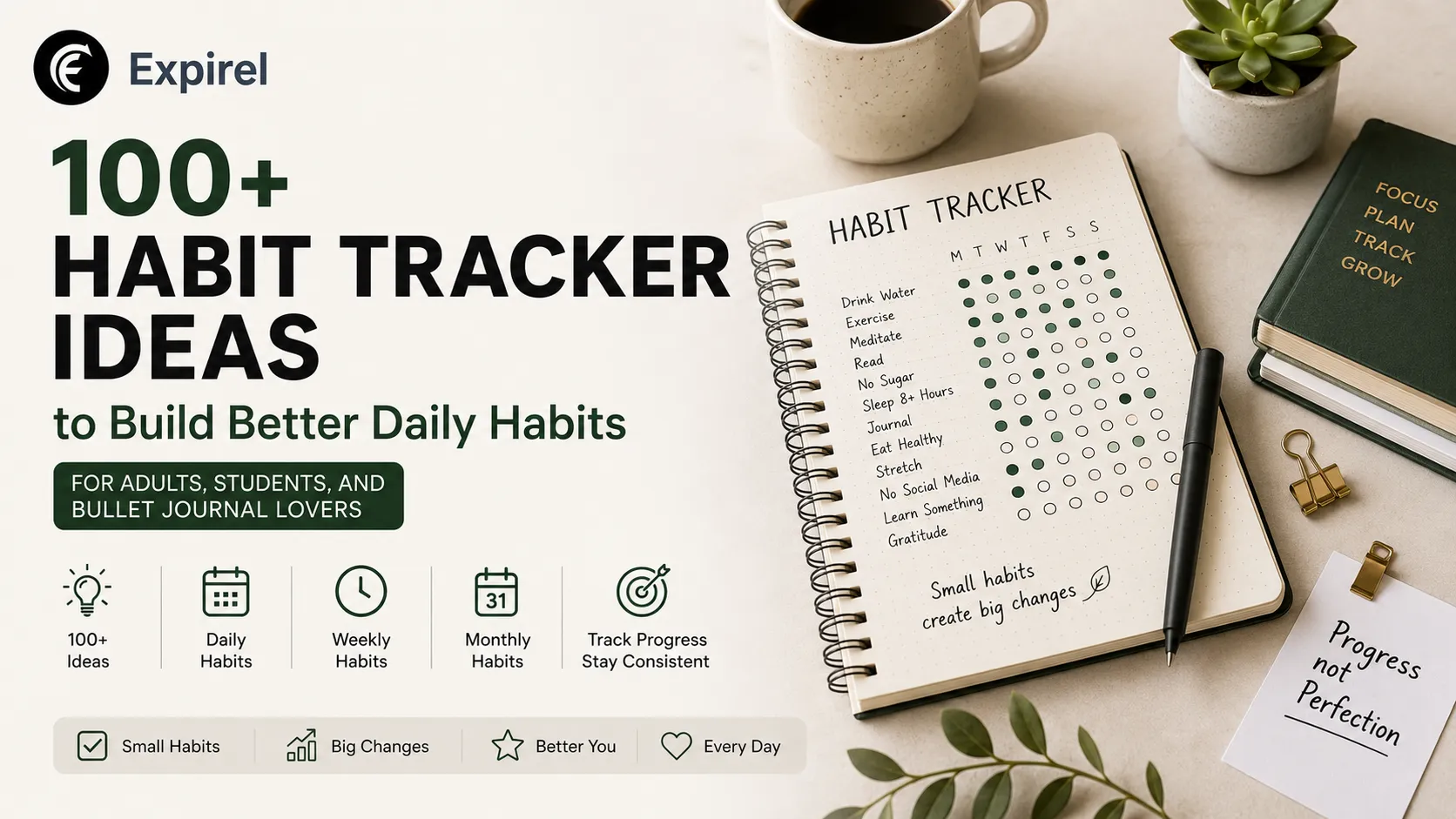
Most people who try habit tracking give up within two weeks. Not because they lack discipline, but because they pick habits that do not connect to their real life. They track "drink water" and "exercise" because everyone does, then lose interest when nothing feels meaningful. If you are looking for habit-tracking ideas that actually stick, this guide goes beyond the usual lists you find online.
A habit tracker is a simple system, either on paper or digital, that records whether you completed a specific behaviour on a given day.
Whether you use a bullet journal habit tracker, a digital app like Expirel, a habit tracker template in your planner, or a simple spreadsheet, the ideas here cover every area of life. You will find daily habits, monthly habit tracker setups, ideas for adults, students, and kids, and practical frameworks to make tracking effortless.
This is not a list of 30 generic habits. This is a complete system.
What You Will Find in This Guide
Why most habit trackers fail (and how to fix it)
How to choose the right habit tracker ideas for your life
100+ habit tracker ideas organized by life category
Bullet journal habit tracker ideas and layouts
Daily vs weekly vs monthly habit tracker setups
Habit tracker ideas for students, adults, and kids
Habit tracker template guide and how to structure one
Common mistakes people make when tracking habits
FAQ: What are some ideas for a daily habit tracker?
Why Most Habit Trackers Fail Before the Month Ends
Before you pick any habit, you need to understand why tracking breaks down. Here are the four real reasons, based on what users consistently report:
Note on habit formation timelines: A study published in the European Journal of Social Psychology found that, on average, it takes 66 days for a new behaviour to become automatic, not the commonly cited 21 days. This means most people quit their habit tracker at exactly the point where the habit is still being formed.
1. Tracking too many habits at once
Beginners often add 15 to 20 habits on day one. By week two, the tracker becomes a guilt ledger instead of a progress tool. Research from psychology suggests that habit formation works best when you focus on 3 to 5 core behaviours at a time, especially in the first month.
2. Tracking outcomes instead of behaviours
"Lose weight" is an outcome. "Do 10 minutes of movement after breakfast" is a behaviour. Habit trackers work on behaviours, not outcomes. If your tracker is full of outcomes, you will feel stuck even when you are making progress.
3. Picking habits that impress others, not yourself
Tracking "cold shower" because you saw it on Reddit does not mean it fits your life. The most effective habits are the ones tied to your personal values and actual daily schedule, not trending self-improvement content.
4. No visual or emotional reward for completion
A habit tracker without a satisfying visual system loses its motivational pull fast. This is why bullet journal habit trackers with color-coded grids, streak counters, and monthly views work better for many people than a plain checkbox list.
How to Choose the Right Habit Tracker Ideas for Your Life
Use this simple four-step framework before you add anything to your tracker:
Identify your current pain point. Are you struggling with energy, focus, relationships, health, finances, or mental clarity? Start with habits that directly address that one area.
Make it behaviour-specific. Convert vague goals into trackable actions. "Be healthier" becomes "walk 20 minutes after dinner." "Save money" becomes "check bank balance every morning."
Set a minimum viable version. On hard days, what is the smallest version of this habit you can still complete? Tracking consistency matters more than tracking perfection.
Choose a tracking frequency that fits reality. Not every habit needs daily tracking. Some work better as weekly or monthly check-ins.
100+ Habit Tracker Ideas Organized by Life Category
These are organized so you can pick what fits your current life stage and goals. Each category includes beginner-friendly and advanced options.
Health and Body Habits
Drink 8 glasses of water
Walk 10,000 steps
Do a 7-minute morning stretch
Complete a strength workout (even bodyweight)
Sleep by a set time (not just "sleep more")
Take a 10-minute walk after each meal
Log your meals (not to restrict, but to notice patterns)
Track alcohol-free days
Take prescribed vitamins or supplements
Do a full body check-in (note any pain or tension before bed)
Mental Health and Mindset Habits
5-minute morning journaling
Write three things you are grateful for
10-minute guided meditation
One minute of deep breathing before any stressful task
No phone for the first 30 minutes after waking
End-of-day mood log (1 to 10 scale)
Write one positive thing about yourself
Limit doom-scrolling to one specific time window
Practice saying no to one unnecessary obligation
Spend 15 minutes in silence (no content, no music)
Productivity and Work Habits
Complete your MIT (most important task) before noon
Plan tomorrow the night before (5 minutes)
Check email only at set times (not constantly)
Do a weekly review every Sunday
Work in 25-minute focused blocks (Pomodoro)
Clear your desk or workspace before starting
Log one learning from each workday
Track time spent on deep work vs shallow tasks
Close all unnecessary tabs before starting a session
Set one micro-goal for the week and check in daily
Learning and Skill Development Habits
Read 10 pages of a non-fiction book
Practice a language for 15 minutes (Duolingo, etc.)
Watch one educational video (not just for entertainment)
Write a summary of something you learned
Practice a musical instrument for 20 minutes
Work through one coding challenge or tutorial
Sketch, draw, or practice a creative skill for 10 minutes
Listen to a podcast during your commute
Revisit your notes from yesterday and add one insight
Research one new topic every week and document key points
Finance and Money Habits
Log every expense, no matter how small
Check your bank account balance each morning
Avoid one unnecessary purchase per day
Track no-spend days per month
Automate a small savings transfer weekly
Review subscriptions monthly for unused services
Set a weekly spending cap for discretionary items
Read one finance-related article per week
Relationships and Social Habits
Send a genuine message to one friend or family member
Put your phone away during family meals
Write one compliment or thank-you note per week
Schedule one meaningful catch-up call per week
Practice active listening in at least one conversation daily
Do one kind act without expectation of return
Home and Environment Habits
Make your bed immediately after waking
Do a 10-minute evening tidy
Wash dishes immediately after eating
Declutter one item from your space per day
Open windows for 10 minutes of fresh air
Water your plants or tend your garden
Set out tomorrow’s clothes and bag the night before
Spiritual and Purpose Habits
Morning prayer, reflection, or intention-setting
Write one sentence about your "why" for the day
Read one page of an inspiring or philosophical text
Spend time in nature, even briefly
Volunteer or contribute to a cause monthly
Review your personal values every Sunday
Bullet Journal Habit Tracker Ideas and Layouts
The bullet journal habit tracker (often called "bujo" habit tracker) is one of the most searched formats for a reason. It combines visual creativity with practical tracking in a way that digital apps sometimes cannot replicate. Here is how to make it work:
The Classic Grid Layout
Draw a grid with habits as rows and days of the month as columns. Each cell gets filled when you complete that habit. Use different colors for different habit categories. This gives you an instant visual snapshot of your entire month.
Best for: Monthly habit tracking, people who love visual progress, and anyone who wants to see pattern gaps quickly.
The Habit Circle or Mandala Tracker
This is popular on Pinterest because it looks beautiful. You draw a circle divided into sections (one per day of the month). Each day you fill in a slice. By the end of the month, you will have a colourful mandala that represents your consistency.
Best for: One or two high-priority habits you want to visualize beautifully. It does not scale to 15 habits but works perfectly for 1 to 3.
The Minimalist Dot Tracker
List your habits down the left side. Each day you place a dot, checkmark, or X. No color, no decoration. This works for people who want the structure of a bullet journal without the time investment of artistic layouts.
Best for: People who find decorative trackers intimidating or time-consuming.
The Weekly Spread with Habit Check-In
Instead of a monthly grid, you dedicate one section of your weekly spread to a mini habit tracker. You track 4 to 6 habits over 7 days. This integrates habit tracking naturally into your weekly planning flow.
Best for: People who already use a weekly planner layout and want habits baked into the same page.
Bujo Habit Tracker Ideas by Theme
Morning routine tracker: Track each element of your morning: water, stretch, journal, no phone
Self-care tracker: Skincare steps, supplements, sunscreen, sleep time
Reading tracker: Pages read per day, books finished per month
Mood and energy tracker: Daily mood score, energy level in the morning vs evening
Creative output tracker: Days you wrote, painted, designed, or practised a craft
Study tracker: Hours studied, subjects covered, revision sessions completed
Daily vs Weekly vs Monthly Habit Tracker Setups
One of the most common mistakes is trying to track every habit every single day. Some habits are daily. Some are weekly. Some are monthly. Using the wrong frequency creates false failure.
Frequency | Best Habit Types | Examples |
|---|---|---|
Daily | Body, mindset, morning and night routines | Water, stretch, journal, sleep time |
Weekly | Productivity, learning, relationships | Weekly review, call a friend, clean desk |
Monthly | Finance, health checks, goal review | Review subscriptions, doctor appointments, and the monthly budget |
Monthly Habit Tracker: The 30-Day Challenge Approach
A monthly habit tracker works best when you treat each month as a focused experiment. Pick one to three habits. Track them for 30 days. At the end of the month, review what worked and what did not before adding new habits. This prevents tracker fatigue and builds real momentum.
Monthly habit tracker ideas that work well on a 30-day challenge format:
30 days no sugar
Read every single day
Journaling streak
No-spend challenge
Wake up at the same time every day
Complete a workout at least 20 days out of 30
Habit Tracker Ideas for Adults: Beyond the Basics
Adults face different challenges than teenagers or students. They manage career demands, family responsibilities, financial stress, and health maintenance simultaneously. These habit tracker ideas for adults go beyond the generic suggestions:
Track your energy, not just your tasks. Log your energy level (1 to 5) at the same time each day. Over a few weeks, you will see patterns and can schedule important work during your peak hours.
Track screen time categories. Not just total screen time, but how much was social media vs reading vs work.
Career growth micro-habits. One LinkedIn connection per week, one skill update per month, one networking message every two weeks.
Health maintenance habits for adults over 30. Annual blood test scheduled, sunscreen daily, posture correction during desk work, and eye rest every hour.
Parenting and family habits. Screen-free hour with kids, read a bedtime story, family dinner at the table, and weekly one-on-one time with each child.
Habit Tracker Ideas for Students
Students need habits that support academic performance, mental health, and long-term skill development at the same time. These are the habit tracker ideas for students that actually move the needle:
Academic Habits
Review yesterday’s notes for 10 minutes each morning
Complete all assigned readings before class
Write a one-sentence summary after each lecture
Do spaced repetition flashcard review (Anki or similar)
Plan your week on Sunday evening
Study in 45-minute blocks with intentional breaks
Student Wellbeing Habits
Sleep before midnight on weekdays
Eat at least one proper meal per day
Leave your room or house once per day
Talk to at least one person in real life (not just online)
Limit gaming or streaming to a specific window (not all day)
Habit Tracker Ideas for Kids
Children thrive with visual trackers that feel fun rather than like a homework assignment. These ideas work for ages 5 to 12 and can be turned into a sticker chart, colorful grid, or digital app:
Brush teeth morning and night
Make your bed before school
Read for 15 minutes
Put toys away before bed
Drink water instead of juice at one meal
Say something kind to a sibling or friend
Do 20 minutes of outdoor play
Practice an instrument or hobby
No screens until homework is done
Parent tip: Let the child choose at least 2 to 3 of their own habits. When kids have ownership over what they track, completion rates improve significantly.
How to Build a Habit Tracker Template That Actually Works
A habit tracker template is only useful if it matches how you actually live. Here is how to design one from scratch, whether you use paper, a spreadsheet, or an app:
Step 1: Define your tracking period
Decide if this is a daily tracker, weekly tracker, or monthly tracker. Daily and weekly trackers need a date column. Monthly trackers work best as a grid (habits vs days of the month).
Step 2: Limit your habits
Cap your list at 5 to 7 habits when starting. You can always add more after the first month. More habits on paper does not mean more progress in real life.
Step 3: Categorize with color or symbol
Group habits by category (health, mind, work, relationships). Assign each category a color. When you fill in your tracker, the color breakdown shows you at a glance where you are investing your energy.
Step 4: Add a notes section
Include a small box where you can write one sentence about that day. Over time, this turns your habit tracker into a micro-journal that captures context, not just checkboxes.
Step 5: Build in a weekly and monthly review prompt
Add two prompts to your template: "What worked this week?" and "What do I want to adjust?" These prompts force active reflection instead of passive tracking.
Digital vs Paper Habit Tracker Templates
Paper (bullet journal, printable): Higher personalization, no notifications, strong tactile satisfaction, but requires manual effort and can be missed when you are away from home.
Spreadsheet (Google Sheets, Excel): Easy to customize, good for data analysis, but needs manual entry and looks plain without extra formatting.
App-based (Expirel and similar): Best for reminders, streak tracking, and analytics. Expirel lets you track daily habits, set expiry-based reminders, and see long-term patterns without manually counting streaks or calculating percentages.
Common Mistakes People Make with Habit Trackers (And How to Fix Them)
Mistake 1: Breaking the streak and giving up entirely
Missing one day does not ruin your habit. The research on behaviour change consistently shows that missing twice in a row is the real danger, not missing once. Build a "never miss twice" rule into your system instead of aiming for a perfect streak.
Mistake 2: Tracking without intention
Filling in checkboxes becomes mindless within 3 weeks if you do not connect each habit to a reason. Write your "why" next to each habit when you set up your tracker. Revisit it when motivation drops.
Mistake 3: Not reviewing your tracker
A habit tracker you never review is just a to-do list. The data it collects is only useful if you look at it regularly and ask: What pattern do I see? What needs to change next month?
Mistake 4: Copying someone else’s tracker directly
Pinterest and Reddit habit tracker spreads look inspiring, but they represent someone else’s life. Use them for layout ideas, not for habit content. Your tracker should reflect your goals and your daily schedule.
Mistake 5: Skipping the start-small principle
A 5-minute walk tracked consistently for 30 days does more for long-term behaviour change than a 1-hour workout tracked for 4 days then abandoned. Always define the minimum version of your habit before you add it to your tracker.
Using Expirel for Habit Tracking
Most habit trackers focus on streaks and checkboxes. Expirel adds a layer that most apps miss: expiry-based habit reminders. This means you can set habits that recur on custom schedules, not just daily.
For example, you can track "renew gym membership" every 3 months, "review insurance" every 6 months, or "check in with a mentor" every 2 weeks. These are habits that matter but fall through the cracks in standard daily trackers. Expirel keeps them visible without cluttering your daily view.
It is particularly useful for adults who juggle multiple habit categories (health, finances, relationships, work) and need a system that covers both daily micro-habits and longer-cycle recurring behaviours.
Conclusion
The best habit tracker ideas are not the ones with the most ticks. They are the ones that show up for you on difficult days when motivation is gone, and discipline feels thin. That only happens when your habits are small enough to complete under pressure, meaningful enough to matter when you reflect, and tracked in a system you actually enjoy using.
Start with 3 habits from the lists above. Pick one format (bullet journal, app, or spreadsheet). Commit to 30 days. Review at the end of the month and adjust. That single cycle, done honestly, will teach you more about your behaviour patterns than any productivity book you will ever read.
If you want a digital habit tracker that handles both daily habits and longer-cycle recurring reminders, Expirel is built exactly for that. It removes the mental load of remembering what needs to happen and when, so you can focus on actually doing the work.
Frequently Asked Questions
Q: What are some ideas for a daily habit tracker?
For a daily habit tracker, start with 4 to 6 habits across different life areas: water intake, a short journal entry, your most important task before noon, a 10-minute walk, no phone for the first 30 minutes of the day, and a 10-minute evening tidy.
The key is to pick habits you can realistically complete every day, even on your worst days. If a habit only happens when life is easy, it is not a daily habit yet. Think of each daily habit as a minimum viable action, not a best-case scenario. A 5-minute walk counts. A single page of reading counts. Consistency on the small version beats perfection on the big version every time.
Q: How many habits should I track at once?
Start with 3 to 5 habits maximum. Adding more before the first 30 days is the single biggest reason people abandon their tracker.
Once you complete your starting habits consistently for 30 days, you can add 1 to 2 more. Think of your tracker as a live document that grows with you, not a complete self-improvement plan you build on day one. The people who stick with habit tracking long-term almost always started smaller than they thought they needed to.
Q: What is the best format for a bullet journal habit tracker?
The classic monthly grid is the most practical bullet journal habit tracker format: habits in rows, days of the month in columns, fill each cell when you complete the habit.
If you want something more decorative, the habit circle or mandala tracker works well for 1 to 3 key habits and looks visually rewarding by month-end. For weekly planners, embed a small habit check-in box directly on each weekly spread so habits and schedule live on the same page. Avoid spending more time decorating the tracker than actually using it, a common trap with highly visual bujo setups.
Q: Can I use a habit tracker for monthly habits instead of daily ones?
Yes, and you should. Monthly habits belong in your tracker just as much as daily ones. Use a simple checklist format for them rather than a daily grid.
A monthly habit tracker works especially well for health maintenance tasks like booking a dentist appointment or reviewing your budget, relationship habits like sending a thank-you note or scheduling a catch-up call, and personal growth actions that do not need to happen every single day. These are the habits most people forget entirely because no daily tracker reminds them. A dedicated monthly checklist or a recurring reminder in an app like Expirel keeps them from slipping through the cracks.
Q: What are the best habit tracker ideas for students?
The five best habit tracker ideas for students are: reviewing notes for 10 minutes each morning, sleeping before midnight on weekdays, completing readings before class, doing spaced repetition review daily, and planning the week every Sunday evening.
These five habits target the two biggest student failure points: inconsistent sleep and passive studying. The morning note review alone, just 10 minutes, activates spaced repetition without any extra study sessions. Planning on Sunday takes less than 15 minutes but removes the daily decision fatigue of figuring out what to work on next. Students who track these five consistently typically report improvement in both grades and stress levels within four to six weeks.
Q: Are habit tracker templates better on paper or digital?
Both work well, and the best choice depends on when and how you engage with your habits. Paper is better for reflection; digital is better for reminders and pattern tracking.
Paper trackers, including bullet journals and printable templates, create a strong tactile connection and are excellent for people who process information better when they write it by hand. Digital trackers are stronger for accountability: they send reminders, calculate streaks automatically, and show you pattern data over weeks and months without any manual counting. Many serious habit-builders use both: a paper tracker for end-of-week reflection and a digital app like Expirel for daily check-ins and longer-cycle recurring habits.

Fahad Ahmad
Founder of EXPIREL · Digital Entrepreneur · Product Management Specialist
Fahad Ahmad is the founder of EXPIREL and a digital entrepreneur with over 10 years of experience in SaaS development, SEO, and digital product creation. He focuses on building practical solutions that help individuals and businesses manage product expiration dates, organize inventory, track habits, and improve daily productivity.
Through EXPIREL, Fahad shares actionable guides, product management tips, barcode scanning tutorials, and research-backed insights designed to help users reduce waste, stay organized, and make smarter decisions.
Related Articles
View all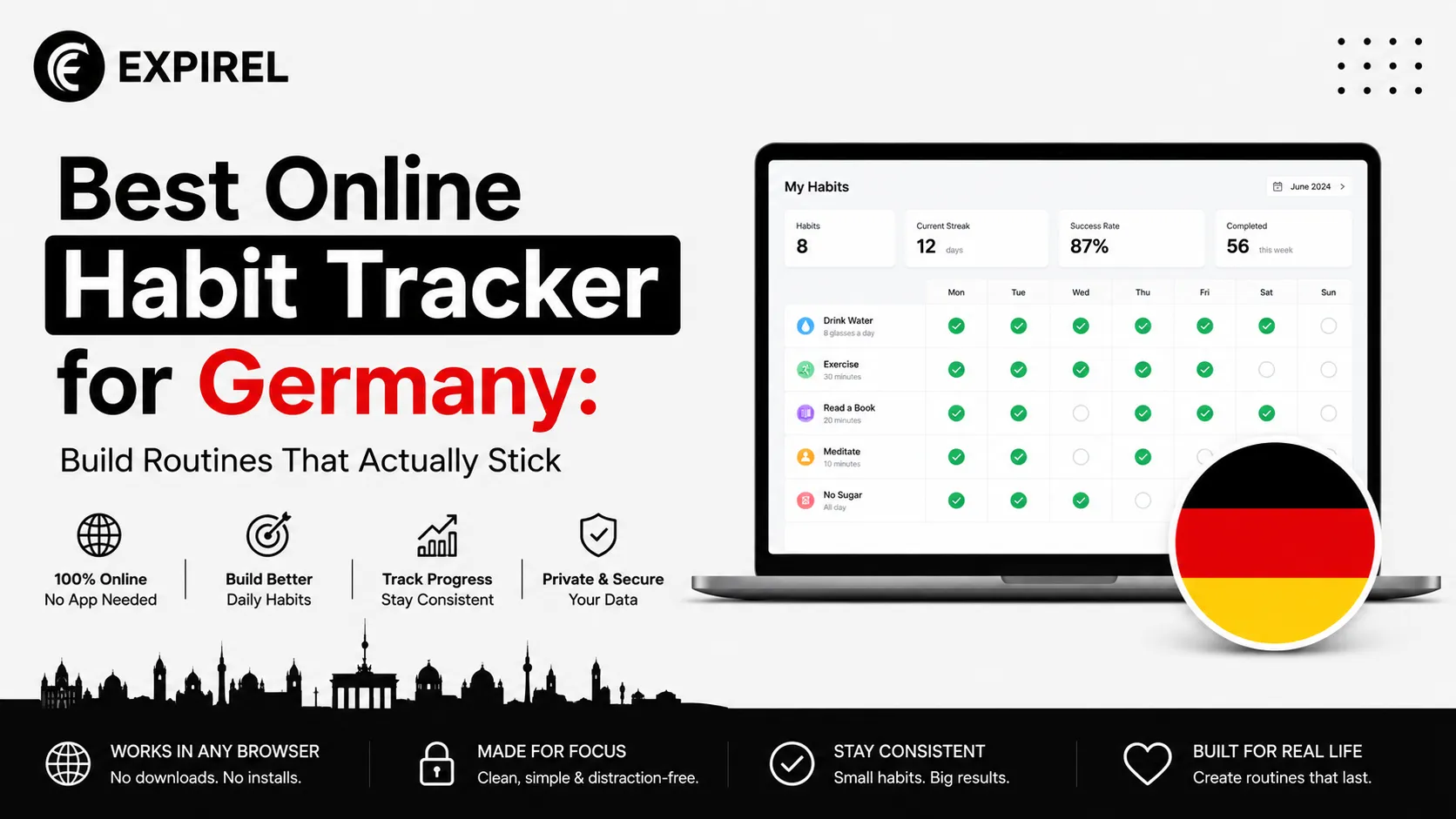
Best Online Habit Tracker for Germany: Build Routines That Actually Stick
June 12, 2026
Best habit tracker in Germany? Expirel lets you track daily habits, build streaks, and get WhatsApp & email reminders, no app download, works on any device.
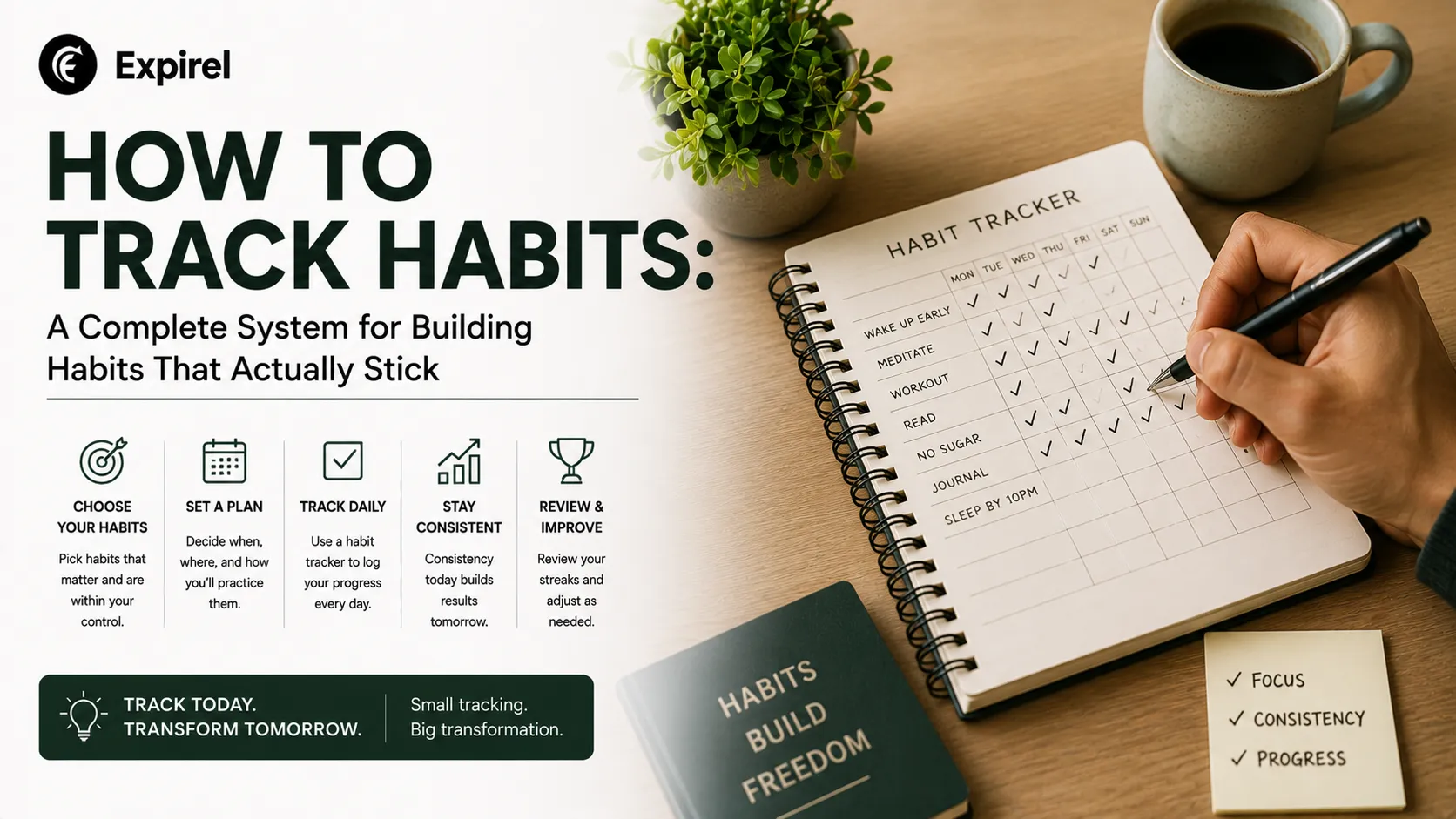
How to Track Habits: A Complete System for Building Habits That Actually Stick
August 3, 2026
Tired of abandoned habit trackers? Get a step-by-step system for daily, weekly, and long-term habits, plus a free 30-day checklist you can start today.
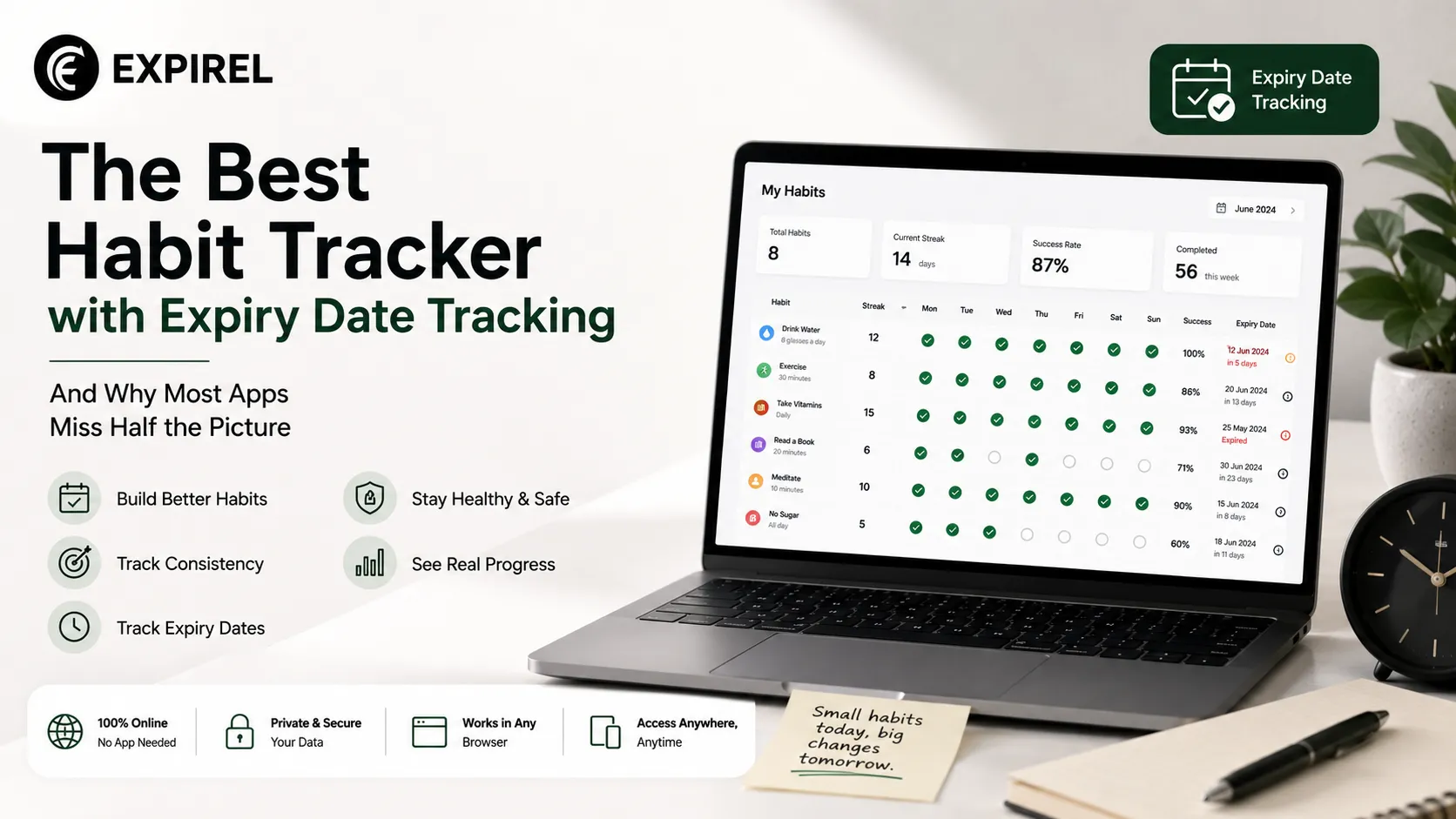
The Best Habit Tracker with Expiry Date Tracking - And Why Most Apps Miss Half the Picture
June 16, 2026
Most habit trackers ignore real life. Expirel tracks daily habits AND expiry dates like food, medicine, subscriptions, and freebies in one dashboard.