Productive Dinner: The Evening Habit Behind Next-Day Productivity
Struggling to focus by 2pm? The problem might be last night's dinner. See the productivity diet, 4 quick meals, and exactly when to stop eating.
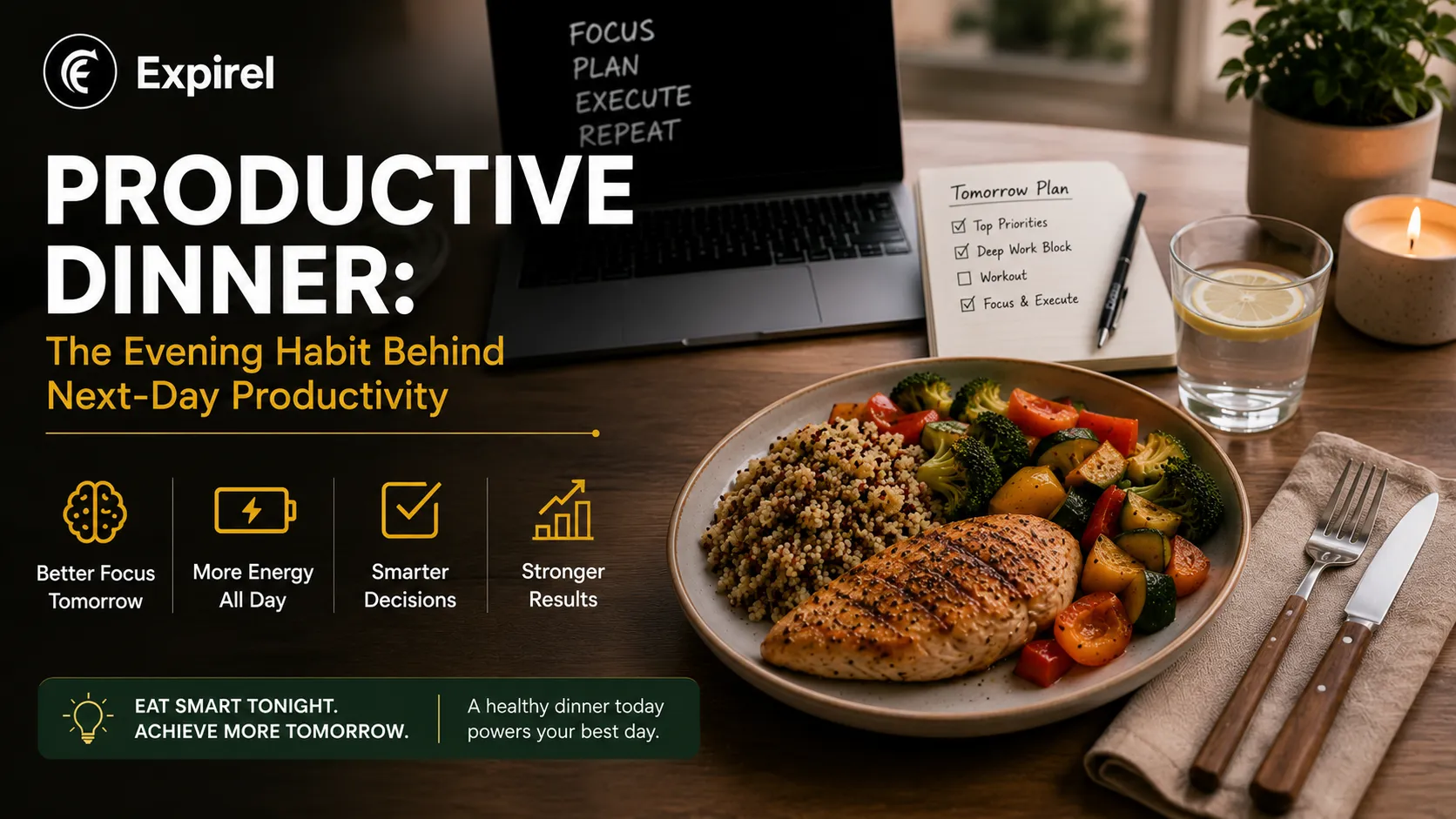
Dinner productivity is the idea that your evening meal is not the end of your working day. It is the first input into tomorrow's. What you eat, how much, and when you eat it shapes the quality of your sleep, and sleep quality is what determines how sharp, focused, and steady you feel the next morning. Most advice on productivity focuses on the morning routine or the workday itself and skips this entirely, which is exactly why so many people who already have a solid morning routine still hit a wall by mid-afternoon.
This guide covers the eating and environment side of that connection: what makes a dinner productive, a practical productivity diet framework, four original meals you can build around it, how to choose a productivity restaurant when eating out, and the habits that make it stick. If you are looking for the daytime work system side, the capture, time-blocking, and review framework, our productivity recipe guide covers that in full.
Productive Dinner at a Glance
Detail | What to Aim For |
|---|---|
Timing | Finish eating 2 to 3 hours before your intended sleep time |
Protein | 25 to 35 grams from lean sources: fish, poultry, eggs, legumes, tofu |
Carbohydrates | Complex, slow-digesting sources rather than refined sugar or white flour |
Vegetables | At least one magnesium-rich vegetable: spinach, broccoli, edamame |
To avoid | Alcohol, heavy saturated fat, and caffeine after mid-afternoon |
What Is a Productive Dinner?
A productive dinner is a meal built around three things: enough protein to support the hormone pathway your body uses to fall asleep, complex carbohydrates that keep blood sugar stable overnight instead of spiking and crashing, and enough time between your last bite and your first minute of sleep for digestion to mostly finish. None of this requires a special diet or unusual ingredients. It requires paying attention to timing and composition, the same two variables that matter in almost every area of nutrition science.
The Science Connecting Dinner to Next-Day Output
A randomised trial run by Harvard-affiliated researchers tested identical meals on two different schedules and found that shifting the same food to later in the day left participants hungrier, burning fewer calories overall, and storing more of what they ate as fat. The food was the same in both conditions. Only the clock changed, which is the strongest evidence that timing itself, not just content, drives the effect.
Sleep is the mechanism that connects the two. CDC data shows a large share of U.S. adults do not get the recommended amount of sleep on a regular basis, and insufficient sleep directly reduces next-day attention, working memory, and decision quality. A heavy, late, or alcohol-paired dinner is one of the most common and most fixable causes of poor sleep quality on an otherwise normal night.
Caffeine timing matters here too. The half-life of caffeine is roughly 4 to 6 hours in most healthy adults, based on FDA-referenced data, which means a 3 p.m. coffee still has a meaningful amount of active caffeine in your system at 8 or 9 p.m., interfering with the sleep onset that a productive dinner is trying to protect.
The Productivity Diet Framework
A productivity diet is not a weight-loss plan. It is an eating pattern built around one goal: consistent next-day cognitive output.
Eat
Lean protein: chicken, turkey, white fish, eggs, legumes, tofu
Complex carbohydrates: brown rice, quinoa, sweet potato, whole grain bread
Magnesium-rich vegetables: spinach, broccoli, edamame, pumpkin seeds
Healthy fats in moderation: olive oil, avocado, nuts
Limit or Avoid at Dinner
Alcohol, which reduces REM sleep even at one or two drinks
Refined carbohydrates eaten within two hours of bed
Large portions of fried food or heavy cream sauces, which slow digestion during sleep
Caffeine after 2 to 3 p.m., including tea and chocolate desserts
4 Productive Meals You Can Build in Under 30 Minutes
These are original meal builds designed around the eat and avoid framework above. Each serves two to four people and needs no specialist ingredients.
Herb-Crusted Cod with Roasted Sweet Potato and Broccoli · 25 minutes
Season two cod fillets with dried thyme, garlic powder, and lemon zest, then bake at 200°C for 15 minutes. Roast cubed sweet potato and broccoli florets in olive oil alongside it. Cod is a lean, easily digested protein, and sweet potato provides a low-glycemic carbohydrate that will not spike blood sugar close to bedtime.
Turkey and Black Bean Chili Bowl · 25 minutes
Brown ground turkey with onion and garlic, add a tin of black beans and a tin of diced tomatoes, season with cumin and smoked paprika, and simmer 15 minutes. Serve over a small portion of brown rice. Turkey is one of the richest dietary sources of tryptophan, and black beans add magnesium and fibre that slow digestion.
Greek Yogurt Chicken with Farro and Asparagus · 30 minutes
Marinate chicken breast in plain Greek yogurt, lemon, and oregano for at least ten minutes, then pan-sear 6 to 7 minutes per side. Cook farro per package instructions and roast asparagus in olive oil. The yogurt marinade tenderises the chicken while adding calcium and protein, and farro digests more slowly than white rice.
Tofu and Edamame Stir-Fry with Brown Rice · 20 minutes
Pan-fry cubed firm tofu until golden, then stir-fry with edamame, sliced bell pepper, and a light soy-ginger sauce. Serve over brown rice. This is the highest-magnesium option of the four, useful for anyone who has trouble staying asleep through the night rather than falling asleep.
Productivity Tips for Building a Dinner Routine That Sticks
A productive dinner is easy to plan once and hard to repeat consistently, mainly because of decision fatigue at the end of a long day. These tips remove the friction.
Plan five dinners on Sunday, not each day. Deciding once a week instead of once a day removes the single biggest reason people default to takeout.
Set a kitchen start reminder, not a dinner reminder. A reminder to start cooking at a fixed time works far better than a vague intention to eat earlier.
Cook around what is already in your fridge before it goes bad. This is the single most overlooked productivity habit in most kitchens: people buy fresh protein and vegetables with good intentions, then forget what they have and order delivery instead. Expirel expiry tracker solves this directly by flagging ingredients that are close to their use-by date, so your Sunday plan can be built around what needs to be used first instead of what looks appealing in the moment.
Keep a repeating rotation of five or six meals rather than inventing something new every night. Novelty is not what makes a dinner productive; consistency is.
Productivity Restaurants: Eating Out Without Derailing Your Evening
A productivity restaurant, in this context, is not a place with good wifi. It is a place that lets you eat out without undoing the dinner habits above: fast enough that you are not eating right before bed, with menu options that are not entirely fried, heavy, or alcohol-forward, and close enough to home that a late night out does not turn into a late night in bed too.
How to Choose One
Check the menu online before you go and identify a protein-and-vegetable option in advance, so you are not deciding under time pressure at the table.
Favor restaurants with grilled, roasted, or steamed options over all-fried menus.
Book a time that lets you finish eating at least two hours before bed, not right up against it.
Order water alongside anything else, and treat alcohol as optional rather than automatic if sleep quality matters that night.
Common Mistakes People Make With Productive Meals
Skipping dinner entirely on busy days, then overeating late at night once the workday finally ends.
Eating at the desk while still working, which slows digestion and removes the mental boundary between work time and recovery time.
Relying on delivery as a default rather than an exception, usually because nothing planned was in the fridge.
Treating alcohol as a wind-down tool. It feels relaxing in the moment and measurably reduces the depth of sleep that follows.
Letting fresh ingredients expire unnoticed, which quietly pushes people toward takeout by the time they realize nothing usable is left.
Real-World Scenarios
Busy parent cooking for a family
Planning five dinners matters even more with multiple people to feed. Expirel family sharing feature lets everyone in the household see which ingredients are about to expire and who is cooking which night, so meal planning is not sitting on one person's memory alone.
Remote worker eating dinner at the same desk they worked at all day
A short walk or even standing to eat in a different room creates the boundary that a commute used to provide, which makes the meal register as a break rather than a continuation of work.
Shift worker with an irregular dinner time
The two-to-three-hour buffer before sleep still applies, just shifted to whatever time that worker's sleep window actually starts. The principle is about the gap between eating and sleeping, not the clock time itself.
How to Track and Sustain a Productive Dinner Habit
The habit that determines whether any of this sticks is not the recipes. It is whether you actually cook a planned, reasonably timed dinner most nights of the week. A visual habit tracker, like the one built into Expirel, lets you log "cooked a planned dinner" as its own daily habit alongside your other routines, so you can see the pattern building instead of relying on memory to judge how consistent you have actually been.
Pair that with expiry tracking so the ingredients you bought with good intentions do not quietly go to waste, and the two habits reinforce each other: less waste means less reason to default to delivery, and a visible streak means less reason to skip planning on a tired evening.
Conclusion
Dinner productivity is a simple idea with an outsized effect: what you eat in the evening and when you eat it shapes how well you sleep, and how well you sleep shapes how well tomorrow goes. Build a small rotation of productive meals, plan them once a week instead of once a day, and protect the two-to-three-hour buffer before bed. If you also want the daytime half of this system capture, prioritisation, time blocks, and review see our companion guide on the productivity recipe, and pair both with Expirel to track the habits and keep the ingredients behind them from going to waste.
Frequently Asked Questions
Q: What is a productive dinner?
A productive dinner is a meal with lean protein, complex carbohydrates, and magnesium-rich vegetables, eaten two to three hours before sleep, so digestion is mostly complete before your body shifts into overnight recovery.
Q: What productivity tips matter most for evening routines?
Plan meals once a week instead of once a day, set a reminder to start cooking rather than to eat, keep a repeating rotation of simple meals, and stop caffeine by mid-afternoon so it does not interfere with sleep onset.
Q: What is a productivity diet?
A productivity diet is an eating pattern focused on next-day cognitive performance rather than weight loss. It prioritizes lean protein and complex carbohydrates at dinner and limits alcohol, refined carbohydrates, and late caffeine.
Q: What makes a restaurant good for productivity?
A productivity-friendly restaurant offers grilled or roasted options rather than an all-fried menu, serves food quickly enough that you finish well before bedtime, and does not make alcohol the default part of the meal.
Q: What are good productive meals to start with?
Simple builds combining a lean protein with a complex carbohydrate and one vegetable work best: herb-crusted fish with sweet potato, turkey chilli with black beans, yoghurt-marinated chicken with farro, or a tofu and edamame stir-fry.

Fahad Ahmad
Founder of EXPIREL · Digital Entrepreneur · Product Management Specialist
Fahad Ahmad is the founder of EXPIREL and a digital entrepreneur with over 10 years of experience in SaaS development, SEO, and digital product creation. He focuses on building practical solutions that help individuals and businesses manage product expiration dates, organize inventory, track habits, and improve daily productivity.
Through EXPIREL, Fahad shares actionable guides, product management tips, barcode scanning tutorials, and research-backed insights designed to help users reduce waste, stay organized, and make smarter decisions.
Related Articles
View all
Dinner Productivity vs Productivity Recipe: What Is the Difference and Which One Do You Actually Need?
July 13, 2026
Not sure how dinner productivity and a productivity recipe differ? This guide compares both clearly, shows how they work together, and links.
11 Best Social Media Productivity Tools to Save Time in 2026
October 12, 2026
Compare 11 social media productivity tools for 2026 that save time on routines, scheduling, design, automation, video, analytics, and link tracking.
Best Productivity Apps for Medical Students in 2026: Pick by Stage
October 9, 2026
Find the best productivity apps for medical students in 2026: free picks, a stack for each stage, tools for doctors, and how to protect patient privacy.